





Mediamax’s exclusive Interview with Veronika Zonabend, social entrepreneur and philanthropist, co-founder of the Ruben Vardanyan and Veronika Zonabend Foundation (RVVZ) and other charitable foundations and programs
(The interview was recorded before December 18, when the state prosecutor in Baku requested life imprisonment for Ruben Vardanyan).
Veronika, for the past two years, everyone who knows you and Ruben has been asking the same question: how is the situation evolving with him and with the other Armenian detainees? It is widely reported that what is being called a trial in Azerbaijan continues to resemble a farce. Nevertheless, is there any hope for their release?
Unfortunately, there are no good news. This week, it was announced that the “judicial investigation has been concluded” and that the parties will move to closing arguments. However, it is unclear between whom these arguments will take place. No independent experts are allowed to attend the court hearings. Over the course of a year of proceedings, the court has satisfied virtually none of the motions or requests submitted by Ruben and his lawyer, and many of these motions and requests remain unanswered to this day. Although the hearings are formally declared open, access is granted only to individuals on pre-approved lists, and the courtroom itself is cordoned off. The so-called victims and their relatives state that they “have never met Vardanyan, do not know him personally, know of him only through the media, yet believe that the harshest measures should be applied to him.” At the same time, not a single witness who knows Ruben well and whom he requested to be summoned has been called to testify. It is entirely evident that the court’s decision will fall outside the framework of the rule of law. Moreover, the entire so-called judicial process amounts to a complete denial of justice.
Fortunately, Ruben is still permitted to make phone calls once, and sometimes twice, a week for 10 minutes at a time. Neither I nor other members of our family have reliable information about his health; we can assess it only by the sound of his voice. Throughout this period, with the exception of just a few weeks, Ruben has been held in solitary confinement. He is almost completely isolated and has no access to the internet. His only connection with the outside world is letters from friends and those who wish to support him.
I would like to take this opportunity to thank everyone who writes to Ruben. I understand that only a small portion of these letters actually reach him, but they are extremely important to him. The support of friends and the knowledge that he is remembered give him strength. As in previous years, we are organizing a centralized New Year card campaign for Ruben this year, as well. Detailed information on how to write and send a letter can be found on the website FreeVardanyan.com, in the section “Write to Ruben.”
It is deeply regrettable that, following the departure of the International Committee of the Red Cross (ICRC) from Azerbaijan, we have lost the ability to record short video messages for Ruben. In the coming days, I plan to contact the leadership of the ICRC to request clarification of Ruben’s legal status during the period when representatives of this international humanitarian organization visited him while he was detained in Azerbaijan. This is of fundamental importance for understanding the full scope of Ruben’s rights and determining what further steps must be taken to protect his rights and interests, including at the international level.
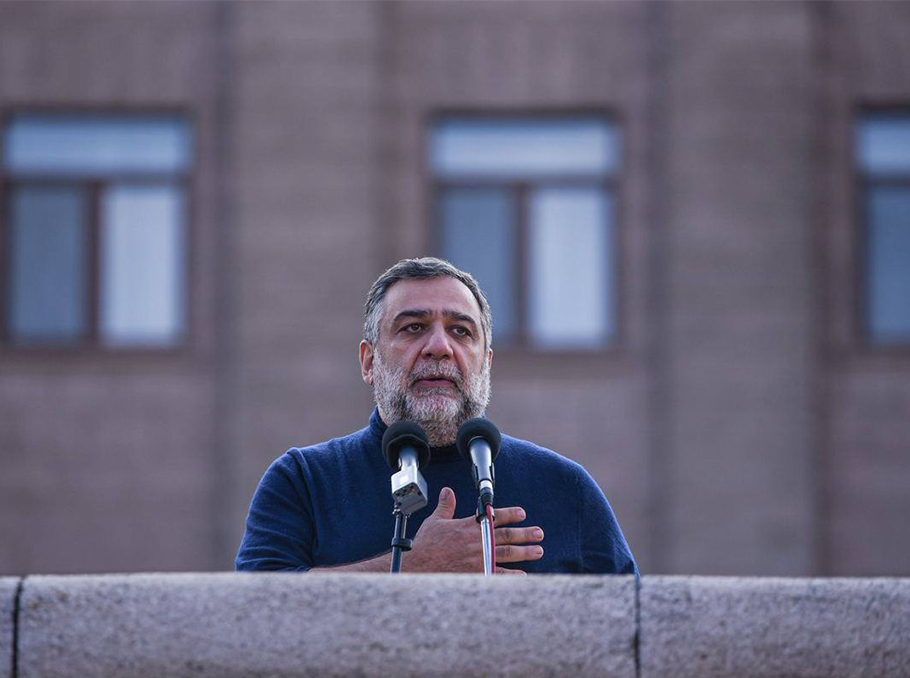
It must be said that, despite the gravity of the situation, Ruben is holding up with remarkable courage. He reads extensively and practices yoga. He worries more about us than about himself, and it must also be acknowledged that he foresaw much of what is now unfolding in the world.
Ruben’s courage and resilience are deeply admirable. But how have you been coping during all this time without him by your side? What gives you strength?
Faith. Faith that the trials we face are given according to our strength, and that each of us must bear our own cross. And faith that goodness and love ultimately prevail. One is truly fortunate to have a great love and a great dream in life; therefore, despite everything, Ruben and I continue to dream, and our love only grows stronger through these trials.
We are also blessed with wonderful children, who support us and give us tremendous strength. They seem to have grown wiser all at once, and their behavior confirms that when you live by your convictions, your children, in turn, give you many reasons to be proud of them.
In addition, I devote myself to work that brings joy, inspiration, and a sense of purpose. That, too, provides immense energy. There is no point in succumbing to grief, resentment over a monstrous injustice, or thoughts of revenge. All of that only drains one’s strength. Ruben often says during our phone calls that he loves everyone — not only friends, but even enemies. Time will judge all and repay all accordingly. What matters is to remain human in any circumstances and to believe.
After Ruben’s unlawful detention by the Azerbaijani authorities, you said in one of your interviews that, despite all the difficulties, “the work on our projects does not stop, because they are long-term.” Is this still the case?
Yes, absolutely. These projects are designed for a minimum horizon of 20-25 years. We have achieved a great deal, even though not everything we envisioned could be implemented for objective reasons. Not only Armenia, but the entire world has entered what Ruben began calling the “perfect storm” some 15 years ago: wars, the pandemic, an ongoing financial crisis, and geopolitical tensions, not to mention the many other challenges and constraints of recent years.
Back in the early 2000s, Ruben and I came to understand that in the 21st century, the most valuable “resource” would be a talented, broadly educated individual: creative and capable of thinking beyond conventional frameworks. Accordingly, those states and regions with a higher concentration of such people would be the ones to succeed. This meant creating conditions in which such individuals, the true elite in the genuine sense of the word, could realize their potential at home rather than leave in search of better opportunities. Moreover, it meant fostering an environment attractive enough to draw a true elite from other countries, as well. These people would bring advanced expertise, new technologies, and the highest standards of corporate culture to Armenia, and this mutual intellectual and cultural enrichment would, in turn, provide an even greater impetus for development.
We were convinced that building such an environment should begin with education. It is the key to addressing most global challenges, and Armenia, with its millennia-old tradition of reverence for knowledge, offers exceptionally fertile ground, where the seeds of educational initiatives can quickly yield abundant results.
Did your expectations materialize? Can you point to concrete results?
Yes, absolutely. The most obvious example is the international school in Dilijan, whose graduates are admitted to leading universities around the world. That said, it was not immediately embraced in Armenia. Both within the country and across the Diaspora, there was considerable skepticism about the idea that Armenia could become a destination where children from all over the world would come to receive a high-quality education aligned with the best global standards.
We were talking about an education that prepares young people for the realities of the 21st century, with its challenges and demands, and that develops qualities such as creative and critical thinking, adaptability, and the ability to communicate with people from different cultures and social backgrounds. Our decision to open an international school in Dilijan for children from diverse countries, ethnicities, and social backgrounds fully reflected our vision of Armenia’s future — as a hub country that is needed and valuable for the region and the world.
For a long time, many residents of Dilijan believed that the school was only for the wealthy and had nothing to do with them. But then, several children from Dilijan were admitted, and now, every taxi driver tells tourists: “This is our school—but you have to be smart to get in; it’s not enough just to pay money.” For several years now, the school and the Dilijan Community Center (DCC), which Ruben and I support, have been running joint programs for children and teenagers in Dilijan. Thanks to these programs, local youth believe that anything is achievable if you truly commit yourself. For example, every year, some teenagers from Dilijan are admitted to international schools, including UWC Dilijan. In addition, local children have access to the school’s sports infrastructure: the football field, sports hall, and swimming pool.
Moreover, in partnership with Samsung, the school runs programs teaching teenagers from various cities across Armenia programming and Android application development. Importantly, these programs are not limited to students from specialized schools. For instance, children from Dilijan were able to join through preparatory courses organized by the DCC. I am proud that, in Armenia, more than 95% of participants successfully complete the full course and receive certificates: the highest rate among all countries where this program operates. Several of our students were also part of the national team that secured third place in the individual ranking (and 16th place in the team ranking) at the International Artificial Intelligence Olympiad in Beijing.
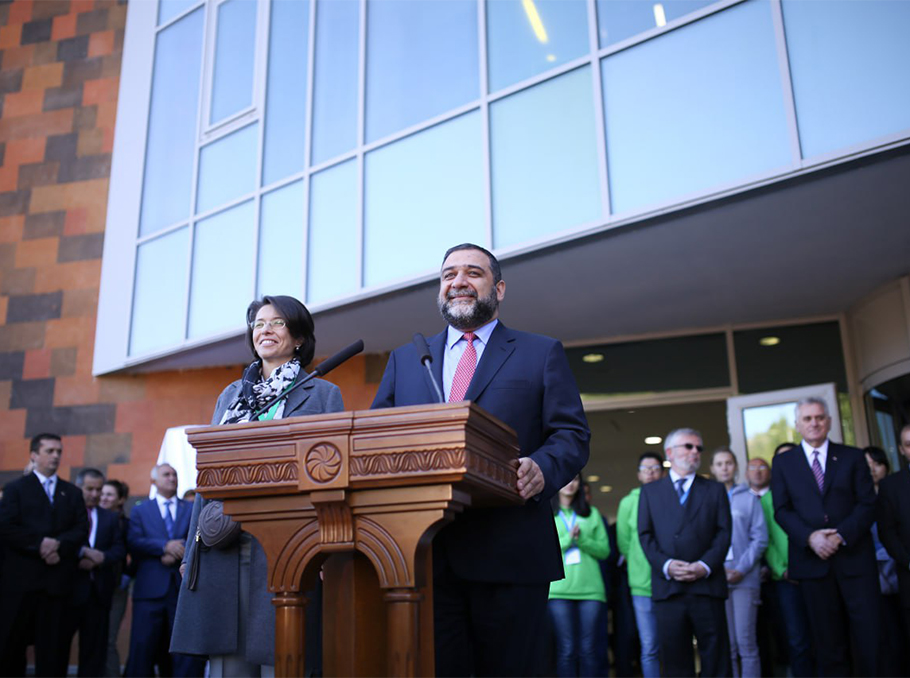
As a result, UWC Dilijan plays a significant role in the educational life of the city, the region, and even the entire country. I hope that decision-makers fully appreciate the importance of UWC Dilijan for Armenia. When we ceremonially opened the school in October 2014, I said that, in time, we would be counting the number of Nobel laureates who had studied there. Believe me, that will happen.
Over the past 10 years, the school has not only earned considerable prestige within the UWC network, but it has also become an internationally recognized brand. Just consider this: parents from 80 countries, nearly half of all the countries in the world, send their children to Dilijan every year, choosing Armenia as the best place for education. Moreover, thanks to the Dilijan International School, which today includes not only a college, but also a preschool and secondary education, several families from other countries — Russia, China, the United States, and the UAE — have relocated to Dilijan.
In your view, has the international school influenced the mindset of Dilijan’s residents?
You know, constructing a building is far quicker than changing a mindset, which is why our work with young people began long before the school opened. Over the past 11 years, the staff and volunteers of the Dilijan Community Center (DCC) have done a great deal to expand educational and leisure opportunities for local residents. Since the Center’s establishment, around 2,000 people from Dilijan have completed various training programs and taken part in international competitions. There are also cases where breakthrough initiatives by young entrepreneurs have received funding for further development. It is fair to say that all of this has significantly transformed the mindset of the younger generation.
Young people are no longer afraid to dream or to set ambitious goals. They study foreign languages, plan their futures, and actively engage in volunteer work, which has become a normal and widely accepted practice in Dilijan. Motivated young men and women launch their own social initiatives and drive positive change, understanding that they are the architects of their own destinies.
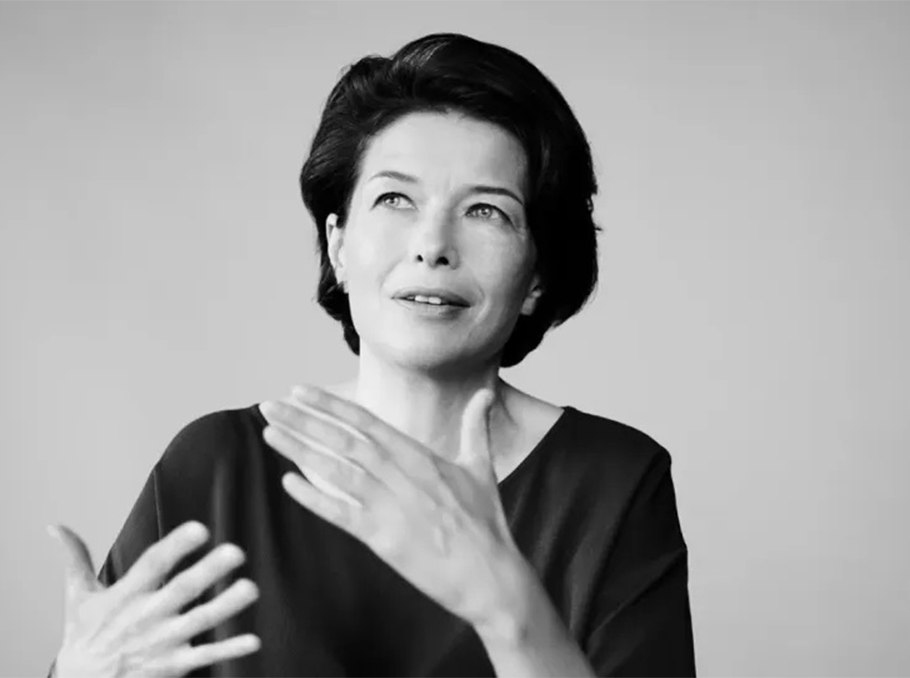 Veronika Zonabend
Another vivid example of a project that shapes the local environment is Café #2. It began as a youth-led social initiative, providing local teenagers with opportunities to earn income and acquire skills in the hospitality industry. Over time, however, Café #2 has transformed the lifestyle and social habits of the city, particularly how people spend their leisure time, and has also contributed to the emergence of new restaurant projects in Dilijan.
All of these are examples of how a great dream can change reality. This is precisely what distinguishes Ruben’s projects: he is not afraid of the seemingly impossible. He believes in his vision, develops concrete plans to realize it, convinces others of its importance and feasibility, and brings together a wide range of people to work collectively toward its implementation.
Continuing your point about the importance of UWC for Armenia, it has been reported that the daughter of Prime Minister Nikol Pashinyan also graduated from one of the UWC schools.
Yes, she and her parents attended the fifth anniversary of UWC Dilijan in 2019, and our school left a strong impression on her. One of the key strengths of the UWC educational movement is that children are admitted regardless of their parents’ social or financial status. What matters are a student’s abilities, potential, personal qualities, and willingness to contribute to society. At UWC schools, children of elites, such as European monarchs, study alongside students from refugee families. The geographic, cultural, and social diversity of the student body enables them to see one another as individuals, rather than as representatives of status. So, the Prime Minister’s family fully understands the value of this type of education. This gives me hope that it will continue to remain accessible to children in Armenia.
You said that opening a UWC school in Dilijan aligns with your and Ruben’s vision of Armenia as a hub country. Do your other projects reflect this vision, as well?
They certainly do. Back in the early 2000s, Ruben and his partners began thinking about what they wanted Armenia to look like 20 years and more into the future. An enormous amount of work was undertaken to analyze possible scenarios for the country’s development and to identify which sectors of the economy and areas of activity should be prioritized to achieve breakthrough growth. A world-renowned consultant, McKinsey & Company, was engaged in this process, and the results were discussed both in Armenia and within various Diaspora communities. The project was called Armenia 2020, and it is the source of many of our current programs, including Tatev Revival.
Subsequently, Ruben repeatedly initiated new efforts to foster public discussion about Armenia’s future and models of development. Projects such as Armenia 2031/2041, Futures Studio, and The Future Armenian all address this theme. He considers the hub model, along with full, though thoughtful and balanced, integration into the global space, to be the most viable path forward.
For balanced development, it was important that projects not be concentrated solely in Yerevan, but implemented across the country. That is why Tatev, Dilijan, and Gyumri were selected. We refer to the initiatives we launched as “anchor projects” because of their scale and their multiplicative effect: they trigger a chain reaction of positive change and new initiatives, and together provide a holistic approach to development. Today, with the Wings of Tatev aerial tramway marking its 15th anniversary, and the Dilijan school and the Gyumri project celebrating 10 years, the tangible impact of these initiatives is clearly visible in the transformation of the regional economies.
These projects, along with the Aurora Humanitarian Initiative and Foundation for Armenian Science and Technology (FAST), were implemented in line with the highest international standards. They have improved, and continue to improve, the socio-economic environment around them. But perhaps more importantly, they attract people both from within Armenia and from abroad. This is not only about the hundreds of thousands of tourists who have come to Armenia, but also about those who have chosen to stay, even if not permanently. We have many examples of highly qualified foreign professionals deciding to relocate to Armenia in order to work on our projects. And what can be said about the hundreds of teenagers from almost all over the world who have been coming to Dilijan to study for the past 10 years? After spending two years here, they become voluntary ambassadors of Armenia in their home countries. Even students from Turkey return home after studying at UWC Dilijan with a fundamentally different attitude toward Armenia, Armenians, and the history of the Armenian Genocide in the Ottoman Empire.
Many people involved in our projects, though not Armenian by origin, have become Armenians by choice, having linked their aspirations and future with Armenia. You see a living example before you.
It seems that what you and Ruben envisioned 25 years ago is gradually becoming reality.
Exactly. Throughout all these years, Ruben has consistently translated into action the ideas he spoke about. He is not a politician, and therefore, he has never “shifted with the party line,” as the well-known joke goes. I am certain that everyone wants to see Armenia prosper. At the same time, everyone has their own perspective and planning horizon. Some think in the medium term; others focus on their children’s future. Our planning horizon extends, at the very least, to our children and grandchildren, who are only just beginning their lives. We want today’s five-year-old to be living, in 15–20 years’ time, in a better environment, thanks in part to our projects.
You say Ruben is not a politician, yet it is known that he began cooperating with the Country of Living (“Aprelu Yerkir”) party. Do you and your family cooperate with this or any other political force, for example, those expressing support for Ruben and other Armenian detainees?
We are grateful to everyone who supports Ruben and the other Armenian detainees and to all who are making efforts toward their release. While we treat everyone with respect, we remain outside of politics. We do not support any political force, nor do we oppose anyone. All of our energy and efforts are focused solely on bringing Ruben home.
Now that he has been illegally detained in Azerbaijan for two years, you have had to carry forward all these ideas largely on your own. Is it difficult?
God does not give trials beyond one’s strength. And I am not alone — there are many people around me and my family on whom we can rely during this difficult time, and that is a great blessing.
It is striking how differently people respond to the misfortune that has befallen our family. There are those who have offered, and continue to offer, unconditional support, standing by us and helping in every way they can. But there are also those who behave like looters at a fire. For example, a former partner of ours, to whom we transferred ownership of a very good plot of land in Dilijan, filed a lawsuit against us in order to avoid fulfilling his financial obligations. As the saying goes, God will be his judge. Fortunately, this is almost an isolated case. On the contrary, support has come even from those from whom we did not expect it. Many do not publicize their help; they simply say it is their moral duty. Thanks to all our friends, we are able to continue the work to which we have devoted ourselves. I do not have words sufficient to thank them as they deserve.
But surely it has not been without difficulties? I have heard claims that your organizations were allegedly accused of misusing the land on which your projects are implemented and therefore were being required to return it to the state.
That is not quite accurate. We did not receive this land from the state free of charge. For every plot of land, we acquired either ownership rights or development rights at substantial cost.
Behind each project are years of work, the efforts of hundreds of people, and enormous financial resources: those of our family, as well as our partners and donors. The total volume of investment, including philanthropic funding, in the Tatev Revival program alone amounted to USD 34 million.
The concepts were developed with great care, involving leading international consultants, and were implemented in partnership with top specialists in their respective fields. Just look at how much has been accomplished in Tatev since 2008, when the Revival program began. The Wings of Tatev cableway has brought Armenia its fourth international award this year alone. Today, the region is almost unrecognizable.
The program itself is a unique example for Armenia of a large-scale project based on a tripartite partnership between private entrepreneurs, the state, and the Armenian Apostolic Church. It represents a synthesis of commercial, social-entrepreneurial, and purely philanthropic initiatives, with strong involvement from local residents.
Everything was designed to ensure that tourists would not limit their visits to Yerevan, but would travel deeper into Armenia and stay longer. What we have managed to accomplish has produced tangible results. Tourist flows to Syunik increased seventeenfold. Before the construction of the cableway, Tatev received at most about 5,000 visitors per year. In 2010, the cableway carried 9,000 passengers; by 2019, that number had risen to 155,000. Private-sector investment in the region increased elevenfold.
The growth in tourism stimulated the development of transport and hospitality infrastructure: more than 100 new hotels and guesthouses opened in and around Tatev and Goris. New jobs and educational opportunities emerged, and cultural and social life began to flourish. Villages neighboring Tatev that were once on the brink of depopulation are now seeing families with children return, and previously empty schools are filling again. In particular, our foundation funded a major renovation of the school in Halidzor, and engineering laboratories were established there, as well as in schools in Goris, Tatev, and Shinuhayr.
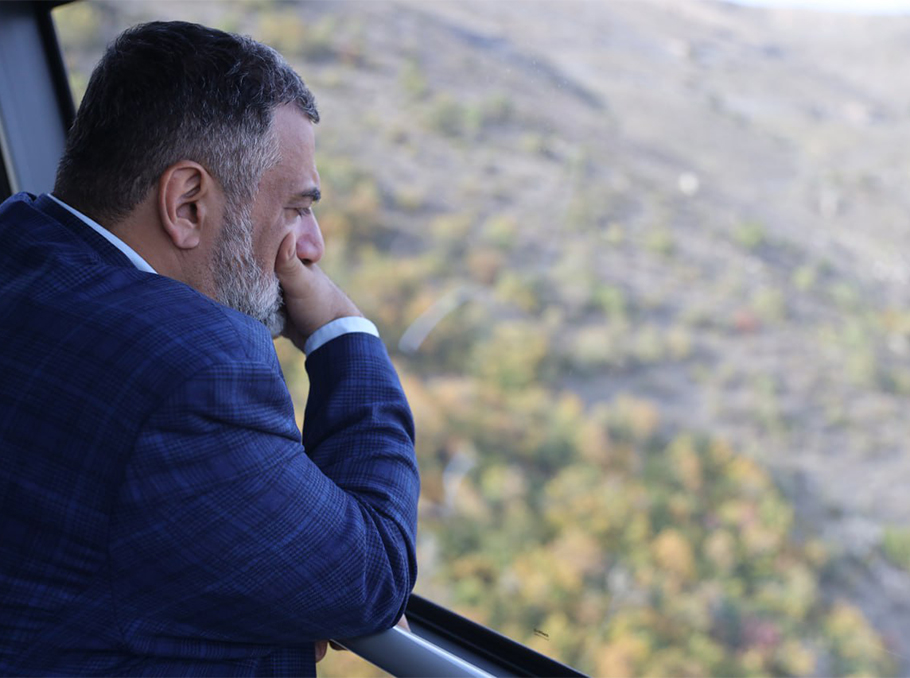 Ruben Vardanyan
As I have said, not everything we planned was realized, and some plans will have to be curtailed. But, I hope that what has already been accomplished will continue to develop successfully.
Presumably the situation in Dilijan is similar?
Yes. As you know, for many years, we have been implementing a comprehensive development program for Dilijan, for which a dedicated foundation was established. When we planned to build an international school in Dilijan, we did not want it to become an oasis of prosperity in a desert. That is why the school was conceived as part of a broader plan for the development of the city and its infrastructure. Clearly, such a large-scale task was beyond our capacity alone, so we chose a public-private partnership model, which we continue to regard as effective.
The concept of developing Dilijan as a modern cultural, educational, and recreational cluster — a best-in-class place to live that would attract people, including from abroad — was part of our broader vision for Armenia’s development. Incidentally, I am pleased that many of the ideas, standards, and working principles initially introduced by our IDeA Foundation in the course of implementing our projects have since been adopted and widely used by many other organizations in Armenia. Some elements of our urban development concept were also incorporated into the plans of other investors who later entered Dilijan. At the same time, few people know who built the cableway in Tatev or the school in Dilijan. We never sought to have our names, or Ruben’s, engraved on commemorative plaques. Only recently, at the insistence of friends, have we begun to speak more openly about Ruben’s personal contribution, hoping this may help accelerate his release.
In Dilijan, we focused our efforts on developing the riverfront, aiming to create a pedestrian and recreational area in line with the best international standards. Incidentally, this concept corresponds to the city’s original master plan, which we found in the archives. Local residents still remember the large central park. Fifteen years ago, it was divided into parcels, and construction was planned on some of them. We wanted to preserve the park for the local community and spent around USD 1 million to buy out these plots or secure them under long-term leases. I want to emphasize once again: we did not receive a single piece of land free of charge. Ownership rights or long-term leases for each plot were acquired at market prices. In addition, our friends and partners purchased plots around the lake and transferred them to us for the development of social projects.
We engaged consultants, urban planners, architects, and the residents themselves to develop a concept for these areas that would meet the needs of the community and the most advanced standards of urban development, so that Dilijan residents and visitors alike would have spaces for high-quality recreation and diverse leisure activities. Whereas 15 years ago, the park was an unsafe place frequented by local troublemakers, today, families stroll there, children play, and people of all ages actively engage in sports. This autumn, Dilijan hosted the international Dilijan Run for the first time, bringing together experienced marathon runners, alongside many children and local schoolteachers. In other words, changes in infrastructure led to changes in mentality.
Over the past 10 years alone, together with our partners, we have invested more than USD 4 million in the improvement and infrastructure of Dilijan’s central park. The total volume of investments, our own and those of our partners, since 2012 to the present amounts to approximately USD 236 million, covering the school and a wide range of cultural, social, and infrastructure projects aimed at developing Dilijan and its local community.
Unfortunately, the current mayor of Dilijan, instead of facilitating the development of social initiatives, has chosen to challenge our long-term lease and development rights in court, thereby obstructing the fulfillment of our obligations. This obviously creates difficulties for us, but even worse, it sends a very negative signal to both private investors and social entrepreneurs, as it forms an unfavorable investment and social environment, in which, instead of a law that protects rights and objective criteria, personal relationships with the mayor’s office and the private interests of some officials prevail. I hope that the rule of law truly exists in Armenia, and that the court, guided by the interests of the Dilijan community as well, will render fair decisions on all claims. Nevertheless, such pressure has become one of the factors why we are forced to curtail some of our projects in Dilijan. Given what our family is currently going through, we simply cannot afford to spend time and energy on confrontation.
I heard that you were planning to build an extraordinary children’s playground in the park.
Yes, it was meant to embody children’s dreams. We asked local children to draw what they would like to see. The playground was also designed as an inclusive play space, meaning it would be safe and accessible for everyone, including children with disabilities.
You are speaking about this in the past tense. Have your plans changed?
No, we still intend to build it. This is one of the park’s most important facilities, and the project is included in a government program for the development of tourist clusters financed by the World Bank. Under this program, more than USD 7 million is planned for investment in the park’s public infrastructure and surrounding areas, as well as river cleanup. All that remains is to agree on the playground construction project with the city administration, which has so far refused approval — although, in our view, there are no grounds for this. Once permission is granted, we are ready to begin work, and I sincerely hope that Dilijan’s residents will ultimately have the best children’s playground.
However, as I mentioned, both in Tatev and in Dilijan, Ruben and I will have to scale back some plans for objective reasons. In both places, a significant portion of the projects are philanthropic investments that will never be financially recouped, and we fully understood this from the outset, as they were conceived in the interests of local residents. It is evident that the state has its own plans for the development of these territories, and I hope they will be realized with dignity: not as large-scale commercial developments, but as modern, comfortable public spaces. We would very much like to avoid Dilijan sharing the sad fate of Tsaghkadzor, where chaotic commercial development has left virtually no public spaces.
Fortunately, awareness is growing within the business community of one’s responsibility for the place where one lives and does business, and we would be glad to pass on the development initiatives we started into caring hands. As for us, we will focus our efforts on educational projects.
A new church is being built in Dilijan. Can we hope this project will not meet the same fate as the central park?
The residents of Dilijan have a strong desire to have their own church, where they can marry, baptize their children, celebrate church holidays, and perform all other rites that accompany spiritual and everyday life. We will therefore do everything possible to ensure that this church is completed. It is more than a place of worship, and it is not only for the Dilijan community. Personally, as someone who was baptized into the Armenian Apostolic Church, it is also a symbol of faith that Ruben will soon return safely. He had long dreamed of this church.
More broadly, projects related to the revival and preservation of spiritual and cultural heritage, not only Armenian and Christian, occupy a special place among our initiatives. We have helped, and continue to help, restore ancient temples and spiritual centers, including the Tatev Monastery; the Surb Gevorg Cathedral in Tbilisi; the Armenian Church in Singapore; the Surb Tadevos (St. Thomas) Monastery in Iran; the library of the Armenian Mekhitarist Order on the island of San Lazzaro degli Armeni in Venice; and the Surb Astvatsatsin (Holy Mother of God) Church in the village of Mushkapat in Artsakh. There, in Shushi, the historic Govhar Agha Juma Mosque was also restored. Today, it often appears in reports on Azerbaijani television when various delegations visit. Ruben also contributed to the restoration of the Russian St. Panteleimon Monastery on Mount Athos and the cell of St. Demetrius of Thessaloniki. With funds from benefactors, including our family, a church complex of the Armenian Apostolic Church was built in Moscow.
So, God willing, Dilijan’s church, the first built there in 85 years, will certainly be completed. It is already 60% finished. Funds are being raised collectively. I was deeply touched by the story of a young boy: during a sporting event in Dilijan, spectators were invited to make any affordable donation, and he gave 60 drams — all of his pocket money.
It seems we can end our conversation on this bright and hopeful note. We discussed, among other things, some difficult topics, but stories of the selflessness of ordinary people, for whom you create these projects, give hope that your and Ruben’s legacy will endure.
I sincerely hope so, too. Ruben loves a saying by Amedeo Modigliani: “Life consists in giving. From the few to the many. From those who know and have, to those who do not know and do not have.” We both deeply believe that this is what life is worth living for. In the end, only what we have done remains after us, and each person decides what kind of memory they will leave behind.
Ara Tadevosyan talked to Veronika Zonabend