





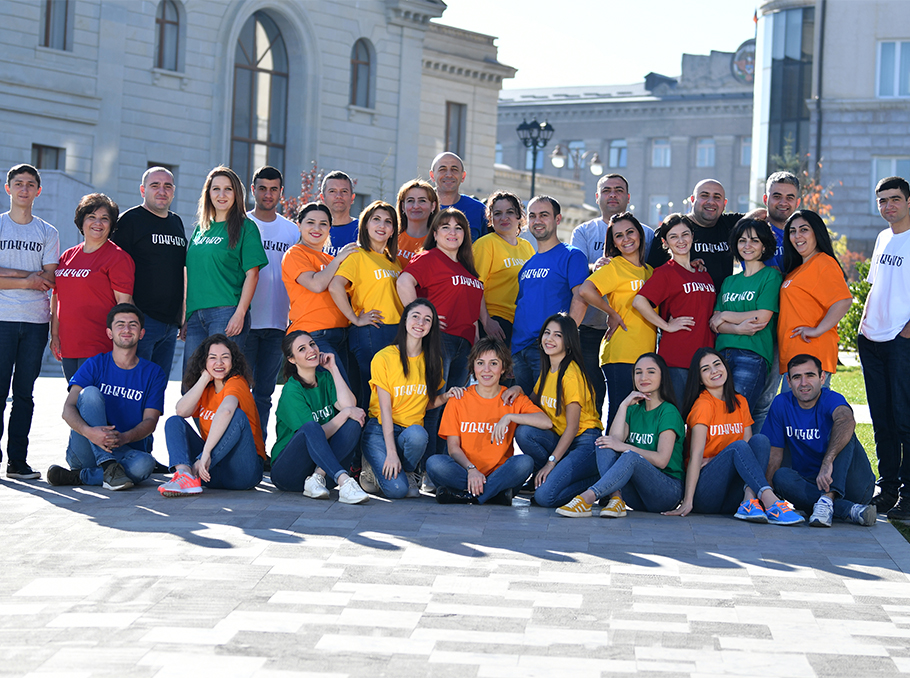

The Artsakh “Mrakats” State Chamber Choir has been an integral part of Artsakh’s cultural life for over two decades, from the difficult post-war years of the 1990s to performing on the prestigious stages in Europe and Russia. Today, the choir is silent.
In the aftermath of the depopulation of Armenians from Artsakh, “Mrakats” lost its funding and the opportunity to continue its activities.
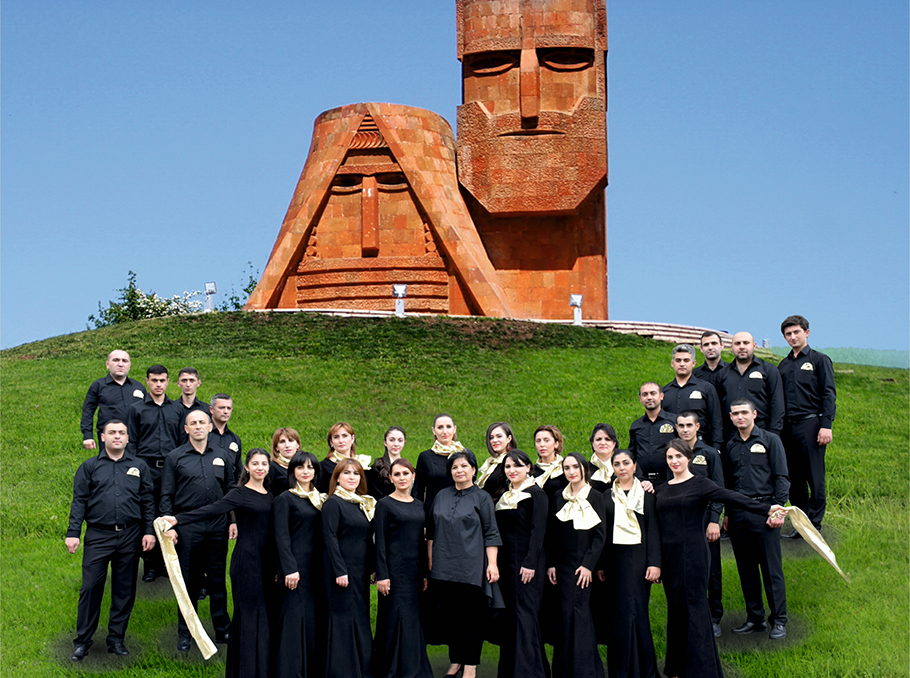 “Mrakats” State Chamber Choir
 Photo: Mrakats
Marine Mesropyan, Honored Artist of the Republic of Artsakh, the founder, artistic director and chief conductor of the choir, lost not only her homeland and the work of her life, but also endured a personal tragedy.
Her son, Dr. Narek Mesropyan, who saved dozens of lives on the battlefield, was killed during the war in October 2020.
Mediamax spoke with Marine Mesropyan about music and war, loss and hope, hope that is fragile, yet possible if we can to rethink our own lives and values.
“I founded a choir for the first time after the war”
I graduated from the Yerevan State Conservatory in 1988 with a degree in conducting and returned to Stepanakert where I began teaching at a music college. However, the war broke out soon, followed by the hardships of the 90s.
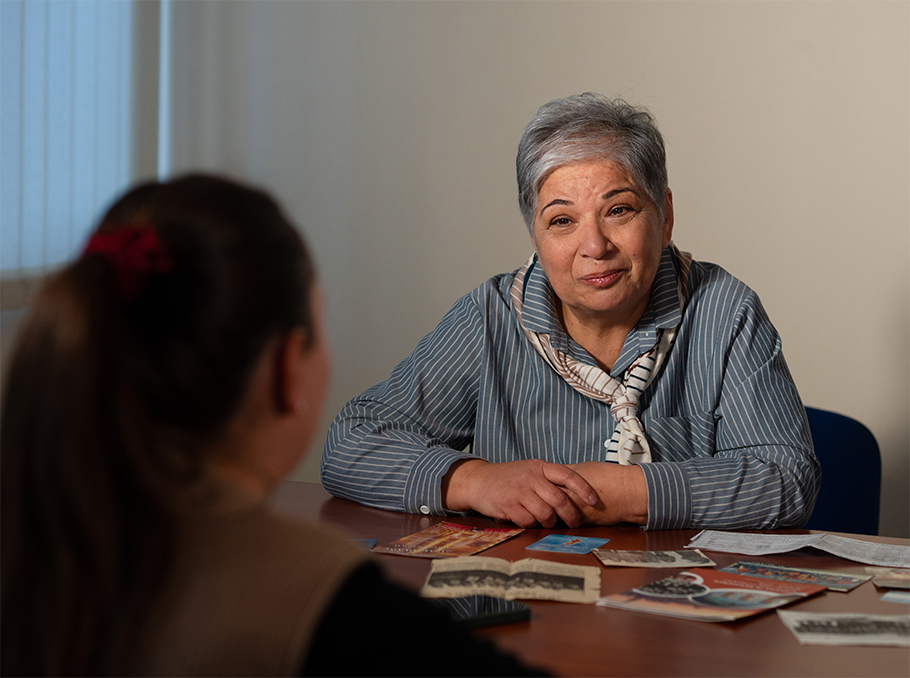 Marine Mesropyan
Photo: Mediamax
In 1993, immediately after the end of the war, I was invited to work at the Stepanakert Art House. It was later transformed into the Children and Youth Creative Center, whose leadership sought to create a children’s choir. Thus, I founded my first choir during the post-war years.
It was a very difficult period: the country was just beginning to recover, and few people understood choral art and its significance.
I must say that the leadership of the Art House at that time played an important and positive role, taking on all technical and organizational issues. It is invaluable to be given the opportunity to forget everyday problems and to focus entirely on creative work.
As the years went by, the choir began to find its footing, grew and evolved, improving with each passing day.
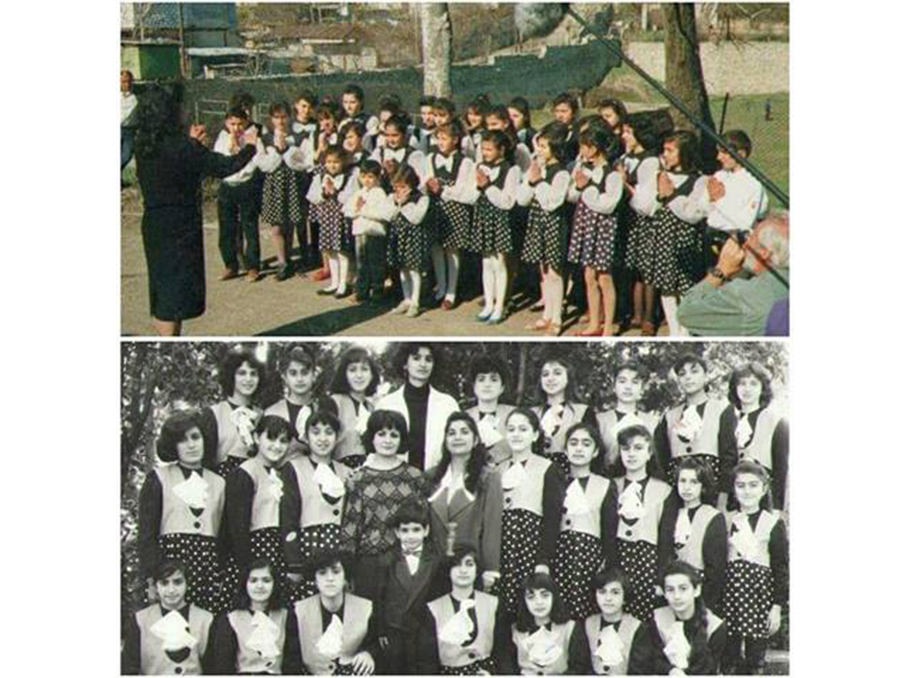
Photo: Mrakats
Over time, the geography of our performances expanded. In addition to Stepanakert, we began taking part in various competitions and concerts across Armenia, realizing that our efforts and work were not in vain. The choir reached such a remarkable level that one day we sent a video recording of our performance to the “Morning Star” show with Yuri Nikolaev on Russian State TV, which was very popular at the time. As a result, the choir received an invitation to perform in Moscow. Unfortunately, we were unable to attend as traveling was extremely difficult during those years, but the invitation itself was already a great recognition of our achievements.
“Mrakats”: coming together in every sense
In 2000, “Mrakats” was created on the basis of the children’s choir. Together with the director of the Art House, we appealed to the Artsakh government, explaining that the choir could no longer remain a children’s ensemble, since the performers had grown up. It was necessary to either disband it or change the format. At that time, the Prime Minister of Artsakh was Anushavan Danilyan, a man who understood and valued choral art, so he supported the initiative. This is how the “Mrakats” State Chamber Choir was born.
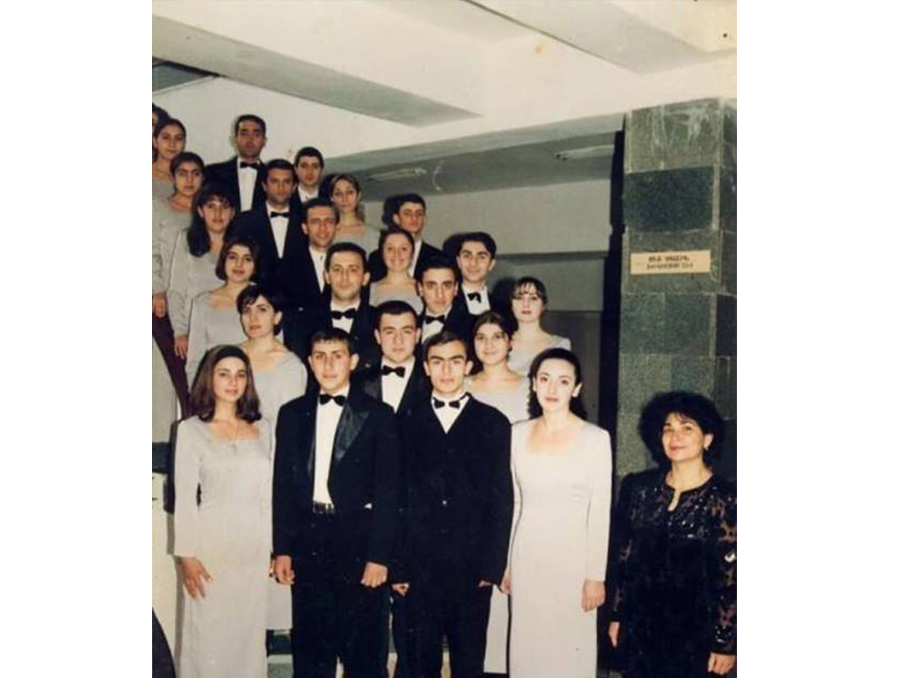
Photo: Mrakats
I was pondering the name of the choir for a long time, as I wanted it to have a direct connection to Artsakh. I consulted historians, studied various sources, and eventually settled on “Mrakats”, a mountain known and beloved throughout Artsakh.
I should say that during that time the children’s choir continued to operate. A new generation of children emerged, from which the adult choir “Mrakats” gradually formed over the years. Thus, an interesting generational shift took place. For example, Margarita, the mother of one of the current soloists of “Mrakats” - Karine, was one of my very first students.
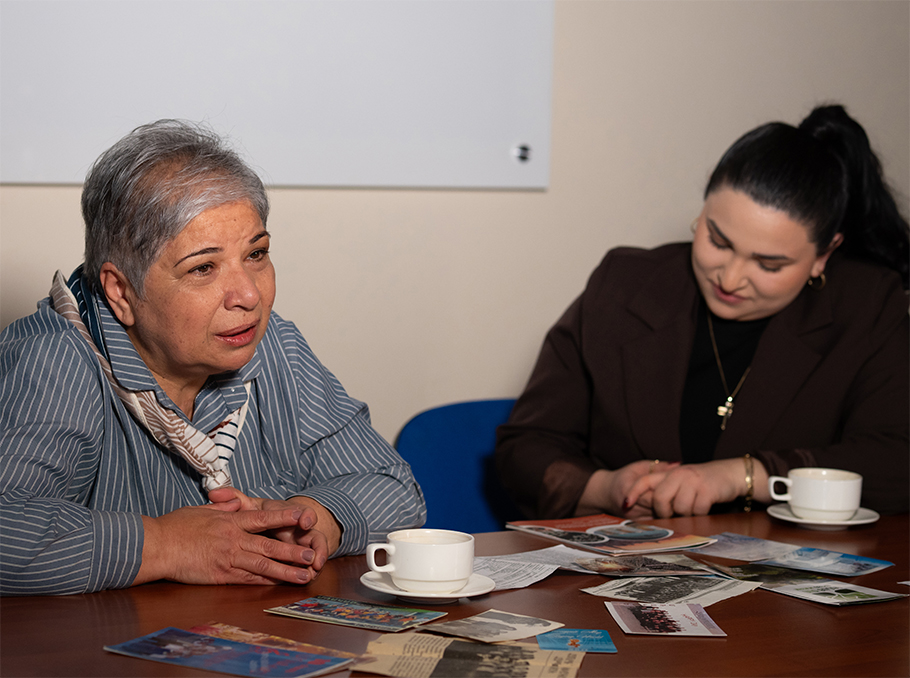 Marine Mesropyan and “Mrakats” soloist Karine Aghajanyan
Photo: Mediamax
With “Mrakats” it was important for me to not only bring together people with strong vocal talent, but also to create a real, warm family. I think having a good choir requires people to come together in every way. For over two decades, we have truly become a family. We try to share both our problems and joys with each other.
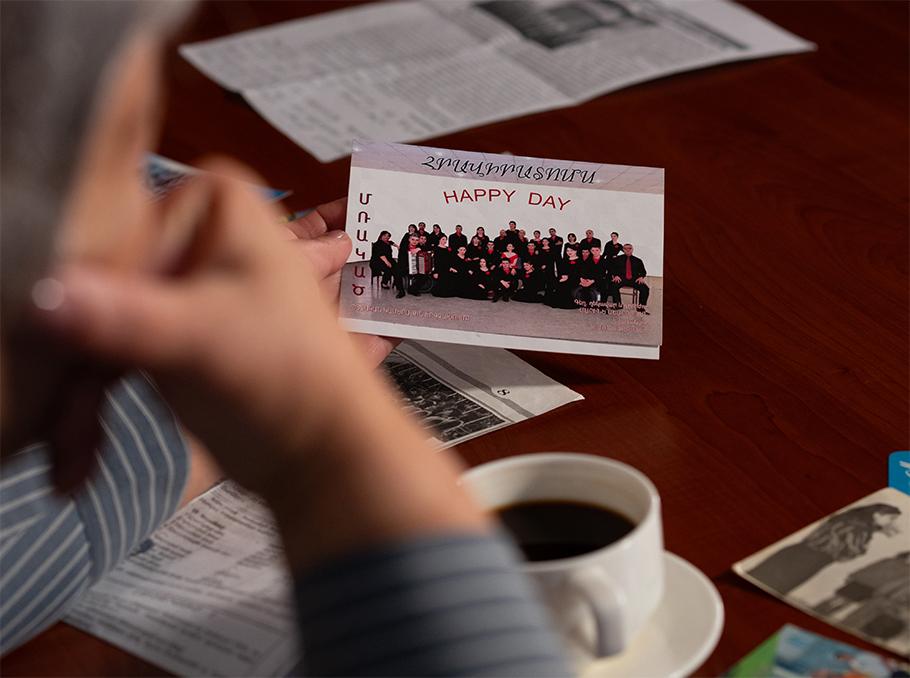
Photo: Mediamax
You know, I have always drawn parallels between my personal and the “choir” family. Both were very happy, both collapsed after the 2020 war.
“Our main goal was the development of choral art”
Our main goal has always been the development of choral art. In our society, parents often enroll their children in dance classes or at least solo singing classes because they want to showcase individual talents. Choirs, however, work differently. The choir unites everyone’s voice and creates a unified, cohesive sound, and that is what makes it so captivating.
During the concerts, “Mrakats” performed both classical choral works and more familiar, “lighter” pieces. However, I always insisted that alongside the “lighter” pieces the audience should also hear Komitas.
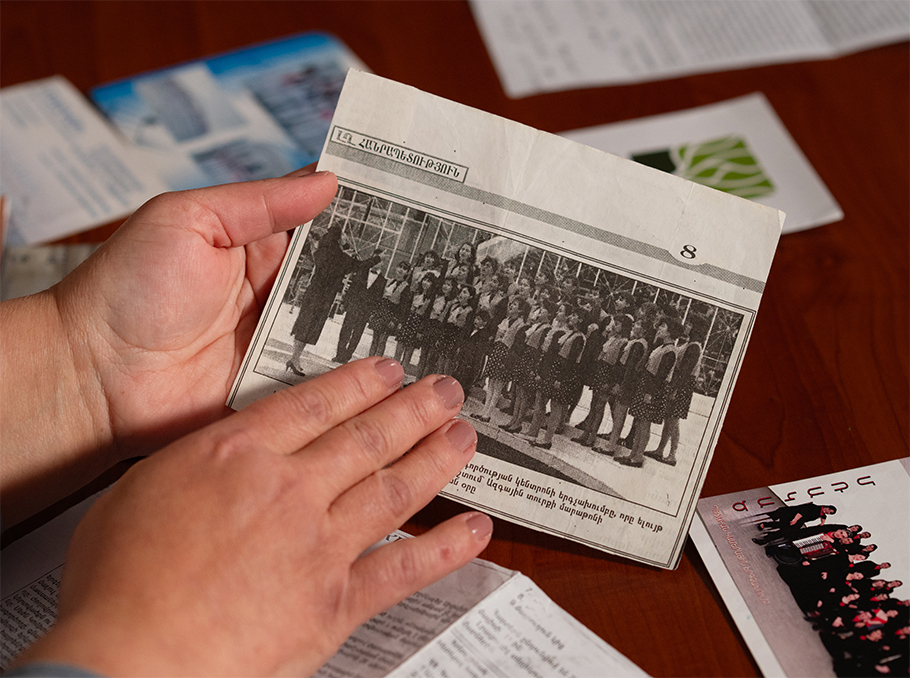
Photo: Mediamax
We have been very active for two decades. I often say that the consecration of almost every church in Artsakh was accompanied by our choir’s performances. We toured all regions of Artsakh, as well as Armenia.
This was challenging both financially and organizationally, but gaining recognition from the Armenian professional community was extremely important to me, and it was always outstanding.
“The giant China and we, Artsakh, competed for the main prize”
It was this recognition that inspired us to take the next step and participate in international competitions.
Our first “international” performance was in St. Petersburg in 2011. It was a significant milestone because choral art there is at the highest level. There were even some concerns as it was our first international performance in such a city. But at that time, the Minister of Culture of Artsakh, Narine Aghabalyan, encouraged us. “You don’t have to win, just go, participate, listen to others,” she said.
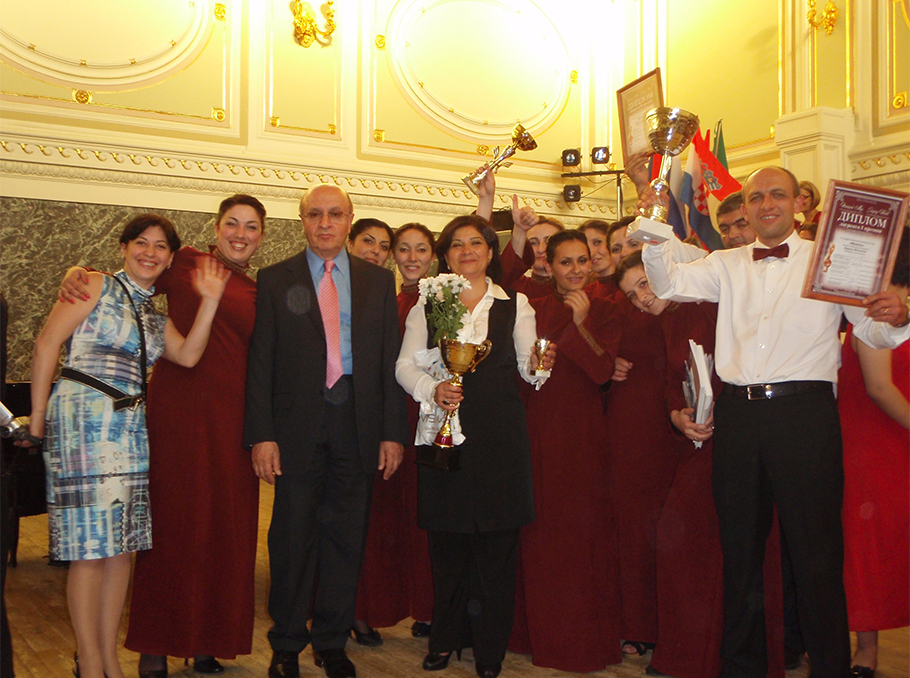
Photo: Mrakats
The competition program was very strong. As a result, we won the Audience Award and took first place among 26 chamber choirs from different parts of the world. I recall that the competition coordinator, conductor Sergey Ekimov, announced from the stage that this was the first time 90 percent of the audience had voted for a single choir. I stood there thinking: they are going to name China because their performance was truly powerful. But it turned out that the audience had chosen us (smiles - ed.).
As a result, “Mrakats” and the Chinese choir advanced to the Grand Prix. In other words, giant China and we, Artsakh, competed for the main prize. To better illustrate the difference, the Chinese choir arrived in St. Petersburg on three planes: one for the performers, one for the camera crew and equipment, and a third for the costumes. We, on the other hand, had to reduce the choir’s lineup from 30 to 22 singers in order to cut travel costs.
We prepared a piece by Komitas for the Grand Prix, while China performed an arrangement of Aram Khachaturian’s “Sword Dance”. I remember saying afterward: “It doesn’t matter who wins, what matters is that both sides played Armenian music.” In the end, China received 4 votes from the jury, and we received 3.
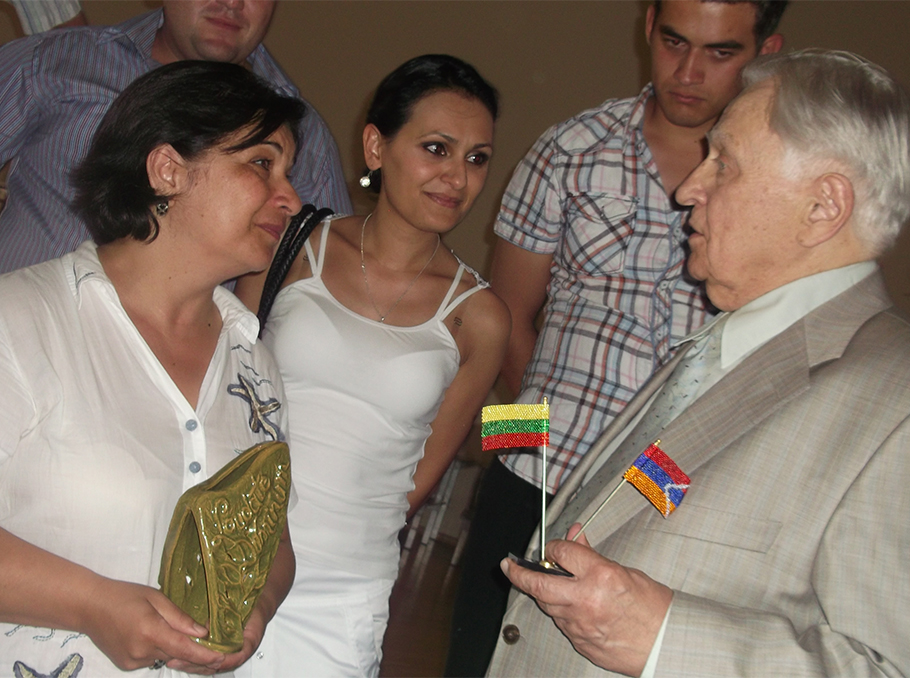
Photo: Mrakats
Our next stop was Vilnius, where choral art is also held in very high regard. In Vilnius, we won first place in the mandatory competition program and third place in overall. There is one moment from that trip I will never forget. At the end of the competition, all the participating choirs were supposed to perform together, and the organizers asked me to conduct the concert. Even now, as I recall the story, I still feel a shiver from the sense of responsibility I experienced at that moment. I wondered whether the other choirs would understand my approach, because mine understood everything simply by looking into my eyes. As a result, it was a great success.
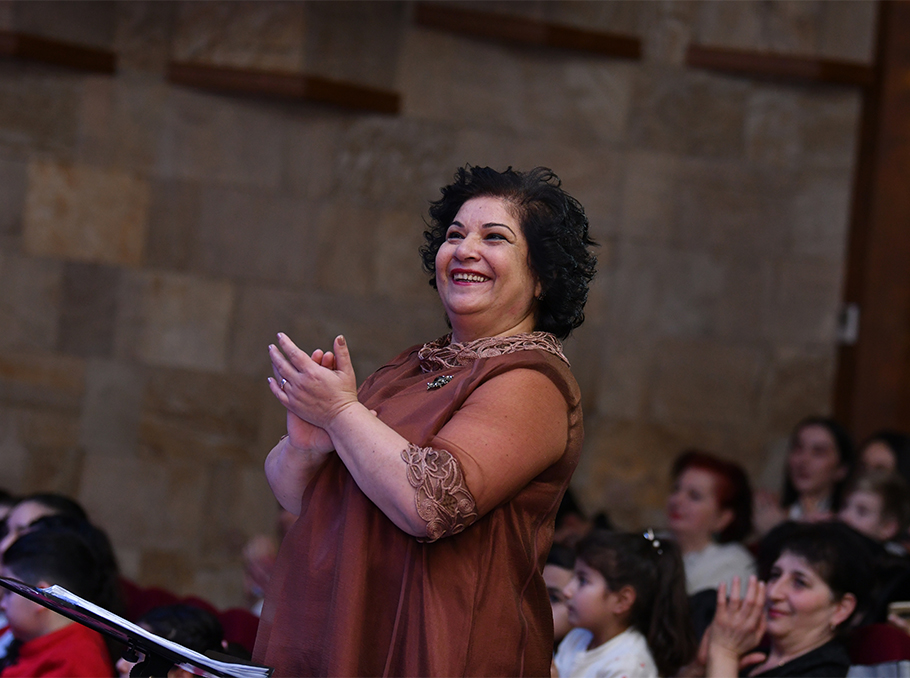
Our last international performance took place in Vienna in 2019, where we performed Mozart’s “Requiem” with the Vienna Orchestra and several other choirs.
 Marine Mesropyan
Photo: Mrakats
On all these trips, we were treated as an Armenian choir. I remember that in Petersburg I asked the organizers to at least mention our city and they introduced us as “Armenia, Stepanakert”.
The year 2020 was a jubilee year for “Mrakats” and, unfortunately, its last happy one.
“The war is over, we won”
My son Narek had been singing in my choir since he was five. As a child, he followed me to all three of my workplaces and grew up surrounded by art. He played the piano beautifully, and specialists predicted a musical future for him, advising him to enroll in the Conservatory. But he chose his own path and became a doctor as he had dreamed since childhood.
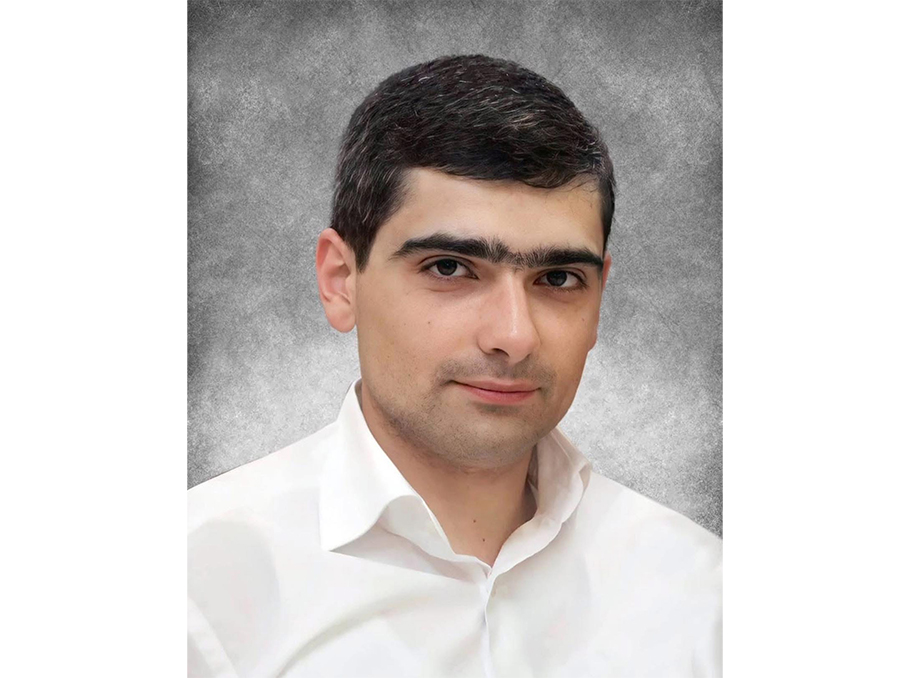 Narek Mesropyan
Photo: from personal archive
During the April 2016 war, Narek was in Talish, and I didn’t even know he was on the front line. His father, who served in the military, used to call Narek and say: “Try to stay out of the media, your mother doesn’t know where you are, don’t make her worry.” And by that time everyone in Stepanakert was already talking about him.
One day, the director of the Art House returned from an event organized at the President’s Palace and said to me: “Mara, why didn’t you say that Narek is a hero?” “Who, my Narek? But he doesn’t take part in military operations,” I replied. He went on saying: “Everyone there is talking about your son.”
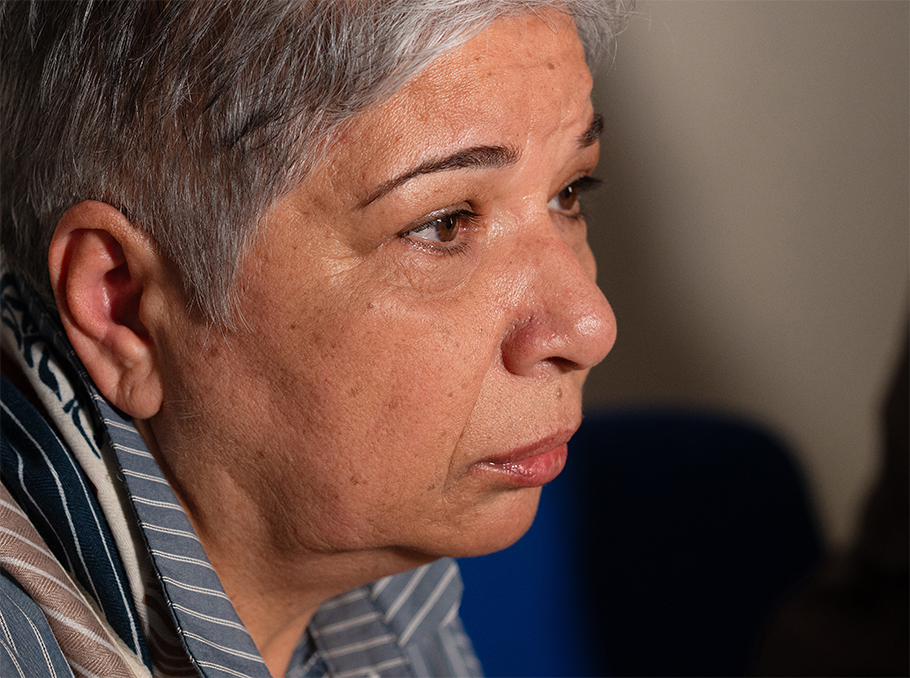
Photo: Mediamax
Narek returned a month later. I remember how hard I cried when I noticed a gray strand of hair on his head. Later, Narek’s commander, the famous Karen Jalavyan, told me how he carried the wounded off the battlefield under Grad rocket fire. They tried to persuade him to wait a little until the shelling eased, but he would say: “I can’t wait, if I don’t go now, the wounded will lose their legs.” There were dozens of such cases. He evacuated the wounded and the dead from the most dangerous areas, cared for less experienced soldiers, even delivered ammunition to the most remote and exposed positions when he went out to retrieve the wounded. In 2016, he survived and was awarded the “Medal for Courage”.
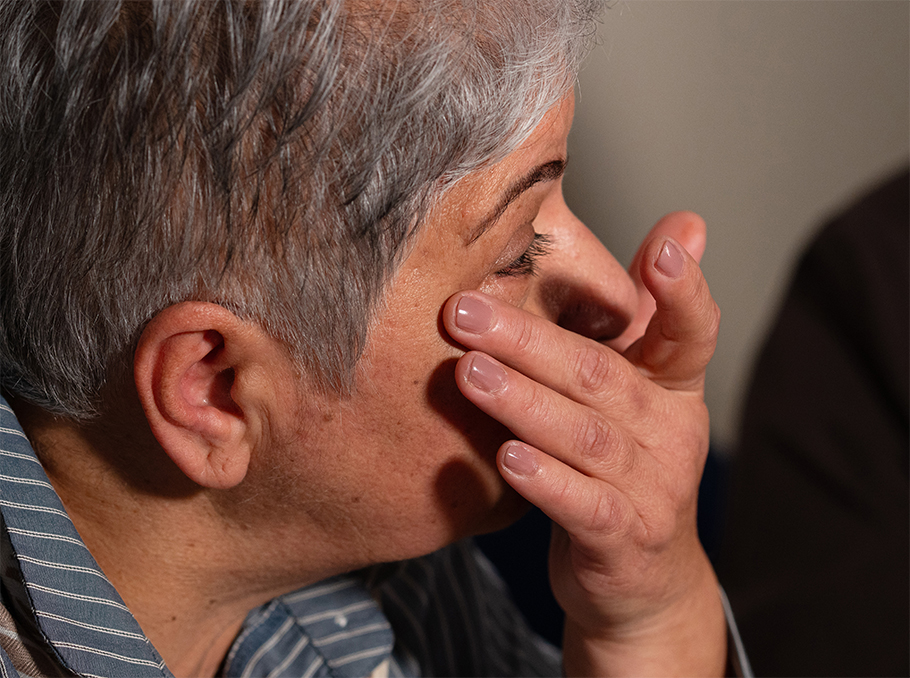
Photo: Mediamax
In 2020, Narek was one of the first to go to the front, saying that there was always a great need for military doctors. On October 11, during the transportation of the wounded soldiers in the Aghdam region, the ambulance he was in was hit. Narek sustained severe injuries and was airlifted to Yerevan by a helicopter. He underwent surgery there, even regained consciousness and began to talk. The first thing he asked when he regained consciousness was: “Is the war over, where is dad?” They told him: “We won.” I was the only one who did not go into his hospital room. I knew I could not bear to see him in that condition, he thought the same way and asked me not to come in. I thought he would recover soon and I would see my son, my Narek again. He died in the hospital on October 19. Narek saved many lives, but they could not save his.
Parents have only memories left
Today, many young men who visit Yerablur come up to me and say: “We are alive thanks to your son.”
It is deeply touching, but my family is devastated. When I say this, I do not want to hurt my husband or daughters, but the happiness we once felt was destroyed. We live on autopilot: we wake up and carry out daily routines for the sake of other children.
Our society definitely needs to reevaluate things and reflect on why Narek and the others lost their lives. I am sure that his memory will continue to live on even after my death. Future generations of our orchestra will preserve it.
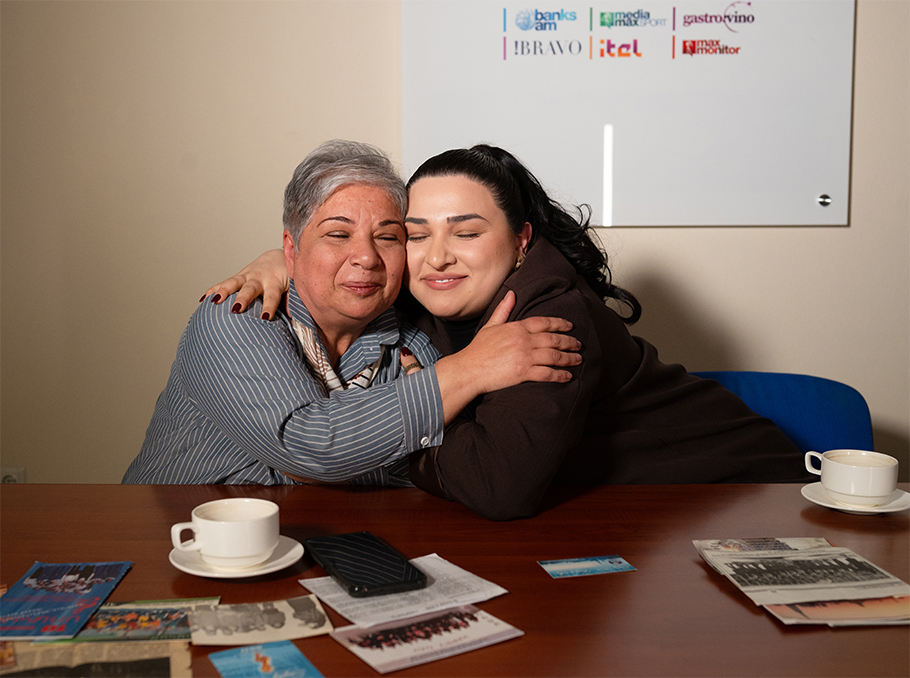
Photo: Mediamax
But my heart aches for those who were killed in the war. We live as if nothing has happened, yet for the parents who lost their children memory is all that remains.
After 26 years, Artsakh’s “Mrakats” choir is silent
After Narek’s death, I returned to Stepanakert in 2021. I could not imagine leaving home, pursuing music, and living my former life. At that point in my life, the choir helped me immensely. They literally dragged me out of the house and drove me to work. The generation that had grown up with Narek, those who had attended the choir with him since childhood, came to visit me almost every day.
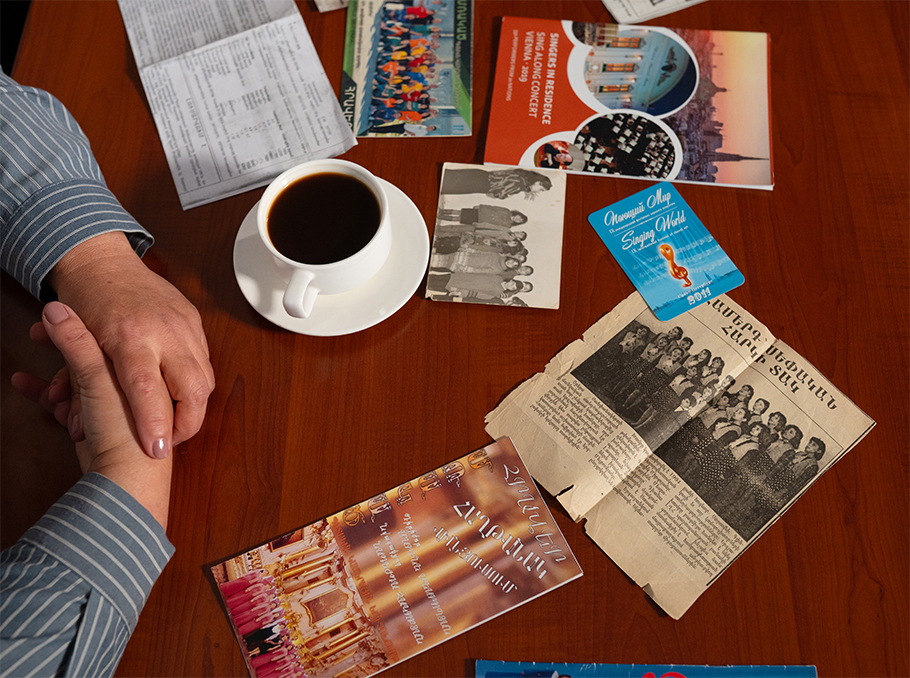
Photo: Mediamax
Then there was the blockade: there were no performances and no motivation. During that time, I heard Igor Matvienko’s song “Aprel” [“To live”] performed by Russian artists and decided that “Mrakats” had to sing it. This is how the video for “Aprel” was born in the blockaded Artsakh.
After the Armenian exodus from Artsakh, our choir was forced to cease its activities. We often hear from local and foreign experts that “Mrakats” has no right to remain silent, but we still cannot find a way to revive it.
The main obstacle is the lack of funding. I am convinced that if the same situation happened in Stepanakert, everyone would be willing to sing even without being paid. But here, without a home, people are forced to find ways to provide their families with at least the bare necessities. It is heartbreaking to see how our best voices are doing any work they can find to earn some money.
We have tried to find financial support, but so far without success. After 26 years of existence, the Artsakh “Mrakats” choir is still silent.
“They may not be famous conductors, but they must be the best people”
Preserving the choir is very important to me; in a sense it is my child, and for its sake I am ready to fight to the very end. Staying connected to the members of “Mrakats” means everything to me. I see that they, too, are trying to find solutions to overcome the current situation and bring the choir back to life.
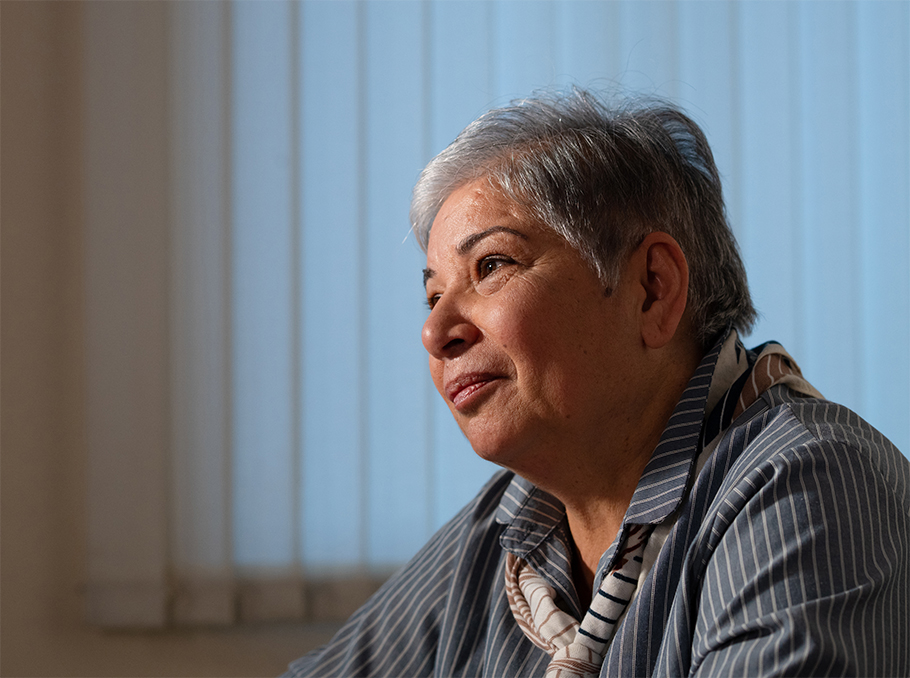
Photo: Mediamax
Like many others, I carry hope in my heart that one day we will return to Artsakh, but on one condition. If we return and live exactly as we did, everything will repeat itself. We need to reassess our values and learn to see life from a different perspective.
I don’t want everyone to suffer with me. Yes, life goes on, but it’s important to understand who and what we live for and to value it.
I have been teaching at the Arno Babajanyan Music College in Yerevan since September. I often talk to my students. I want them to be the best, not only as musicians but in life too. It’s not necessary that they become world-famous conductors; what matters more is that they become the best people they can be.
Yana Shakhramanyan
Photos by David Ghahramanyan