






Yerevan /Mediamax/. S&P Global Ratings revised its outlook on Armenia to positive from stable and affirmed 'BB-/B' long- and short-term foreign and local currency sovereign credit ratings.
“The revision of the outlook to positive reflects our view that there is the potential for improvement in regional geopolitical and security dynamics, specifically further progress toward normalizing diplomatic and trade relations between Armenia and Azerbaijan. We also view Armenia's growth prospects as favorable, while higher levels of the Central Bank of Armenia's international reserves and a flexible exchange rate should help mitigate possible unanticipated external shocks.
Progress in negotiations with Azerbaijan could reduce near-term security risks, although the prospect of a durable peace agreement still depends on signing a binding agreement and its effective implementation”, S&P Global Ratings said.
We present some fragments of S&P’s reports (sudheadings by Mediamax).
“The path remains complex and will take time”
“Peace negotiations between Armenia and Azerbaijan have progressed, reducing the probability of further military escalation in the near term, in our view.
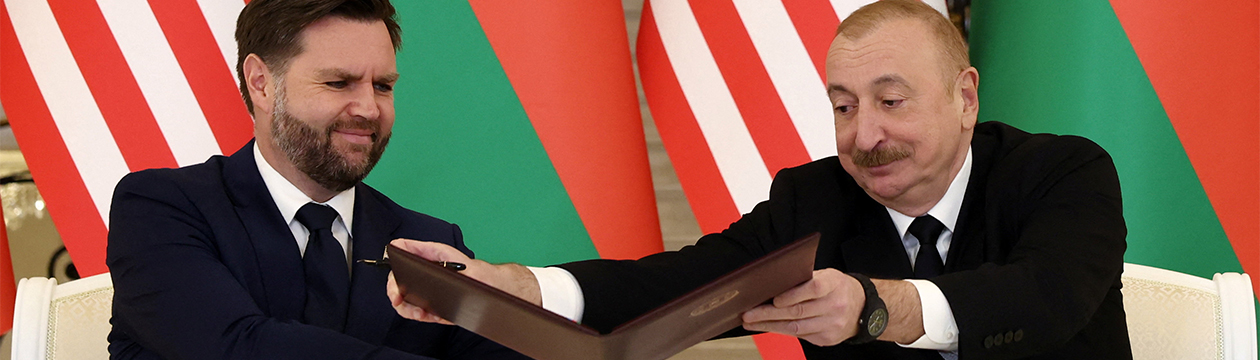
The August 2025 U.S.-brokered agreement marked an important political milestone, signaling commitment at the leadership level and helping to stabilize the security environment. Initial normalization steps have led to modest improvements in regional connectivity and trade, alongside an ongoing Armenia-Türkiye normalization process aimed at reopening borders and establishing diplomatic relations.
However, the path to signing and ratifying the peace agreement between Armenia and Azerbaijan remains complex and will take time, in our view. The durability of the agreement will depend on both sides' willingness to implement politically sensitive decisions, the credibility of enforcement, and security arrangements. Outstanding issues include the sequencing and enforcement of border delimitation and the absence of clearly defined security guarantees. It also remains unclear, in our view, to what extent Russia will remain supportive of an international diplomatic effort to normalize Armenia-Azerbaijan relations that so far has been made without its direct participation”.
“Domestic constraints may add a layer of uncertainty”
“Domestic political constraints in Armenia may also add a layer of uncertainty to peace agreement negotiations. The authorities are preparing a new constitution, with the draft expected by March and a referendum planned for after the June parliamentary elections. Yet it remains unclear whether the preamble will retain references to the 1990 Declaration of Independence, a key point disputed with Azerbaijan, given the latter views such references as implying territorial claims.
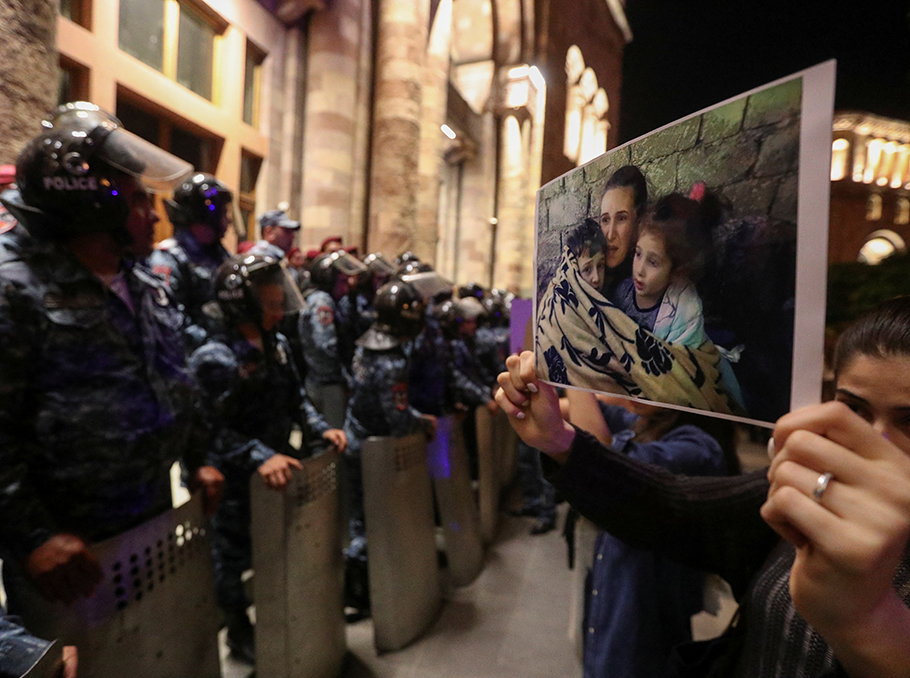
Meanwhile, already high domestic political polarization has been further amplified by tensions between the government and the Armenian Apostolic Church, which enjoys some public support. Since 2024, part of the senior clergy has become closely involved in opposition protests against the government's border and foreign policy decisions. The dispute escalated further in 2025, when authorities arrested several church-linked figures, accusing them of attempts to seize power. Against this background, upcoming constitutional changes and sensitive foreign policy negotiations could face headwinds, in our view”.
“Economic and financial exposure to Russia is still substantial”
“Relations between Armenia and Russia have deteriorated since 2023, marking a shift away from Armenia's longstanding reliance on Moscow as its primary security anchor. The relationship weakened sharply after Russia failed to intervene during Azerbaijan's 2023 military operation in Nagorno-Karabakh, prompting Yerevan to publicly question the value of Russian security guarantees and to freeze participation in Russia-led regional security structures.
Armenia has increasingly pursued a more diversified foreign and security policy, but its economic links with Russia remain high. Armenia has deepened engagement with Western partners, hosted EU monitoring missions, and signaled greater alignment with international legal frameworks, although economic and financial exposure to Russia is still substantial. Russia continues to account for over 36% of Armenia's total exports, a third of imports, half of financial inflows (including labor remittances), and 60% of the country's total energy needs. These links have actually increased in the aftermath of Russia's invasion of Ukraine, when Armenia emerged as one of the key destinations for Russian individuals and businesses trying to escape domestic political risks and the adverse effects of international sanctions.
We consider that Armenia's ability to balance political distancing from Russia with continued significant economic ties will be important for its medium-term economic prospects, given that Armenia remains exposed to potential adverse shifts in Russia's policies”.
“An important near-term test”
“Armenia's upcoming parliamentary elections scheduled for June represent an important near-term test for political stability and policy continuity. Recent opinion polls signal that Prime Minister Nikol Pashinyan and his Civil Contract party continue to lead the field, albeit with lower approval levels than in the aftermath of the 2021 snap elections. At the same time, the opposition remains highly fragmented, spanning former government-linked figures, nationalist groups, protest movements, and church-aligned actors, none of which has yet coalesced around a single leader with broad national appeal or clear electoral momentum.
Our base-line expectation is for broad political continuity after the June elections, with the new government continuing to focus on reaching a full peace agreement with Azerbaijan and not reversing related previous commitments for populist reasons”.