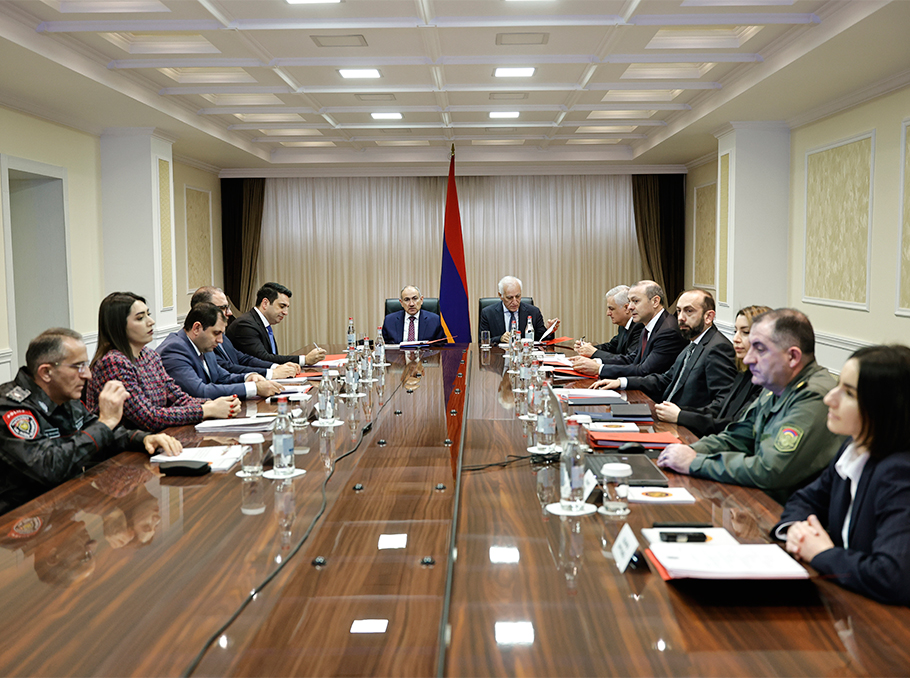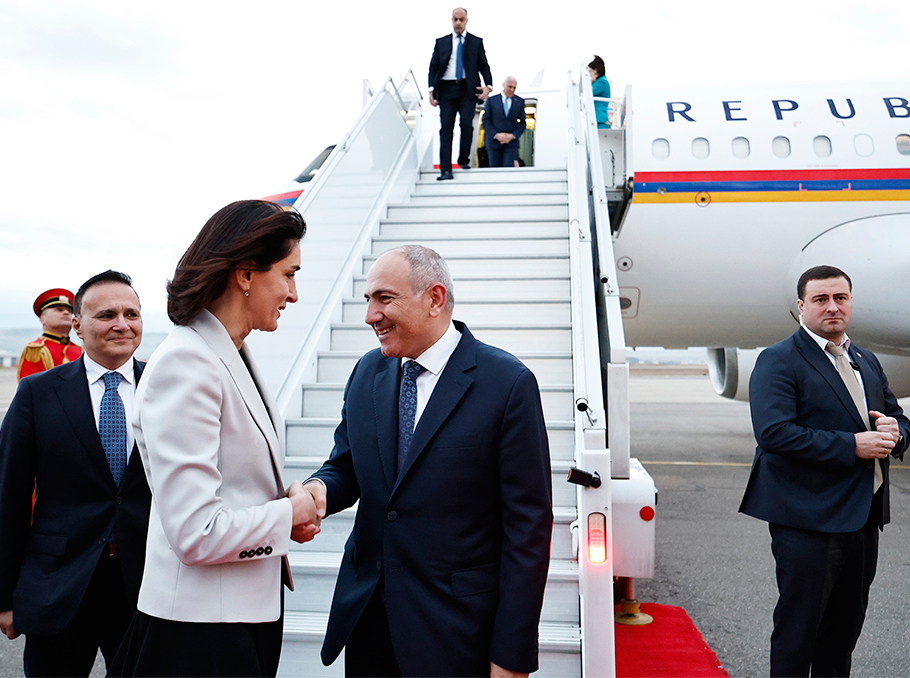








Striving to promote the widespread use of the Armenian language both in Armenia and among non-Armenian speakers living abroad, the Language Committee of the Ministry of Education, Science, Culture and Sports of the Republic of Armenia is implementing the Armenian for Non-Armenian Speakers: Teaching, Testing and Assessment of Armenian program. Thanks to this initiative, knowledge of the Armenian language will become assessable. The program was launched in June 2024 with the support of the Izmirlian Foundation.
Mediamax spoke with the specialists implementing the program about the ongoing work and the expected outcomes.
Study of International Experience and Development of a National Model
The Armenian for Non-Armenian Speakers: Teaching, Testing and Assessment of Armenian program aims to develop internationally accepted standards for teaching, testing, and assessing Eastern Armenian. Based on these standards, an Armenian-language testing and assessment system will be created and implemented to certify levels of language proficiency. The direct beneficiaries of the program are non-Armenian speakers who wish to learn Armenian, regardless of age, gender, ethnic origin, religious beliefs, or place of residence.
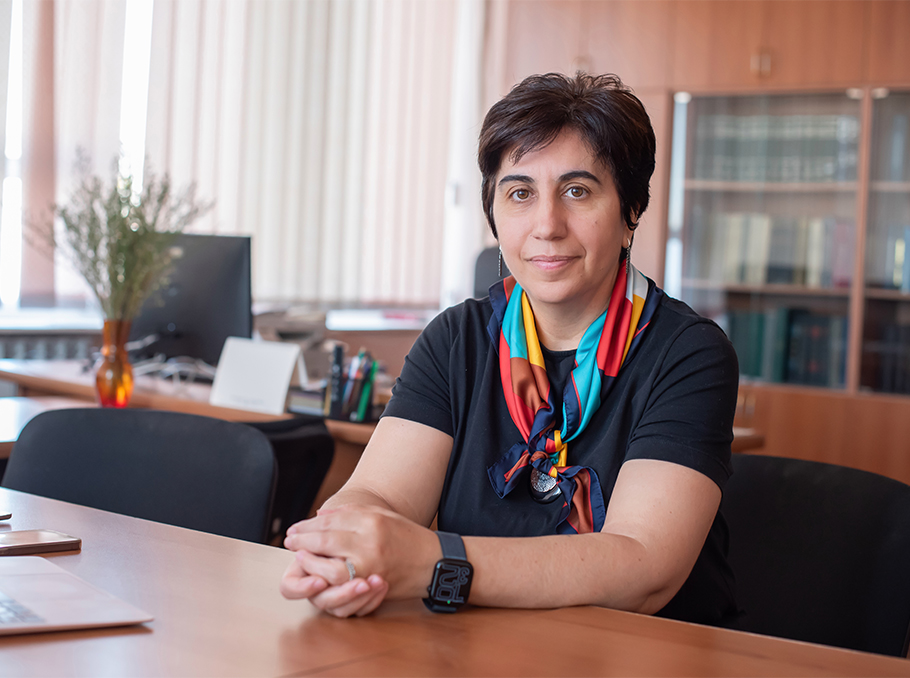 Siranush Dvoyan
Photo: Mediamax
According to Siranush Dvoyan, Chair of the RA Language Committee, unified standards for testing and assessing Armenian for non-Armenian speakers have already been developed based on the Common European Framework of Reference for Languages (CEFR), and work is ongoing to create and implement a unified system.
“There were many challenges during the process, because the standards and tasks being developed must assess not only linguistic knowledge but also communicative abilities. In Armenia, however, we have no prior experience in developing communicative skills in language teaching,” she notes.
Specialists with extensive experience in teaching Armenian were involved in the process, and the team studied the experience of several Eastern and European languages.
“Our approach was to rely on principles, standards, and methodologies that are already accepted and applied in many countries, and to adapt them to the specific features and requirements of our language, rather than simply copying them,” says David Gyurjinyan, head of the working group developing the standards.
After months of work, the document outlining the standards for all six levels of Armenian language proficiency is now complete. At every level, standards and learning outcomes are defined for the four language and communication skills – reading, listening, speaking, and writing – along with the necessary linguistic content.
Creating Descriptions and Tasks Based on Criteria
After developing the standards, the task development group began creating task descriptions and corresponding tasks. To support this work, the group received training from NILE (Norwich Institute for Language Education).
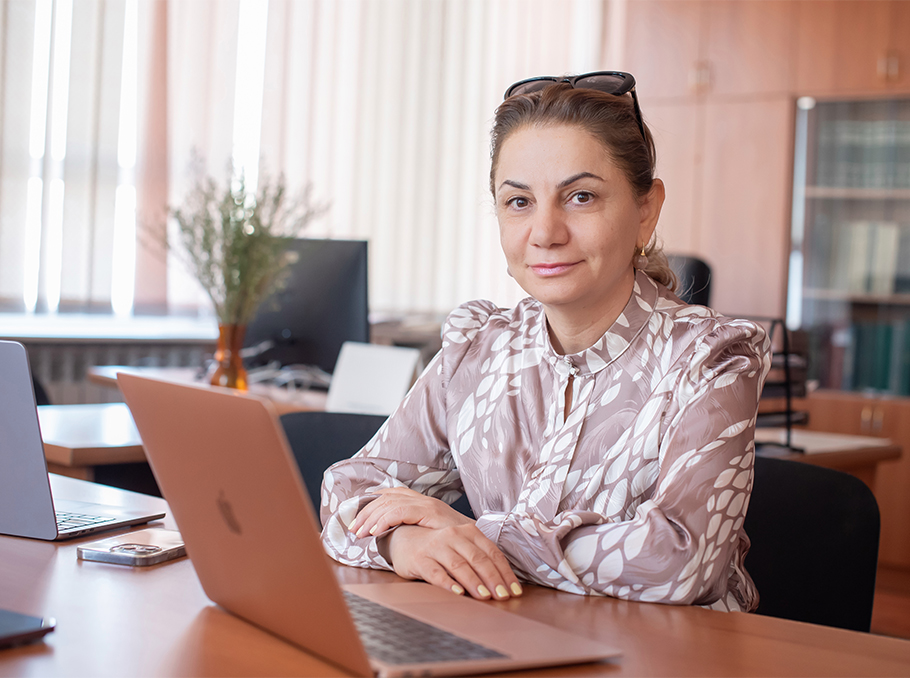 Anahit Hovhannisyan
Photo: Mediamax
Each task must meet clear criteria and follow a consistent logic. It is also crucial that the tasks respect all national or religious sentiments and avoid any form of discrimination.
“At the beginning of the work, we had created a task for level A in which the test taker had to navigate a certain symbol system. We included a traffic light and wrote a question to check knowledge of colors in Armenian. After reviewing the task, our foreign consultant made a very important observation: “What if the test taker is color-blind?” With this example, I want to highlight that there are many nuances that may not cross your mind when creating tasks,” education expert Anahit Hovhannisyan explains.
Social Culture and the Challenge of Spoken Armenian
All the content developed for the tasks must be authentic and reliable. Some questions directly relate to getting to know Armenia – its history, culture, and social norms.

Photo: Mediamax
Perhaps the greatest challenges in the process were related to developing standards and tasks for A1 and A2 levels, the beginner and elementary levels.
“The level of everyday language use is not reflected in our written, oral, or audiovisual media, which is why creating authentic texts for A1 and A2 levels was a major challenge. On the one hand, we cannot introduce jargon used by specific groups into this content; on the other hand, we need texts that use simple, everyday language. So the material must be developed in a way that is neither highly literary nor jargon-like, but natural and everyday,” notes Siranush Dvoyan.
Incorporating High Culture and Everyday Life
In the materials that are being developed, Armenia and the Armenian nation are presented on the one hand through their millennia-old history, culture, and traditions, and on the other hand as a modern state. Naturally, the richness of the literary Armenian language – especially evident in texts related to high culture – has not been overlooked.
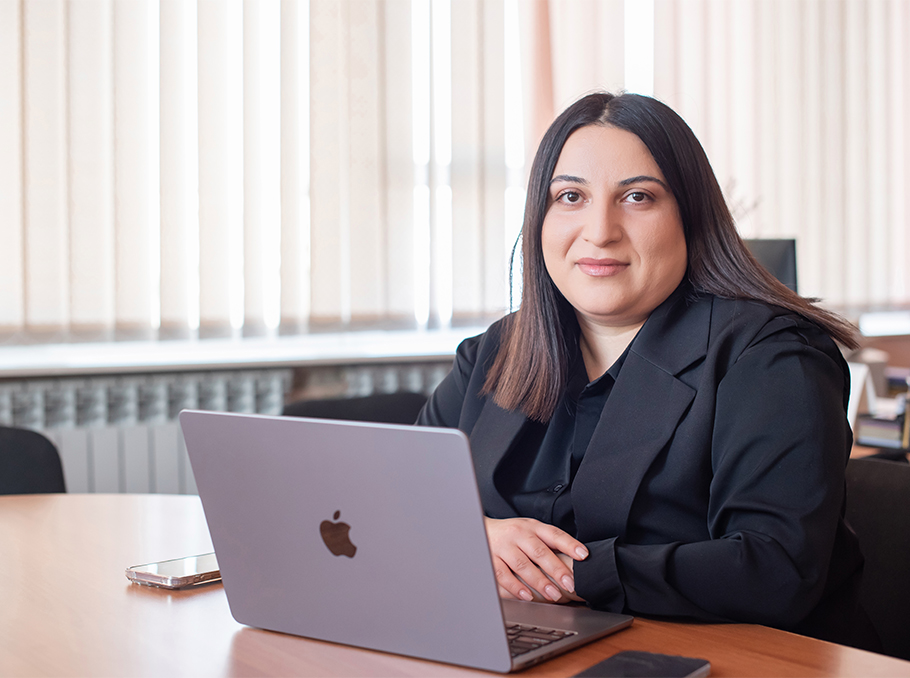 Gohar Harutyunyan
Photo: Mediamax
“We took into account that the materials should, on the one hand, make Armenia recognizable, and on the other hand, become a means of seeing the world through the Armenian language. When developing tasks for levels B1 and B2, we considered that the learners at this level will engage with various spheres of life, including visiting museums and using Armenian media. That’s why we strive to combine high culture with everyday life,” explains Armenian language and literature specialist Gohar Harutyunyan.
Experts also emphasize that learning Armenian and testing one’s knowledge should be engaging.
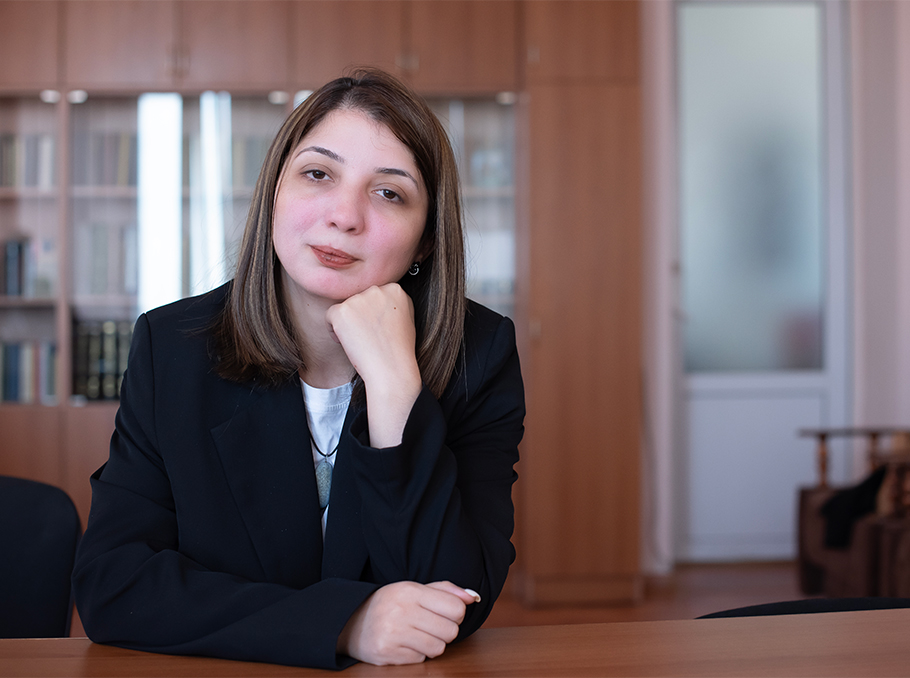 Ani Hovnanyan
Photo: Mediamax
“Anyone who has ever worked in pedagogy knows that both the learning process and the exam experience should spark interest and motivation. In our work, we have tried to respond to this challenge appropriately,” says Ani Hovnanyan, specialist in Armenian language and literature.
System Implementation and Legislative Amendments
Article 3 of the Law of the Republic of Armenia on Language stipulates that officials and citizens working in certain service sectors are required to have a command of literary Armenian. According to Siranush Dvoyan, this provision is quite general, which is why the introduction of the new system will be followed by a series of legislative amendments. These amendments are currently under discussion.
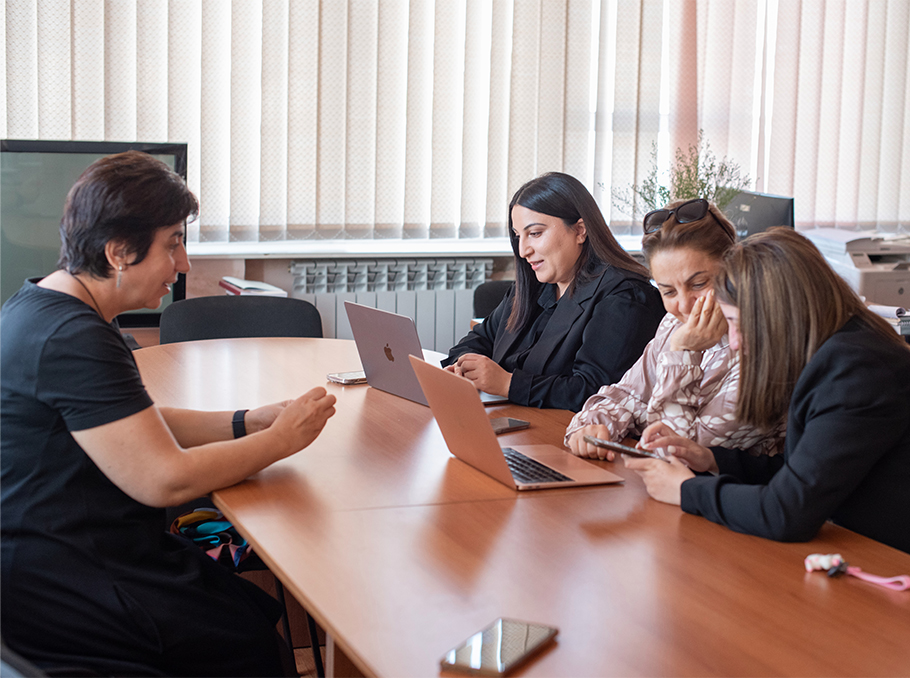
Photo: Mediamax
The Chair of the Language Committee noted that the work already carried out will be expanded, and as a next step, a unified Armenian language assessment system will be developed for native speakers.
Pilot programs are planned for next year to test and study the system, after which it will be refined. Full implementation of the system is scheduled for 2028.
Gaiane Yenokian
Photos by the author