






On February 24, 2026, a groundbreaking ceremony of the EU TUMO Convergence Center for Engineering and Applied Science took place in Yerevan.
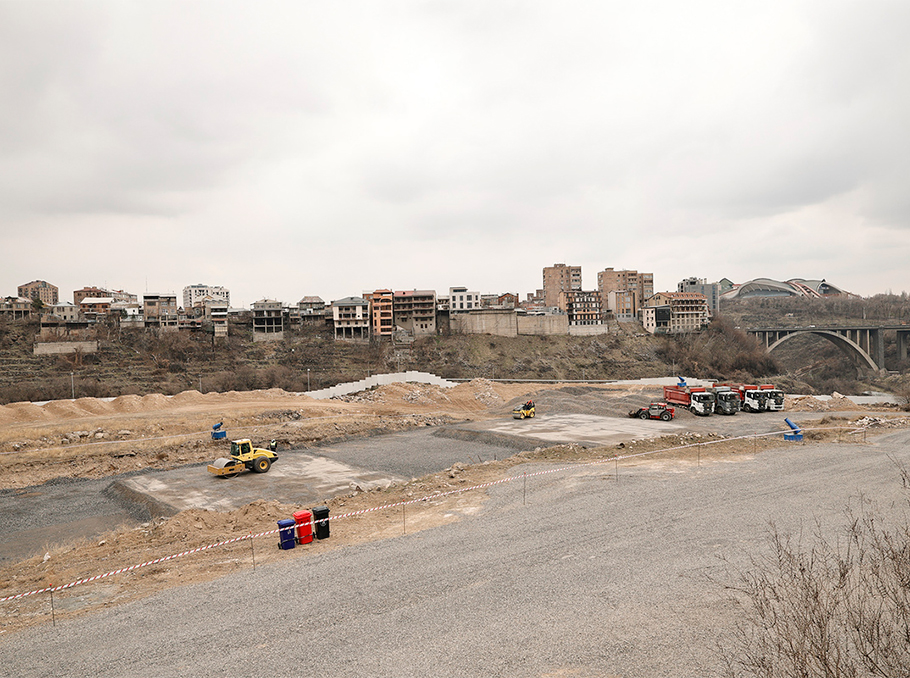
Photo: Armenian Government
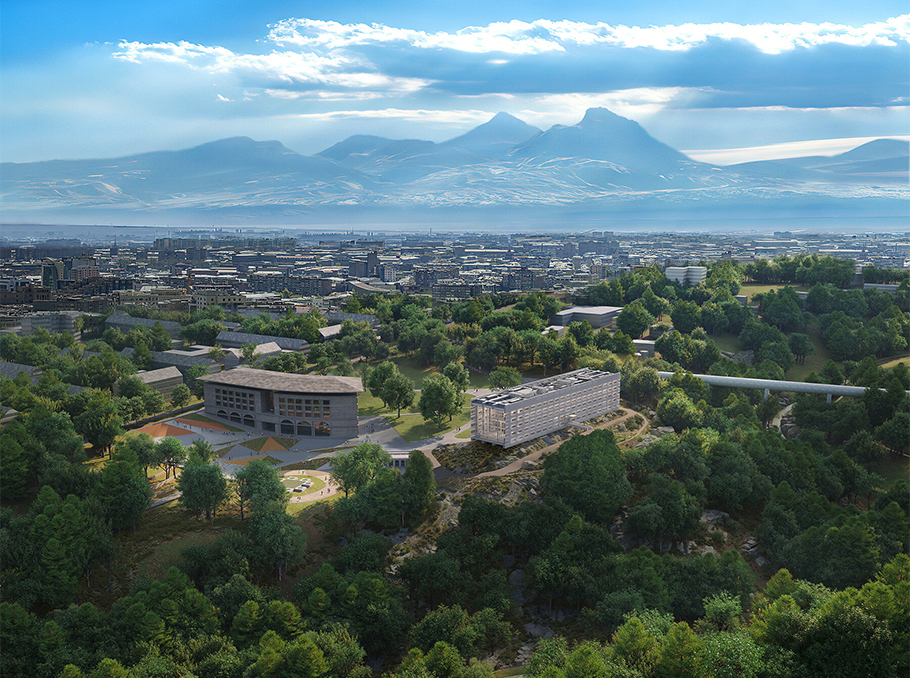
The center is being built near the Hrazdan Gorge in Yerevan, in the immediate vicinity of the existing Tumo Center. The building, which covers a total area of 18,000 m², was designed by the MVRDV architectural firm. The complex will include Tumo Labs with educational, engineering and incubation programs, 42 Yerevan, a local branch of the French programming school, research and application laboratories, collaborative platforms, a conference center and business areas.
Details about the MVRDV project have been published on the Designboom website, which we present to your attention.
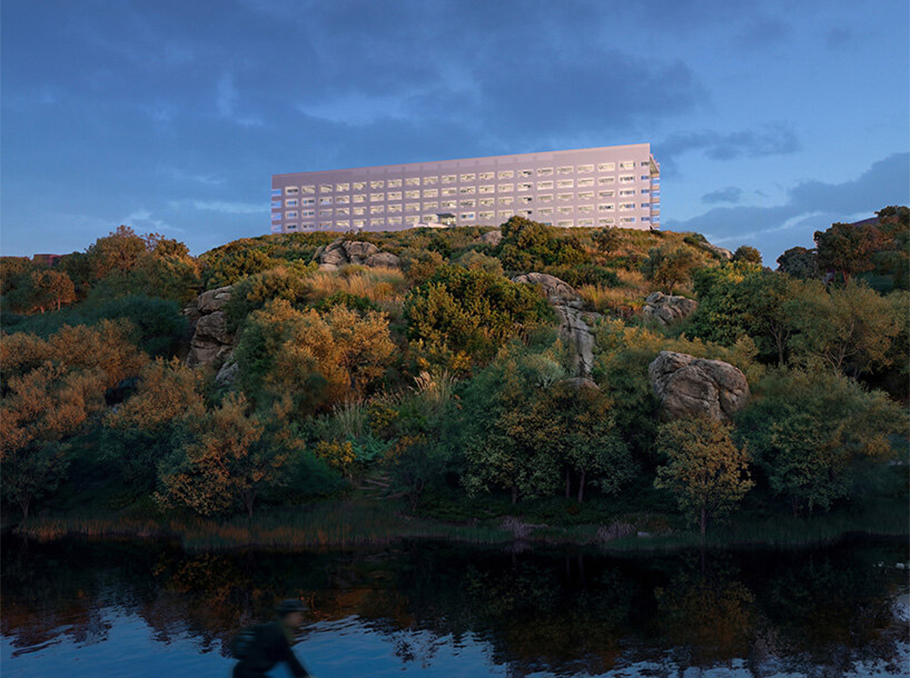
Photo: MVRDV
MVRDV’s 120-meter-long building sits atop a sunken base and cantilevers at both ends over steep terrain. The architects shape the elongated form to read as a single volume, elevated to increase visibility from across the gorge. The podium lifts the structure while extending the topography of Tumanyan Park toward the facade.
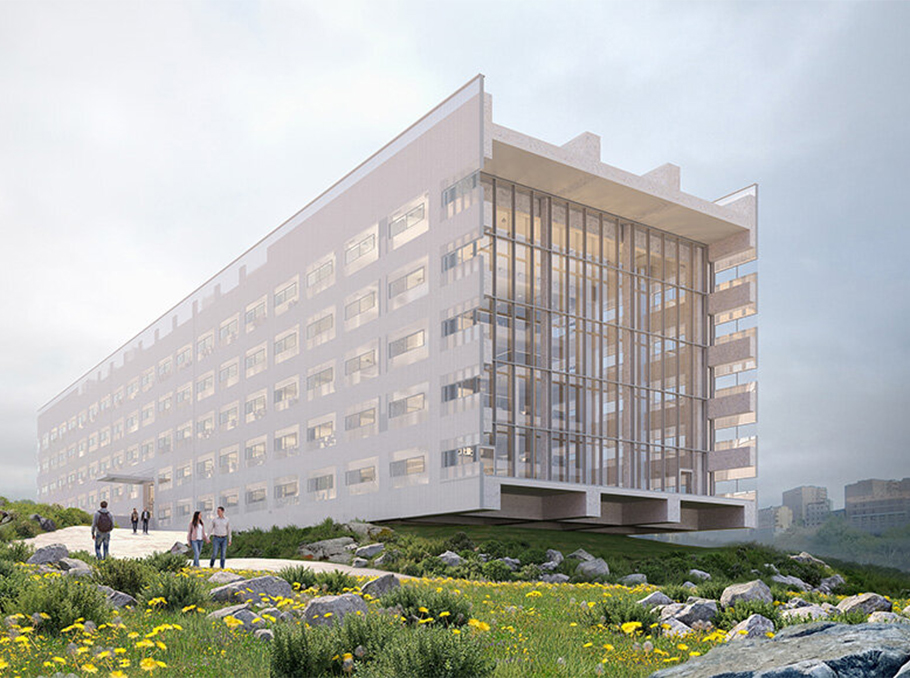
Photo: MVRDV
Large glazed openings at each end frame long views. To the north lies the river gorge while, to the south, Mount Ararat rises beyond the city. The building’s orientation establishes a direct visual relationship with these landmarks and embeds the project within the geography of Armenia.
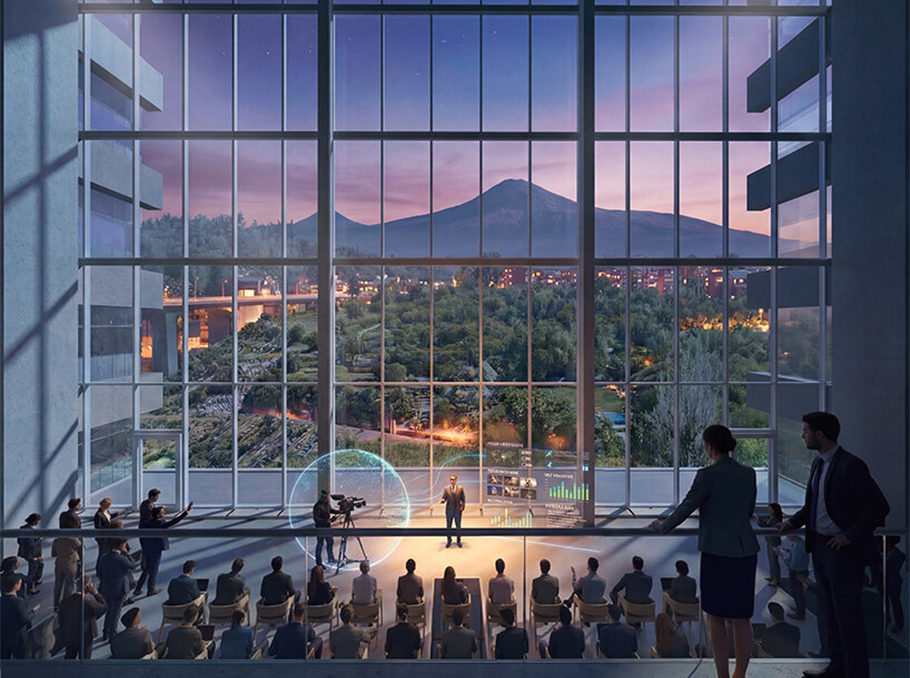
Photo: MVRDV
A translucent polycarbonate facade wraps the exterior. By day, it filters sunlight into the interior and by night, it emits a diffuse glow that reveals the depth of the atriums behind the skin.
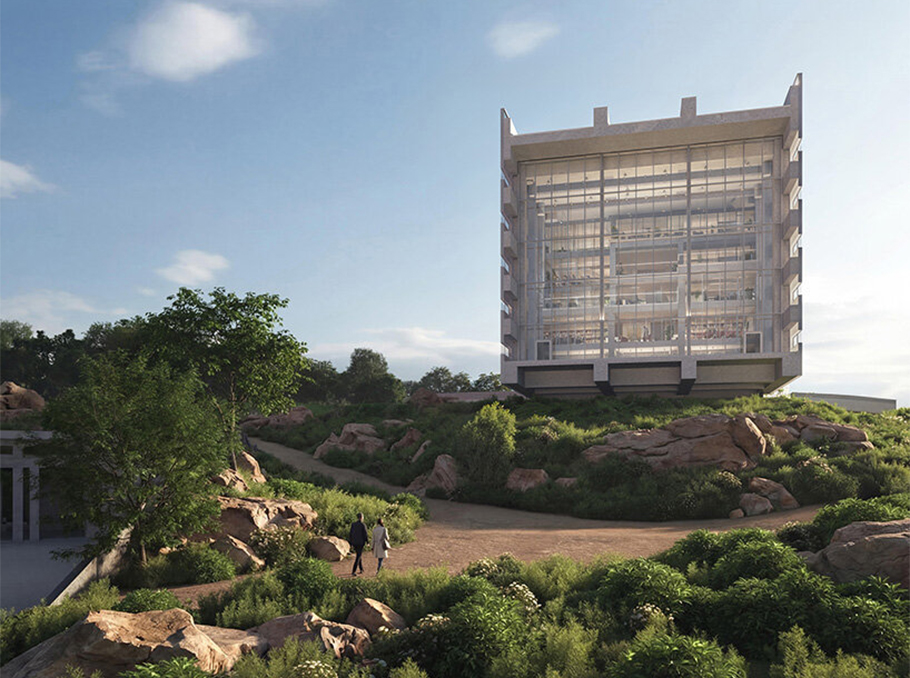
Photo: MVRDV
MVRDV organizes five stories of educational and workspaces around three full-height atriums, each connected to the ground floor. The central entrance hall contains a café and digital lounge and is traversed by a bridge that extends outward as a viewing platform. At one end, a large event hall accommodates conferences and lectures. At the other, vertical connections link co-working spaces at different scales.
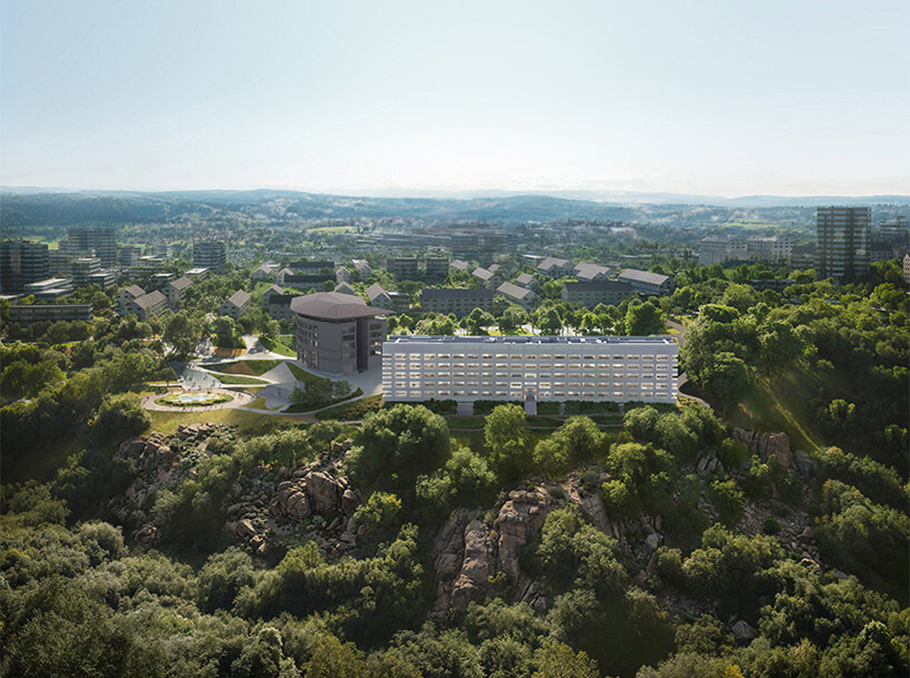
Photo: MVRDV
The atriums operate as social spaces and environmental buffers. Separate heating and cooling systems allow broader temperature variation within these volumes, supported by anti-stratification fans and low-temperature floor heating. This approach reduces operational energy demand while maintaining comfort in adjacent work areas.
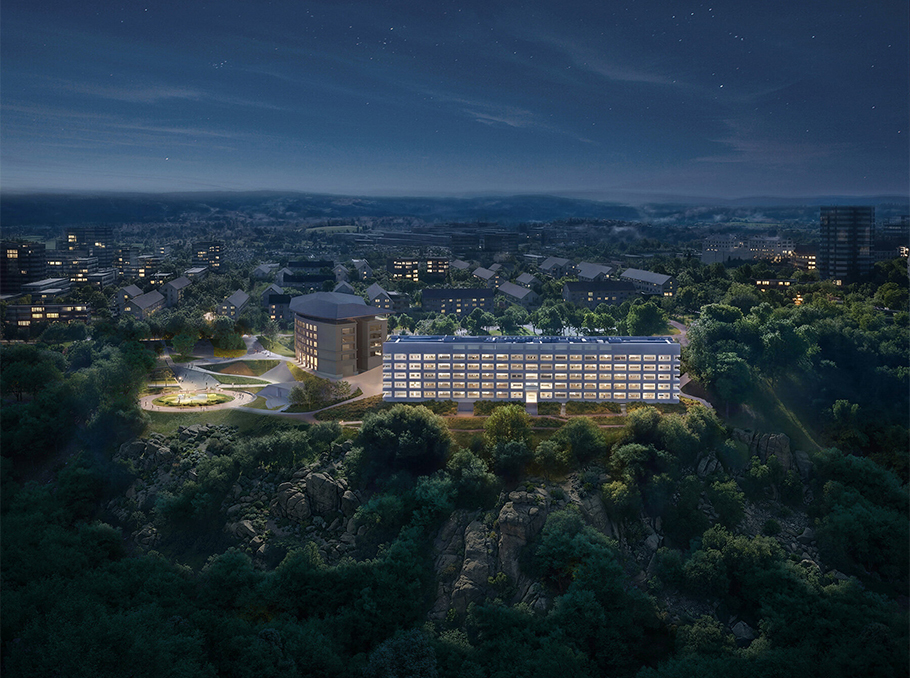
Photo: MVRDV
Floor slabs use a bubble-deck system to lower concrete consumption and overall weight. Two central cores and open floor plates enable reconfiguration over time to allow the building to adapt to changing programs.