





As AI increasingly takes over technical tasks, humans need to focus on the abilities that technology cannot replace – simply, on being human. One of the most inherently human capabilities is leadership: the ability to guide people toward a shared goal. What are the key elements of strong leadership, and how does high-quality education develop the critical skills needed to navigate the challenges of constant transformations?
Mediamax explored these questions in a conversation with Professor Alexandros Psychogios, lecturer in the Pan-European Executive MBA programme, Professor of Human Resource Management and Organisational Behaviour, and Head of the Work & Organisation Group at Loughborough Business School, Loughborough University.
The Pan-European Executive MBA programme, also delivered in Yerevan, is jointly offered by the University of York Europe Campus and the Faculty of Economics and Management at the University of Strasbourg.
It provides Armenian applicants with the opportunity to obtain a high-quality British and European education and earn two MBA diplomas – from the Universities of York and Strasbourg – while continuing to live, work, and study in Armenia.
- Prof. Psychogios, your research and teaching focus on leadership in complex and changing environments, and you often highlight that for successful transformations organizations should focus more on people rather than only on processes. Why is that the case?
- Unfortunately, a lot of organisations that I am aware of, both directly and through research, do not usually give specific attention to people.
The reason is that trying to manage people – trying to convince them, motivate them, and engage them in the change process – is the difficult part. The easy part of the change is designing it, planning the processes, defining the investments and so on. This is a very important aspect, indeed; however, it is the easy part because the included elements do not have their own behaviour, as human beings do. And this is where the problem starts.
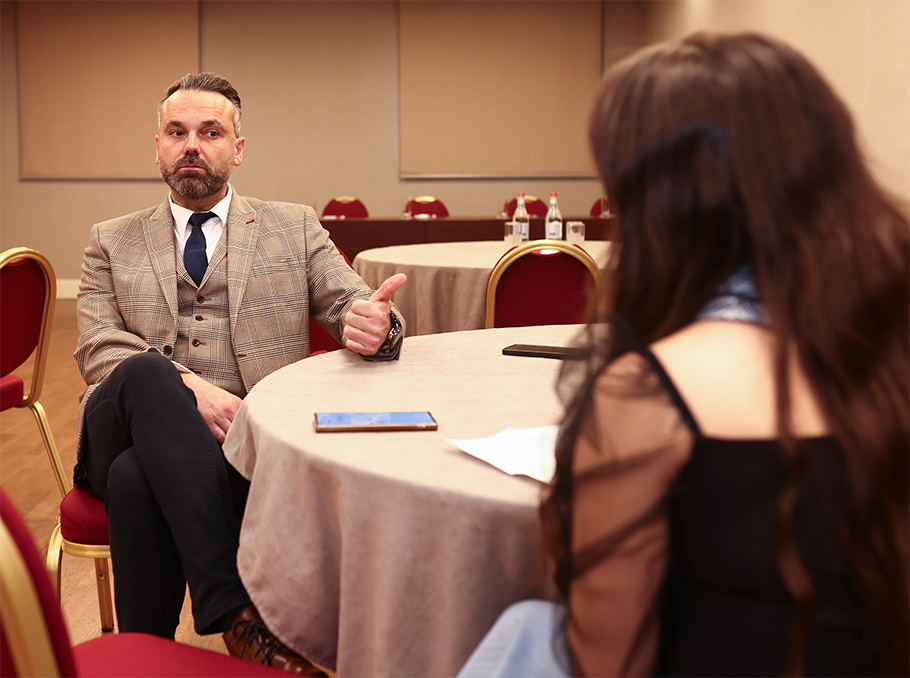 Alexandros Psychogios
 Photo: Mediamax
Many managers or people responsible for the implementation of a change do not usually want to “lose” their time occupying themselves with people, and instead try to focus more on the processes. They ignore the fact that if the people involved in the change have not been convinced about what they need to do, how they are going to do it, and why they are going to do it, then, in the mid–long run, the change will inevitably not be as successful as it was initially planned.
That is why organisations should give the necessary attention to the human side of change.
- As an expert in Brain-Adaptive Leadership and co-author of the book “Neuroscience for Leaders”, could you please explain what is the key to guiding people effectively through change?
- What we know from neuroscience is that the human brain reacts negatively during a change process. Whatever is new for the brain creates a sense of insecurity. This is very normal, and this is what I explain to the managers I train: especially during the first phase of the change, the main question that bothers people is what that change means for them specifically. They need to find a new balance, a new comfort zone, and until that happens, they will be anxious, stressed, sceptical, and in some cases, they might even try to sabotage the change because they feel insecure.
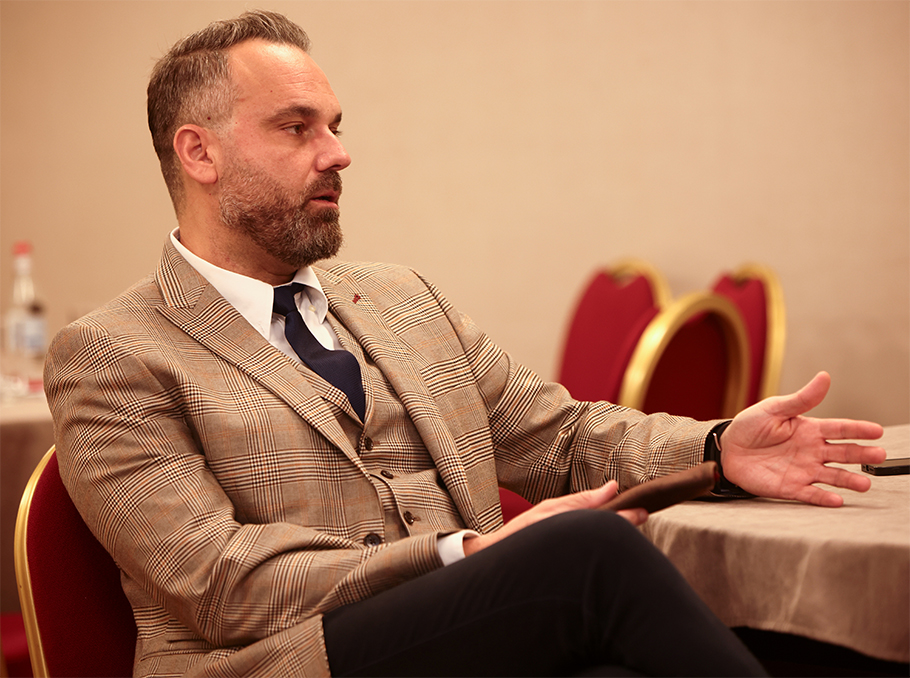 Alexandros Psychogios
 Photo: Mediamax
The first thing I would suggest to managers when they try to apply a change is to be supportive and show that they will go through the change together. They should reassure employees that the necessary support and training to implement the change will be provided, and show understanding by acknowledging that it is normal to feel worried when dealing with a new situation, essentially telling them: “I will be by your side to help you.”
What we have seen through our research is that when managers are more supportive and less technical, focus more on people, especially during the first period of the change, they manage to turn them into allies of the change. As a result, many employees actually help through their experience, skills, and input for the change to be successful.
So, the main message from neuroscience is that the brain does not like change by default, and therefore managers need to find ways to make people understand that support will be provided. This is the key. Of course, there are other important aspects as well, which we discuss in detail during my executive training programmes.
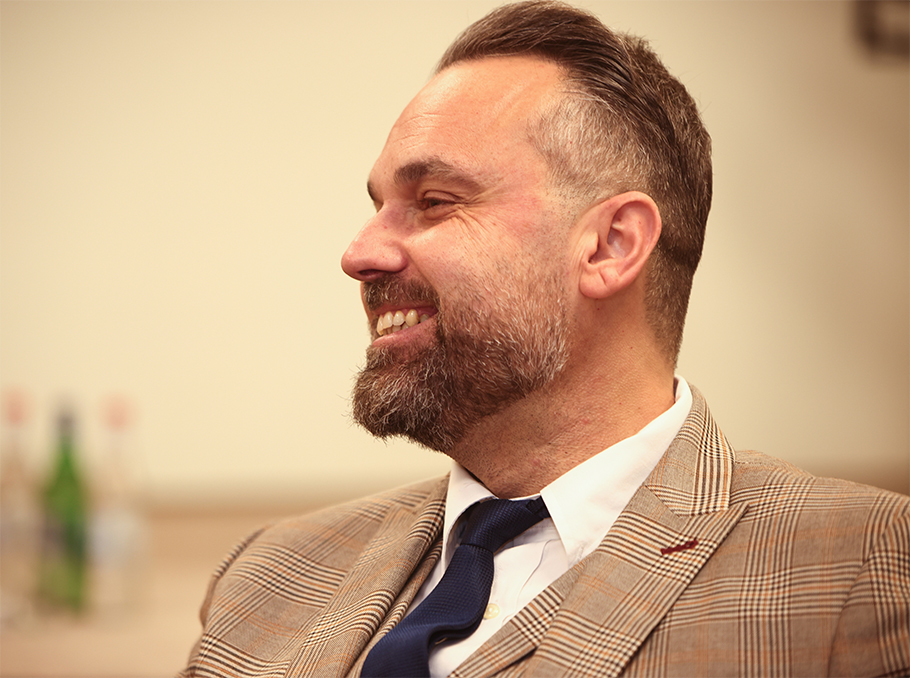 Alexandros Psychogios
 Photo: Mediamax
Through certain exercises, I help my students understand that resistance to change can also come from the top of the organisation. For example, one of the scenarios we work on is the following: they must convince the CEO of a large company to allocate less money to short-term targets where they can get quick results, and instead invest part of the annual budget in longer-term goals. This is not an easy task.
- For many managers these ideas may be completely new. How do you manage to convey the whole science behind it within short modules of Pan-European Executive MBA program?
- As I like to say, managing people – leadership overall – is not rocket science: you do not need a background in mathematics or chemistry to understand it.
Leadership and people management are about being human, behaving as a human, and trying to achieve something meaningful together with other humans. It is a matter of practice and a matter of personality.
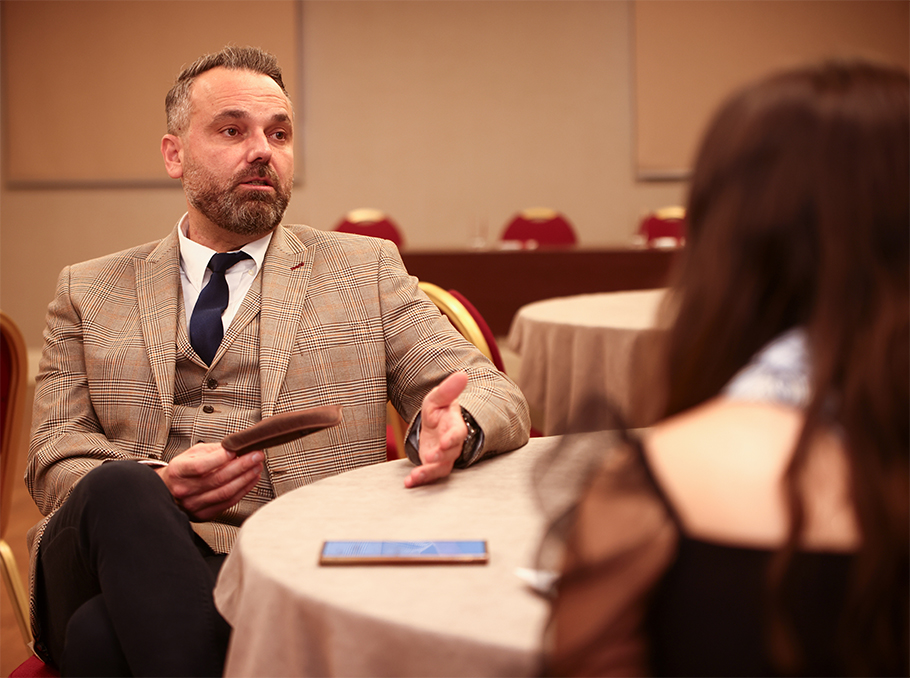 Alexandros Psychogios
 Photo: Mediamax
In my trainings, I do not focus much on complicated theories. Instead, I use many examples and try to explain in simple and practical ways. I try to give my students specific points I know they can remember, and structure the content clearly.
I always say that there is no magic stick I can hand over that guarantees success if you simply apply a model or a framework. Managing people is a process of “playing with my chances.” The more I apply these methodologies and tools, the more I increase my chances of being successful.
And I am glad that many of my students come back to me days, months, or even a year later and say: “Alex, we actually applied what we discussed during the training. And guess what: we saw positive results.” I feel truly motivated when I hear this kind of feedback.
- One of the aspects of your lectures is how to motivate employees. So I wonder: how do you motivate your students to motivate their own employees?
- Motivation is an ongoing process. It depends heavily on the person, the situation, the context. One day we can be highly motivated, the next day we may feel demotivated. This is why, as human beings, we all have dynamic behaviour.
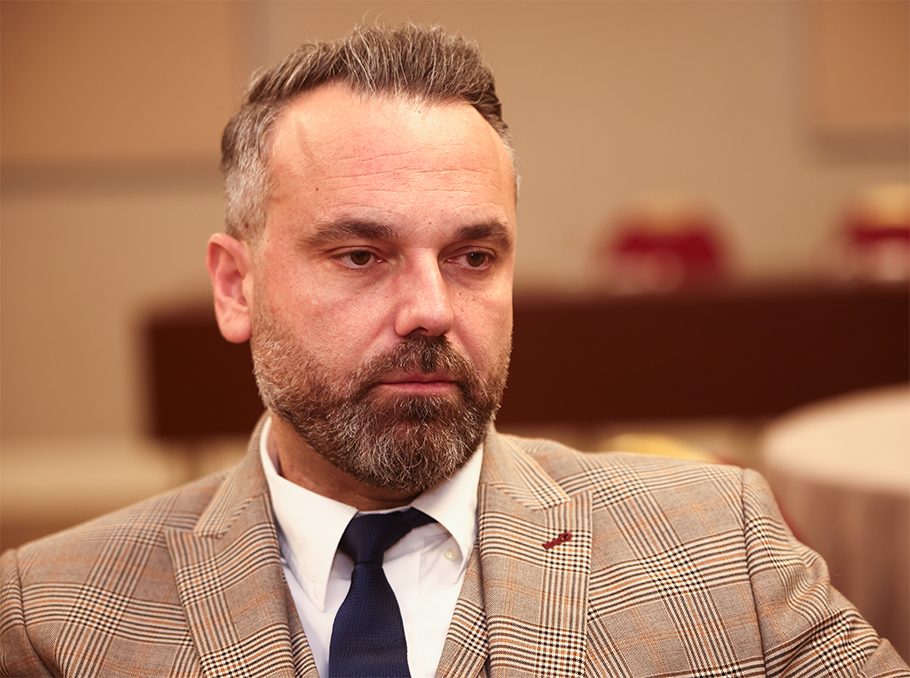 Alexandros Psychogios
 Photo: Mediamax
As I like to say to my students, imagine that motivation is rooted in the emotional part of our brain. Picture this part as a big, powerful elephant. This elephant has the strength to drive us toward our goals – the more motivated we are, the greater our chances of achieving them.
However, many of the goals we pursue are not daily goals but long-term ones. And the emotional part of the brain, the elephant, can easily become demotivated. Once it is demotivated, it becomes very difficult to push it forward because, metaphorically, it is a very large animal. So, what do we need?
Motivation requires two things. First, we need to emphasise motivation that comes from within and focus on that – finding ways to enjoy what we do and staying enthusiastic about it.
 Alexandros Psychogios
 Photo: Mediamax
Second, we need to offer rewards in a form of small wins. For example, imagine we need to implement a change that will last for a full year. We cannot simply say: “Let’s work hard for the entire year, and at the end we will enjoy the reward.” That will not motivate people – at least not during the process. What we need throughout the process are small wins. For instance, after completing step one we can have a team dinner or do something the group enjoys together. That is a small win. Especially in cases where financial rewards are not possible, these kinds of small wins become even more important throughout the process.
- With AI advancing so rapidly, many people have questioned whether formal education is still necessary. How do you view the role of academic programmes in the age of AI?
- I will be very straightforward. AI can replace your technical knowledge 100% and a big part of your experience, especially when this experience can be quantified. What AI cannot have is critical capability.
Aristotle used to say that we have three types of knowledge. The first two – technical knowledge and the knowledge coming through experience – can be replaced by AI. But the third aspect, which Aristotle called phronesis, meaning practical judgment or practical wisdom, is what makes us human.
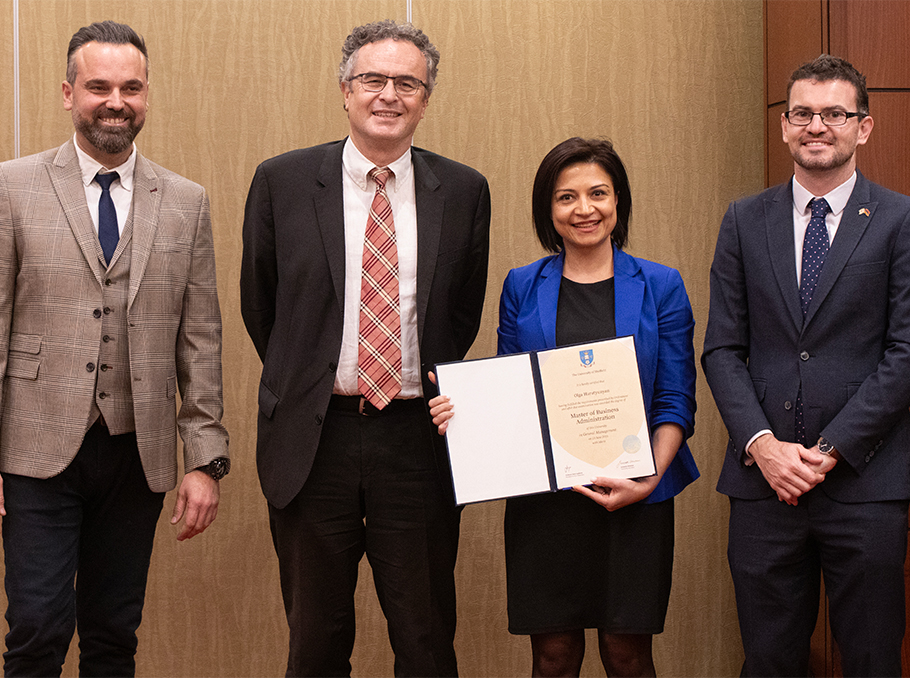
Photo: Mediamax
AI is capable of solving problems we have solved in the past. It will check past data, analyse it, and produce solutions based on past knowledge. Phronesis, however, gives humans the ability to judge new situations for the first time and to synthesize rationality, emotions and instincts to create new ideas, innovations and solutions to new problems in our societies and businesses. As long as humans keep this ability, we have no problem with technology.
This is why in the programme we try to develop the critical capability of students, which happens by challenging them. We give them problems, and when they think they have found a solution, we create another problem for them. Instead of giving them the solutions to the problems, we give them methods through which they can find the solutions by themselves.
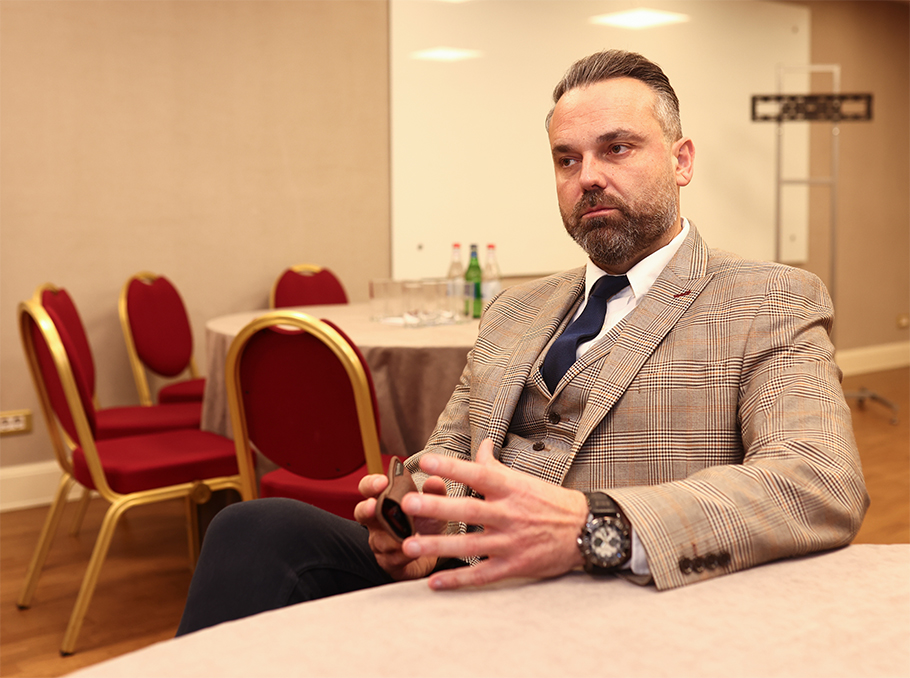
Photo: Mediamax
Many times I am asked about AI and leadership, and I am very absolute on this: do not confuse the two. When we discuss leadership, we discuss a relationship that can take place only among humans. Leadership requires at least two people – the leader and the follower – and it is a continuous, dynamic, complex relationship.
AI can help leaders make faster decisions, just as every technology has done. But we need to understand that it is not here to replace leadership.
Gaiane Yenokian talked to Professor Alexandros Psychogios
Photos: Emin Aristakesyan