






Armenia is undergoing the most significant transformation of its social protection sector in the past three decades. The long-standing system known to the public as Paros, which has been the primary mechanism for social support since the 1990s, is being replaced by a new, modern approach to assessing vulnerability.
The “Strengthening the Social Protection System in Armenia” project – funded by the European Union and implemented with support from UNICEF, UNDP, and the UN World Food Programme – seeks not only to digitalize procedures but also to fundamentally reshape the logic of social policy.
A central component of the reform is the revision of the social assistance system. The goals include eliminating extreme poverty, reducing overall and child poverty, transforming the philosophy behind assessing and addressing family vulnerability, and shifting the focus from benefits to self-sufficiency and employment. As part of this effort, a new vulnerability assessment system has been developed and put into practice.
Since March 17, 2025, the system has been piloted in the Kotayk and Syunik regions of Armenia, with nationwide rollout planned for 2026.
International experience and legislative pillars
The choice of this model was not accidental – it is the outcome of long-term research and analysis of international best practices. According to UNICEF’s Social Policy Officer, Armenuhi Hovakimyan, the process began in 2019-2020 with a comprehensive “diagnosis” of Armenia’s social protection system.
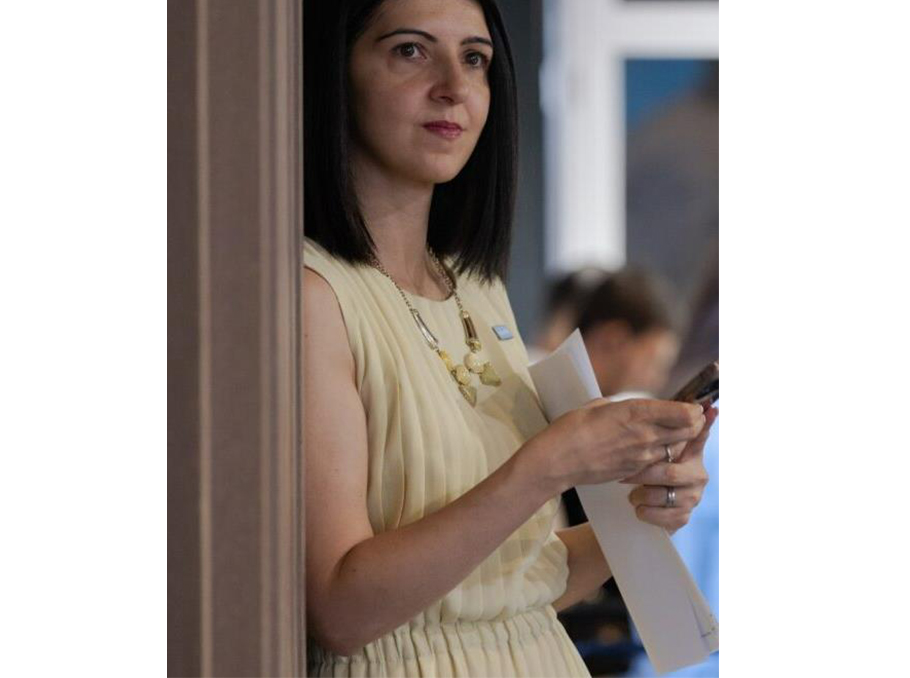 Armenuhi Hovakimyan
Photo: UNICEF
“In cooperation with UNICEF, the World Bank, and the Ministry, models from more than 14 countries were examined. Taking into account Armenia’s context – particularly the prevalence of agricultural and informal income, which does not exceed 50% – a hybrid assessment method was selected. It combines income and asset data (for example, official information provided by the State Revenue Committee) with attribution of income that is difficult to verify,” noted Armenuhi Hovakimyan.
One of the project’s most significant achievements is the complete modernization of the legal framework. With UNICEF’s support, key documents regulating the sector have been revised, developed, and adopted.
“In November of last year, the new Law on Social Assistance was adopted, replacing the previous law that had been in force since 2014. This made it possible to align legislation with the logic of integrated social services, expand the range of services, introduce quality standards, clarify roles and responsibilities, strengthen resilience, and advance the field of professional social work. On the same day, amendments to the Law on State Benefits were also adopted, laying the foundation for the new vulnerability assessment system,” the UNICEF representative emphasized.
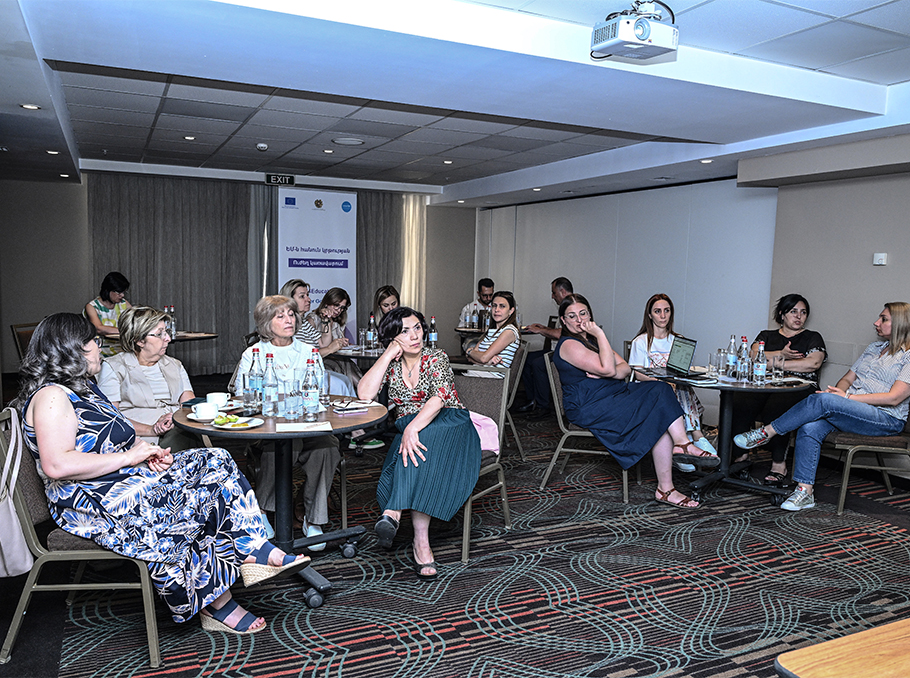
Photo: UNICEF
In October 2025, Armenia also adopted a new Law “On the Rights of the Child and Child Protection,” which is considered ground-breaking in advancing the best interests of the child. “We are supporting the Ministry in developing around 50 by-laws to ensure that the law becomes a fully functional mechanism,” added Hovakimyan.
Summarizing the program’s progress, Artak Harutyunyan, Director of the Department of Demographics and Family Social Guarantees of the Ministry of Labour and Social Affairs, emphasized the crucial role of international partners:
 Artak Harutyunyan
“The most important thing is that we have a supportive partner throughout this process. Reforms of this scale require substantial resources, and it is vital that the ministry is not alone on this path. Our cooperation with UNICEF, the study of international experience, and the complementary steps taken by our partners make it possible to develop a system that is more resilient and better targeted.”
New social logic: Real need and targeting
According to Artak Harutyunyan, the previous system – established in the 1990s – gradually lost its ability to accurately target families in need.
“The old system was essentially an indirect method. Our analyses showed that only 55% of families receiving benefits actually met the eligibility criteria, while about 45%, according to statistics, belonged to non-poor groups. In addition, under the old model, the amount of the benefit barely differed between families with different scores. As a result, even after receiving support, many families remained in poverty,” Harutyunyan explained.
The new system introduces a “hybrid method,” closely tied to the value of the basic food basket. If the income of a family – calculated per adult equivalent – falls below the cost of the food basket, the family becomes eligible for financial support. For 2025, this threshold has been set at 34,581 drams, based on third-quarter data published by the Statistical Committee. Harutyunyan noted that the old system created a kind of “trap,” where families were compelled to artificially maintain a low standard of living to avoid losing their Paros points and the related health, education, and other benefits.
“The new system addresses this issue by introducing four differentiated insecurity thresholds. The first category identifies the extremely insecure group, which receives financial assistance. But the most revolutionary change is that families in the second threshold – even though they no longer receive cash benefits – retain access to all other state-provided services. This removes the fear of losing essential benefits,” Harutyunyan emphasized.
Double income: Employment no longer means losing benefits
One of the most significant advantages of the new system is its strong emphasis on promoting employment. Under the new rules, able-bodied but unemployed family members applying for benefits are required to register as job seekers. The state has also introduced an unprecedented incentive: if a beneficiary finds a job, they do not lose their benefit. For one year, individuals receive both their salary and the state benefit.
However, the challenge is not only financial – it is also psychological. UNICEF’s Social Policy Officer, Armenuhi Hovakimyan, noted that the transition can be difficult for those who have relied on the system for many years. “Families who have lived on benefits long-term often need not only financial but also socio-psychological support to understand that they can and should work, that they can leave the system, and not remain dependent on it. This is a process that requires case management and long-term social work,” Hovakimyan emphasized.
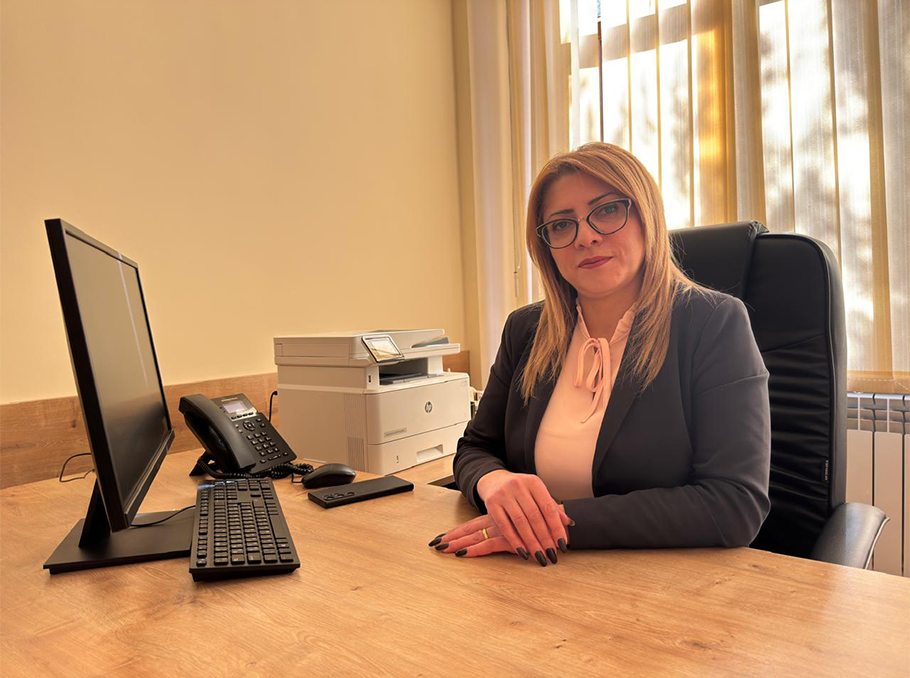 Arus Poghosyan
Photo: Մեդիամաքս
In practice, staff at the Unified Social Service (USS) encounter these challenges every day. Arus Poghosyan, director of the USS regional centre in Sisian, noted that they work actively with employers to support this transition.
“We constantly review job vacancies and offer citizens suitable options, but we often face challenges. Many people are hesitant when it comes to the idea of working. There are cases where even residents of nearby villages refuse to come to the city for work, for various reasons,” she said.
At the same time, there are many objective obstacles: the limited availability of jobs in rural areas, the lack of regular public transport connecting villages and cities, and other practical barriers.
Gayane Grigoryan, a single mother of two from the village of Gorhayk in Sisian, is very satisfied with the new system. Under the updated model, the amount of her benefit has nearly tripled. Though she is a nurse by profession and also engaged in agriculture, she has been unable to find work in her field.
“The new system has significantly improved our family’s social situation, but most importantly, it has freed us from the paperwork and hassle. Now everything is mostly online – the system automatically retrieves the necessary data, and there’s no need to collect documents. When applying for the benefit, I also registered as a job seeker. I am a nurse, but in Gorhayk the only available position is at the local school, and it’s already filled. My children are still small, so I can’t leave them alone every day and travel to Sisian. If there were work in the village, I would gladly take it instead of just waiting for the benefit,” Gayane said.
Fast service and new opportunities: digitalization in practice
Alongside technical and legislative reforms, one of the program’s core components is the strengthening of human capital. UNICEF places special emphasis on capacity development, supporting continuous training for social workers.
This preparedness is also highlighted by Arus Poghosyan, Sisian’s USS regional centre director. She noted that before any change is introduced, staff receive targeted training, enabling regional centres to fully adapt to the new system.
Although the system is still in the pilot phase, frontline professionals are already seeing tangible improvements.
“There is a lack of digital skills among citizens, which is why we never leave anyone to navigate the system alone. In our centres, we help them create accounts, complete applications, and understand the next steps. People often express satisfaction, saying they appreciate the support throughout the online process,” said Arus Poghosyan.
The true impact of the reforms is best reflected in the stories of beneficiaries. Anna Sargsyan, a mother of three from the village of Hartashen, noted not only the significant increase in financial assistance but also the improvement in service quality.
“Previously, I received 36,500 drams. I have three children, and under the new program I now receive 114,000 drams. The amount has increased significantly, and thanks to this support, I was able to take my youngest daughter to Yerevan for eye treatment.
In addition, the process is now much faster. At first, the system was unfamiliar, but with the staff’s help and patience, I learned how it works. Next time, if needed, I’ll be able to submit the application myself,” Anna said.
The complexities of digitization: Why do we still need paper?
Although full digitization is the goal, the transition has not been entirely smooth, and the system is still being refined. According to Artak Harutyunyan, one of the main challenges lies in integrating the databases of various government agencies.
“There are technical difficulties in obtaining complete and automatic information from different databases. As a result, some documents still have to be attached manually. However, our goal is to reach a level where the system receives all necessary data automatically,” explained Harutyunyan.
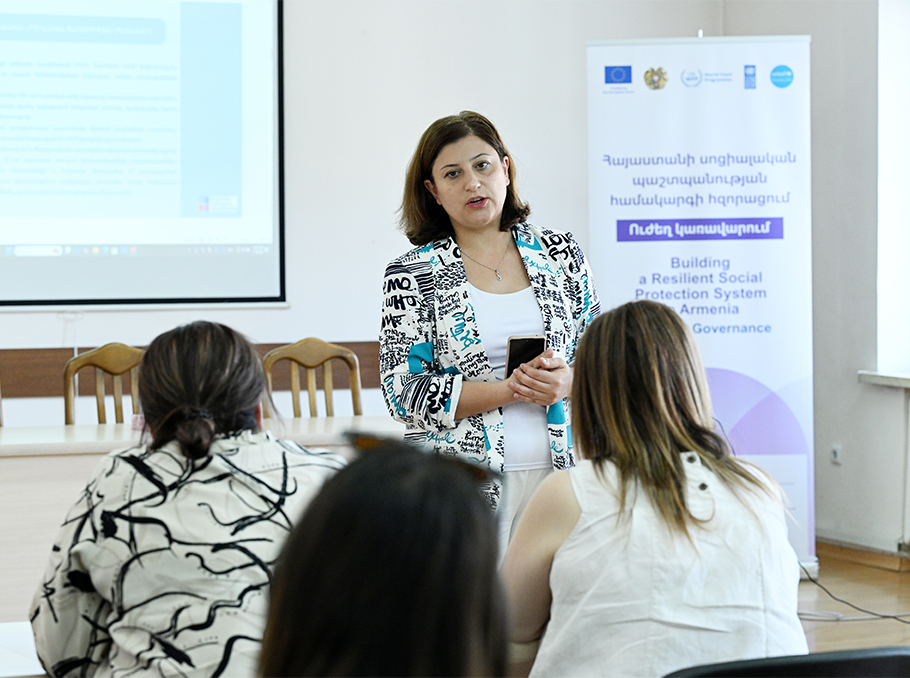
Photo: UNICEF
Once the pilot phase is completed, required adjustments are made, and technical issues are resolved, the new system will be rolled out and expanded to all regions of Armenia.
The system is still in development, but the direction is clear: toward a more targeted and development-oriented social protection model.
As UNICEF’s Social Policy Officer, Armenuhi Hovakimyan, concludes:
“The social protection system is complex. The only way to overcome its challenges was to start somewhere, and I believe it was the right decision that this ‘one day’ came now.”
Anahit Baghdasaryan