





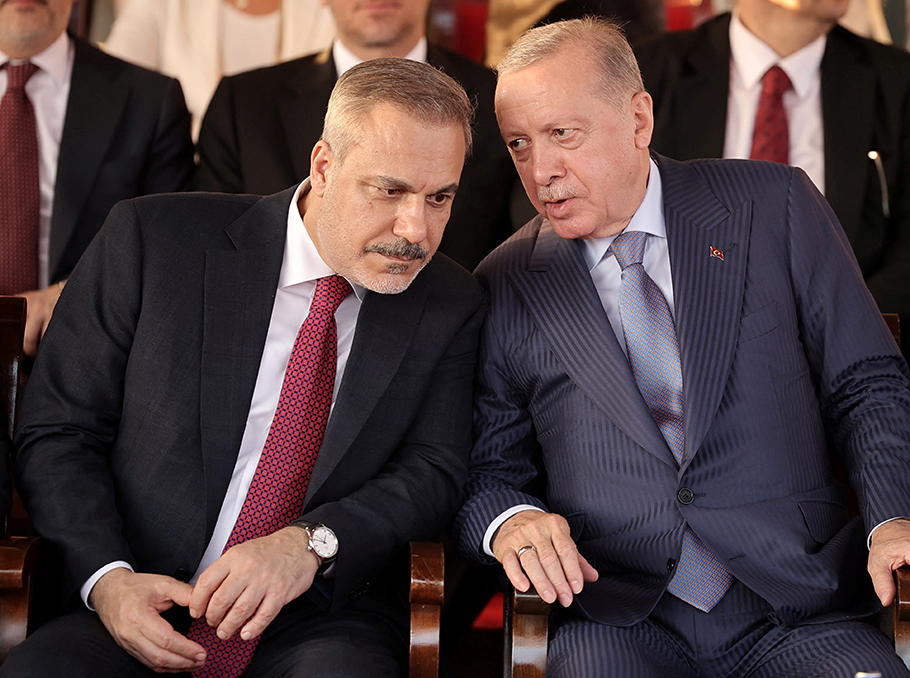

Sinan Ülgen, a former Turkish diplomat, is Director of EDAM, an Istanbul-based think tank, and a senior policy fellow at Carnegie Europe.
Sinan Ülgen
In times of upheaval, it is up to political leaders to make the critical decisions needed to defend their countries’ interests. Those decisions are often shaped by an institutional sense of history. This is certainly true for Turkey today, as it confronts the likely ramifications of the US-Israeli war on Iran.
Turkey and Iran share an understanding of regional geopolitics that goes back centuries. Theirs is among the oldest continuously recognized shared borders in the Middle East and they have been at peace with each other since 1639.
To be sure, Turkey and Iran are far from allies. Their interests have often diverged sharply, particularly since the Islamic Revolution in 1979, and they have often engaged in a zero-sum contest for regional influence. But their strategic rivalry has always played out indirectly: while the two sides have often sought to shape regional dynamics in their favor, they have actively avoided direct confrontation.
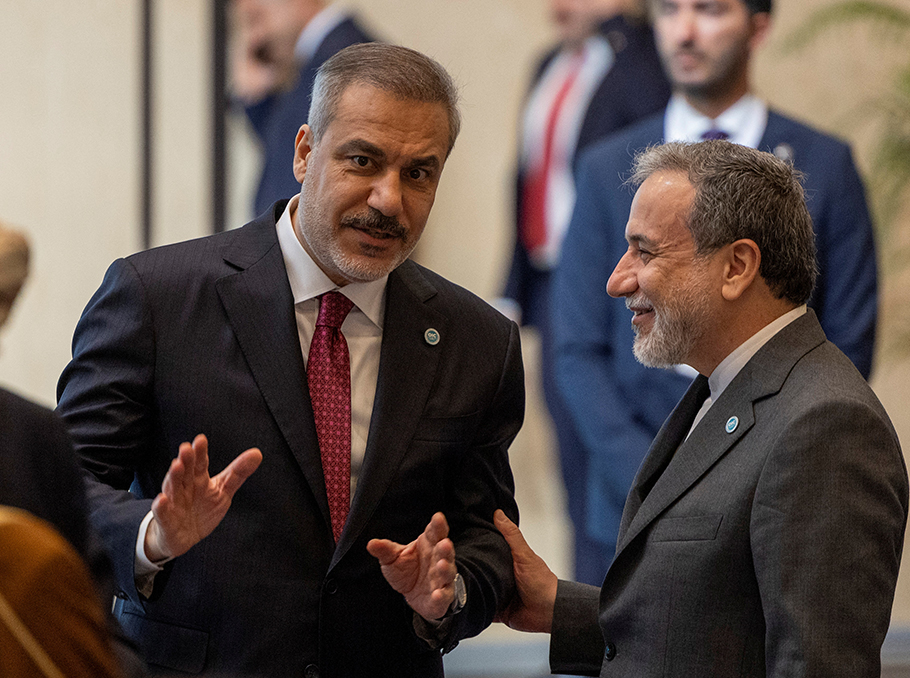 Turkish and Iranian Foreign Ministers Hakan Fidan and Abbas Araghchi
Photo: REUTERS
This was apparent, most recently, in Syria. When mass protests against Bashar al-Assad’s dictatorship erupted in 2011, Turkey overtly backed regime change. But Iran became a critical ally of Assad, helping him to withstand over a decade of civil war. It was only after Iran’s external influence was weakened in late 2022 that opposition forces – with Turkey’s help – were able to turn the tide of the conflict and, ultimately, topple the Assad dynasty.
Today, Turkey is so committed to avoiding a direct confrontation with Iran that it even played down Iran’s ballistic-missile attack this week, which would allegedly have struck the Incirlik Air Base in southern Turkey were it not for NATO air defenses. Turkish President Recep Tayyip Erdoğan’s government is skeptical about the feasibility of regime change in Iran – particularly if the process is led by the United States. If President Barack Obama, who prized sober strategic planning by experienced leaders, did not have the patience and commitment to bring about regime change in Syria, how can Donald Trump’s chaotic administration succeed in Iran?
Even if the US does manage to topple the Iranian regime, an orderly transition is unlikely, to say the least. For Turkey, state collapse in Iran is the worst-case scenario, followed closely by a Syria-style cycle of violence pitting a desperate regime against an opposition that is empowered to fight, but not strong enough to win quickly.
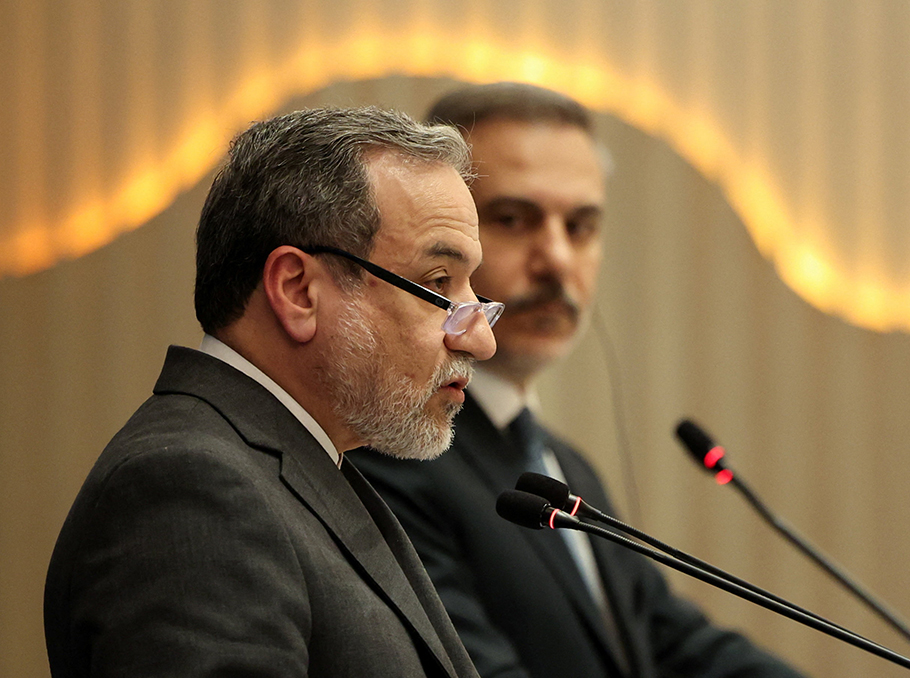 Turkish and Iranian Foreign Ministers Hakan Fidan and Abbas Araghchi
Photo: REUTERS
Whatever mess the US and Israel create in Iran, Turkey will have to deal with the consequences, including large refugee inflows. From the Iranian Revolution in 1979 to the Gulf War in 1990-91 to the Syrian civil war more recently, regime change in Turkey’s neighborhood – or botched attempts at it – has invariably placed a heavy security and humanitarian burden on the country. With some 3.2 million refugees from Syria alone, Turkey is one of the world’s largest refugee-hosting countries. Iran’s population, at more than 90 million, is nearly four times larger than Syria’s.
Refugee inflows from Iran would also place considerable strain on Turkey’s economy, at a time when the country is attempting to rein in once-runaway inflation. Erdoğan’s government has managed to bring down inflation from 70% to 30% over the last two and a half years, and is aiming to drive it into single digits before the next electoral cycle in 2028. Prolonged instability in Iran could significantly hinder this effort through rising oil prices and heightened risk aversion in international capital markets.
An acute awareness of these risks drove Turkey’s efforts to avert the current conflict, including by offering to mediate negotiations between the US and Iran. When those efforts failed, Oman stepped in, and the doomed talks then moved to Switzerland, which has long served as a back channel between the two countries. Now, Turkey is seeking to help end the violence as quickly as possible – before the Iranian regime collapses.
But while avoiding a protracted conflict and the fracturing of Iran is vital to Turkey’s interests, so is ensuring that the war’s outcome does not represent a victory for the regime. A victorious Islamic Republic would undoubtedly be emboldened to withdraw from the Nuclear Non-Proliferation Treaty and accelerate its effort to become a nuclear-weapons state, or at least a nuclear-threshold state. A nuclear Iran would upend a regional balance of power that has lately tilted toward Turkey.
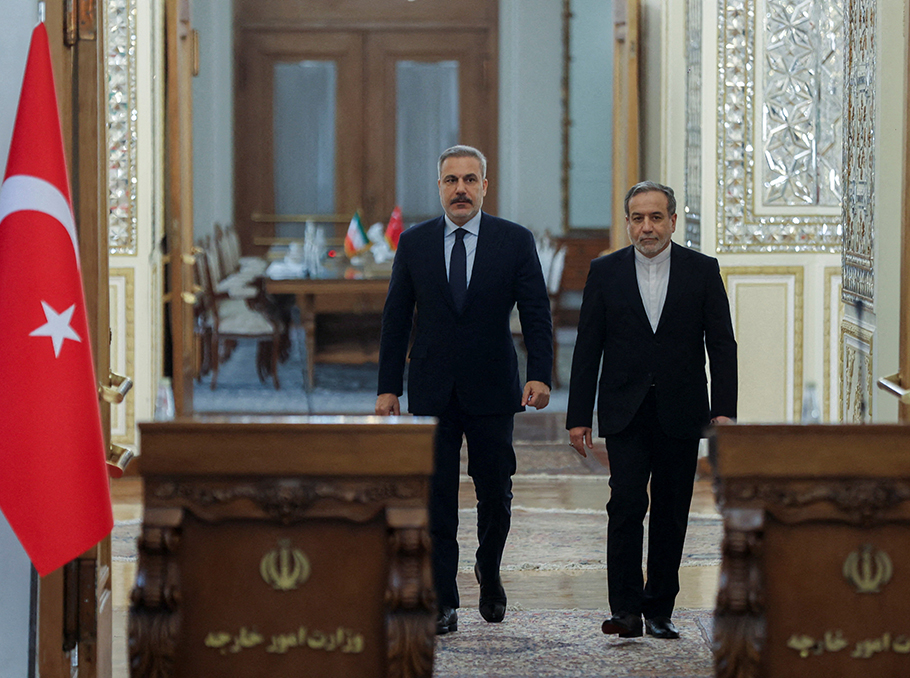 Turkish and Iranian Foreign Ministers Hakan Fidan and Abbas Araghchi
Photo: REUTERS
Turkey’s preferred outcome would thus be a managed degradation of Iran’s ambitions and capabilities. The Venezuela precedent might be useful here. When the US removed President Nicolás Maduro, it did not install an opposition government; instead, it allowed a pliable leadership cadre from within the existing regime to take over.
A similar approach could be taken in Iran. If the next set of leaders comes from within the regime, they will retain the support of the domestic religious and political establishment and command sufficient legitimacy to accept an onerous deal to cease uranium enrichment, curtail Iran’s ballistic-missile program, and end its regional proxies’ destabilizing activities.
In the coming weeks, Turkey’s state and intelligence resources are likely to focus on identifying and contacting key players within Iran who fit the bill. Then, when the time is right, Turkey could seek to connect these figures to relevant international players, setting the stage for an early and sustainable agreement to end the conflict.
Copyright: Project Syndicate, 2026.
www.project-syndicate.org