






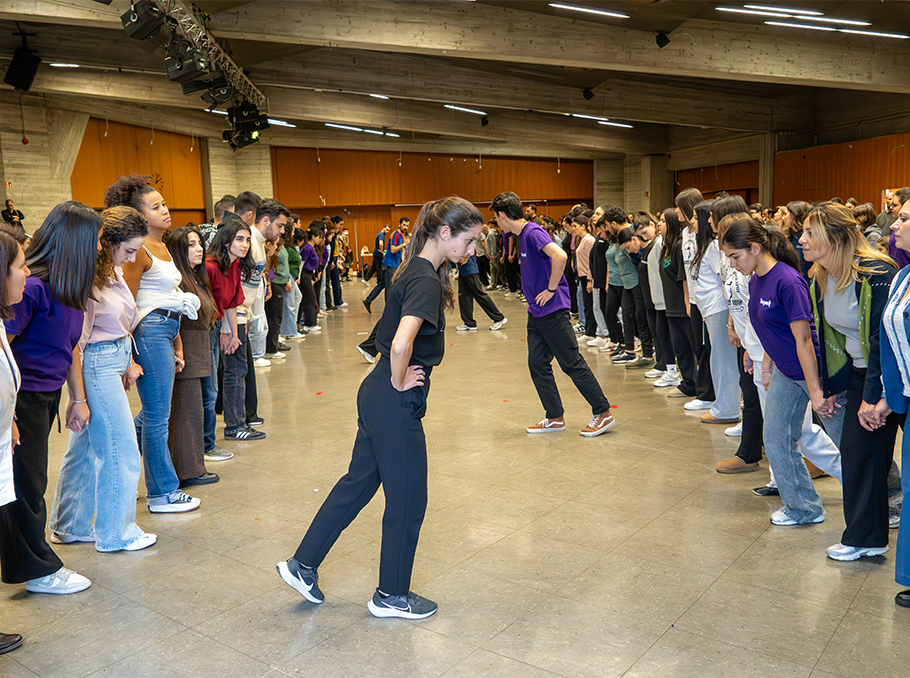
On November 8–9, the fourth pan-European gathering of the Armenian Folk in Motion initiative took place in Munich, themed A Tribute to Resistance.
Active for nearly two years, the movement has generated growing interest among Armenians in Europe, particularly among younger generations, by restoring traditional dances that had long been absent from modes of transmission in the diaspora to the center of practice as a vital aspect of identity.
How it started?
“Armenian Folk in Motion” is the result of a collective process. The initiative emerged from Geneva-based architect Lerna Bagdjian, who has been familiar with Armenian choreographic dance since the age of three, having taken classes at the Armenian school in Geneva, but it was only at seventeen, during a stay in Yerevan, that she understood the difference between traditional dances and the so-called ‘Armenian ballet’ she learnt, widespread in the diaspora. She was introduced to recordings of performances by the “Karin” ensemble, presented as the best national dance group.
“I put on the DVD and saw the dancers repeating the same movements for five minutes, and didn’t understand it, I was expecting a show. That same evening, we had dinner with the members of the group. They had just returned from Diyarbakir, where they had participated in a festival. Gagik Ginosyan and the ensemble members began to dance and encouraged me to join. I couldn’t follow their steps at all, it felt like they were dancing something entirely different. From that moment on, I began to do some research and told myself that something needed to change in the diaspora, even though these dances were already practiced by certain groups, but on a far too limited scale.”
Founded by choreologist and folklorist Gagik Ginosyan, the “Karin” group has been promoting traditional dances for more than 20 years, holding open national dance classes on the last Friday of each month under the title “Our Dances and Us” at the Cascade or at the Narekatsi Art Union. Alongside this, the Karin Scientific Center works to revive Armenian dance studies by researching their origins and history. Over the years, many people’s perceptions of Armenian dances have changed, bringing them off the stage and into everyday life.
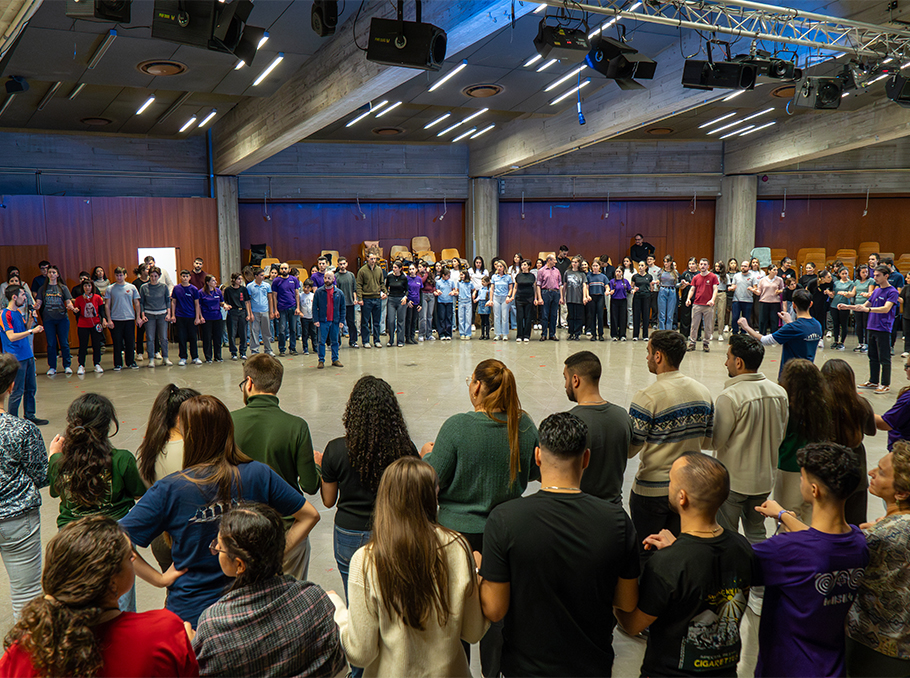
Photo: Armenian Folk in Motion
For many years, Ginosyan was engaged in fieldwork, traveling to different communities, researching and documenting the dances of various regions (Armenia, Javakhk, Akhaltskha, Artsakh, those parts of Western Armenia where Armenians still live, Beirut, Parskahayq and others). In his words, “during the Soviet years, Armenian dance was confined within choreographic frameworks.” His goal was to discover and rescue from oblivion the original dances that were inspired by everyday life and performed as part of daily living (such as Van Fisherman, various war dances, and ritual dances), and then to return them to everyday life once again, this time as part of the daily lives of contemporary people.
“Later, when I was doing a six-month internship in Armenia, I began attending traditional dance classes,” Lerna continues. “The teacher said, ‘You learn quickly, which is good, but you must forget everything you’ve learned until now.’ I realized that the approach was fundamentally different from what I had been taught before: it wasn’t about creating an artistic performance to convey emotions to an audience, but about living those emotions for yourself, through the collective energy of the group.”
It is this approach that needed to be reintroduced in the diaspora: not a performer-audience relationship, but at first a collective space for learning and transmission. One of the most important points is not just to learn the movements, but also to understand the origins and history of each dance, and the meaning behind every step. It makes one view cultural heritage in a completely different way.
How was it realized?
After an initial contact with a Brussels-based group transmitting these traditional dances, the initiative remained on hold for some time. It regained momentum in October 2023 following a meeting with Sipana Tchakerian in Goris, in the context of the forced displacement of Armenians from Artsakh. One an archaeologist, the other an architect, both attentive to material and intangible heritage and familiar with these dances, they saw cultural transmission as an essential response to the crisis, a way to act at their own scale.
“In a context of national crisis, awareness of ourselves, our history, and our traditions is the first step toward unity and the protection of our nation’s future,” Lerna explains.
The first gathering took place in Paris on March 24, 2024, with 80 participants from France, Belgium, and Switzerland. The second was held in Brussels on December 8, 2024, with 130 participants, joined by three additional countries—Germany, the Netherlands, and Luxembourg. The third took place in Geneva on May 4, 2025, with 240 participants, with Spain joining as well and more French and Swiss cities. The fourth gathering was held in Munich on November 8–9, 2025, with 350 participants from 12 European countries.
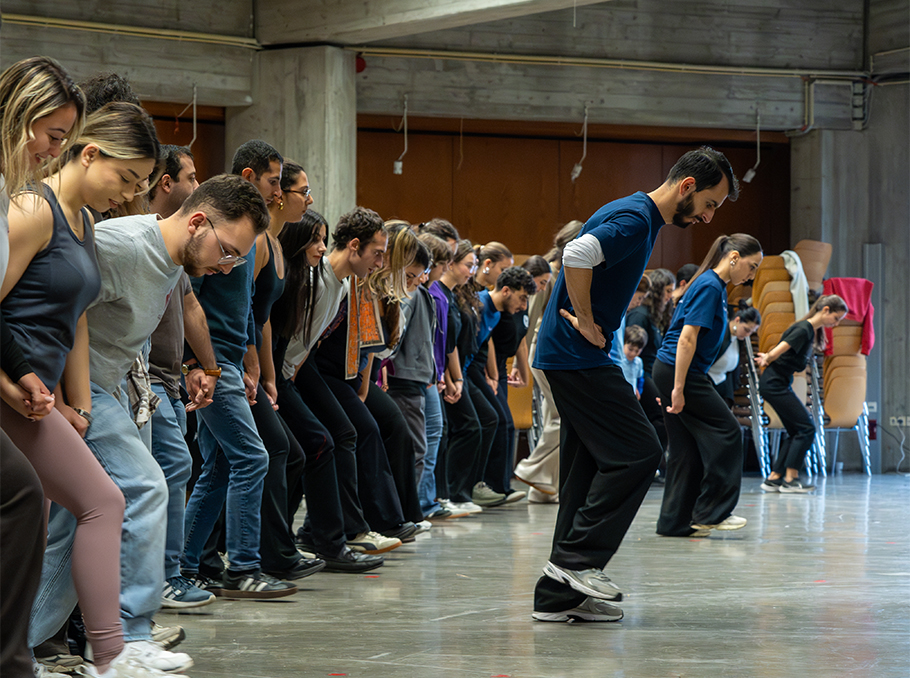
Photo: Armenian Folk in Motion
During the Munich gathering, the focus was on war dances, in consideration of the chosen date. The host was the “Khoyak” group, represented by its founder Ani Aznauryan, who had previously participated in the kinetography program at the AYB School in Armenia. Kinetography is a method of recording dance steps, and its Armenian version, called Kakavagir, was created in 1940 by the ethnographer and art historian Srbuhi Lisitsian.
The programme for all the gatherings follows the same structure. It always includes a theoretical component and a practical one, with lectures and a main open class with song and dance workshop. A dinner featuring both the host country’s and Armenian motifs is also part of the programme. This time, Garegin Masuryan, head of the “Karin” Scientific Center, researcher, and teacher, was invited from Armenia. Lectures were delivered on the topics “Research on folk dances nowadays” and “The role and impact of dance on military training”.
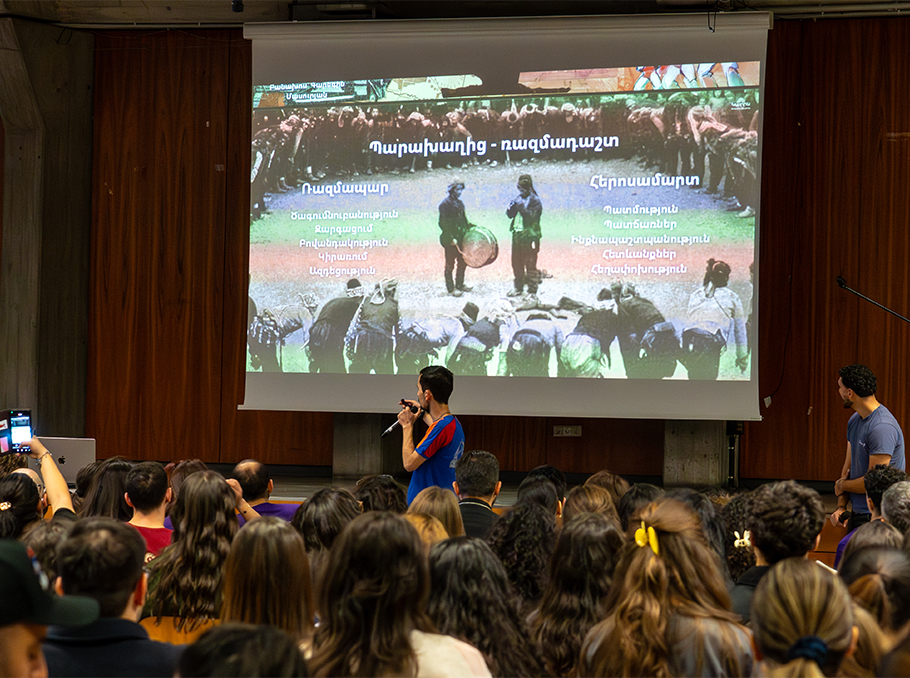
Photo: Armenian Folk in Motion
The current organizing team is made up of representatives from five traditional dance groups from different cities:
France – Avand (Paris): Meliné Asatryan, Annie Voskanian
Belgium – Nemrut (Mechelen): Liana Yaghunyan; Gandzak (Brussels): Tigran Fahradyan, Argishti Dashyan
Switzerland – Gamar (Geneva): Lerna Bagdjian
Germany – Khoyak (Munich): Ani Aznauryan
From an organizational perspective, one of the main challenges is maintaining a balance between quality and quantity. It is important for participants to understand that this is not only an opportunity to socialize and have a good time, but above all, a means of self-awareness and assuring the transmission of our cultural heritage. “Singing and dancing for pleasure is good, but singing and dancing with the awareness that we are bringing back to life traditions practiced for centuries on lands from which we were forcibly displaced, is even better”, says Lerna.
How will it continue?
This growing interest is both encouraging and increases the organizers’ responsibility. As the gatherings expand, many questions arise. These are discussed with researchers to ensure that cultural heritage is conveyed effectively in a contemporary context and across a layered diaspora. At the open class on Sunday in Munich, half of the attendees were not members of any group, they had simply heard about it and were curious. The diversity of participants is very good, but it often leads to reconsidering who the main target audience should be.
The participants come from diverse migratory backgrounds, with some long established in Europe and others more recently arrived from Armenia. Profiles vary from city to city, and a group of “Armenians by Choice” (ABC) is also emerging; people without Armenian origins who are deeply engaged in discovering and transmitting this culture.
Some participants do not speak Armenian, so key information is also provided in English to ensure everyone can follow. Overall, there is no single spoken language at these gatherings—you can hear Western Armenian, Eastern Armenian, English, French, and more. At the same time, all the organizers share the view that these gatherings are also a way to actively defend and sustain our language.
The initiative encompasses not only organizing the gatherings, but also building a network—maintaining ongoing connections with various groups and researchers active in Europe as well as in Armenia. It also aims to support the creation of new groups and to build new bridges between the diaspora and Armenia.
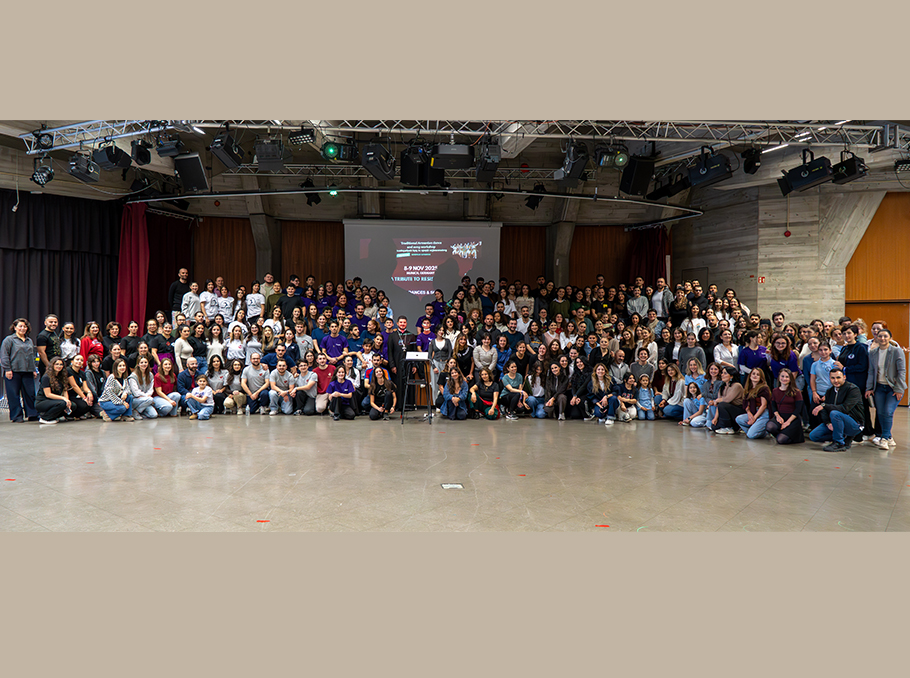
Photo: Armenian Folk in Motion
In 2026, the focus will be on organizing thematic seminars for teachers, as well as smaller-scale gatherings to emphasize quality, and, of course, on organizing a major annual gathering. There are also plans to expand collaborations with researchers based in Armenia, ensuring that the results of their work are presented on the international stage.
Keeping alive the life cycle of dances
Movement is proof of vitality, especially when there is philosophy behind every move. For example, jumps in Armenian dances symbolize the idea of lifting the soul toward the divine through the body, while stomps carry the meaning of “charkhapan” - neutralizing the evil. Humans, living between heaven and earth - between God and satan - are constantly confronted with a dilemma. These simple movements reveal the choice we make.
When a multitude of people performs the same movements simultaneously, the energy of unity can be felt through dances that have withstood centuries.
The life cycle of a dance has four stages, whose uninterrupted functioning ensures the continuity of this cycle:
1. Documenting the dance from the people
2. Analysis and publication
3. Staging and performance
4. Returning the refined and purposeful dance to the people
Including the diaspora in this cycle is the mission of the Armenian Folk in Motion initiative.
One of the greatest Armenian thinkers of the 20th century, Kostan Zarian, writes on this topic:
“A nation is, above all, rhythm. Within the instinctive movements of our bodies lie immediate connections, whose continuity creates rhythm and expresses our spiritual life. Rhythm is what brings the spirit into being, gives it direction, emphasizes it, harmonizes it, and, above all, preserves that which is enduring, immediate, and independent—the elements that form the spiritual character of a person or a nation.
When, due to circumstances, a nation loses or forgets this independence, it becomes a mixed mass, swept up by all currents yet belonging to none, performing all dances while remaining spiritually exposed and permanently without rhythm.
Each time an individual loses personal depth and is carried by an external current, abandoning themselves, accepting without resistance the imposed form and manner of being, conforming and becoming a mere mimic, chaos arises. This is especially true when it happens to nations. The destructive power of chaos lies precisely in this: it is not mine, it is not me, and therefore I cannot shape it with my creative will.
Chaos only ends when a nation, through extraordinary effort, returns to its dance. They become like a child, reconnecting with their own rhythm.”
Eliza Sargsyan




Comments
Dear visitors, You can place your opinion on the material using your Facebook account. Please, be polite and follow our simple rules: you are not allowed to make off - topic comments, place advertisements, use abusive and filthy language. The editorial staff reserves the right to moderate and delete comments in case of breach of the rules.