







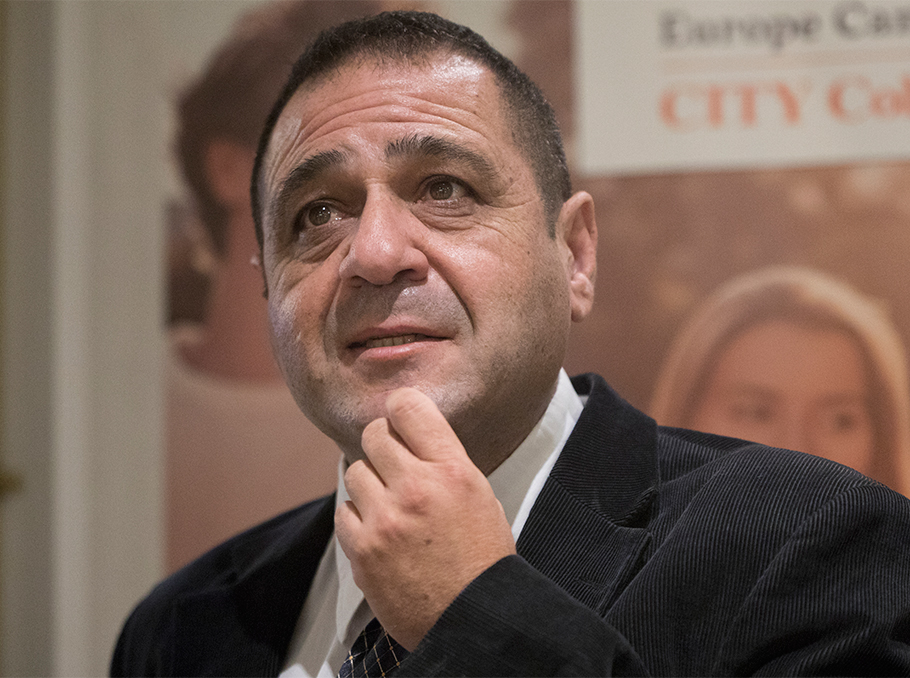
In an era defined by geopolitical upheaval and rapid technological change, businesses face unprecedented challenges that demand both strategic foresight and adaptive thinking. How can leaders prepare for unpredictable scenarios? What skills do executives need to navigate constant transformation, and how can high-quality education help develop these capabilities?
Mediamax explored these questions in a conversation with Mr. Chris Liasidis, Associate Professor and Director of Executive MBA Operations, Training, and Development at the University of York European Campus, who also lectures in the Pan-European Executive MBA programme.
The Pan-European Executive MBA programme, also delivered in Yerevan, is jointly offered by the University of York Europe Campus and the Faculty of Economics and Management at the University of Strasbourg.
It provides Armenian applicants with the opportunity to obtain a high-quality British and European education and earn two MBA diplomas – from the Universities of York and Strasbourg – while continuing to live, work, and study in Armenia.
- Mr. Liasidis, with your long-standing experience in international business strategy and leadership development, what do you see as the key elements that define a resilient international business strategy in today’s world of rapid change and geopolitical uncertainty?
- If there was a single clear answer, all businesses would be successful. But as we see in the business world – and especially now, given the war environment and everything unfolding around us – things are constantly changing or going wrong.
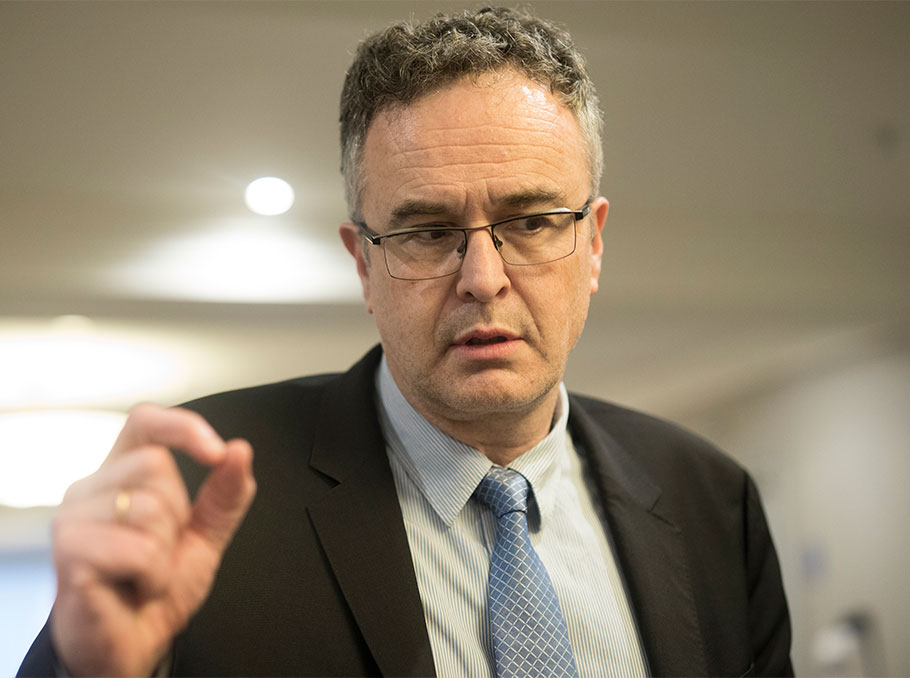
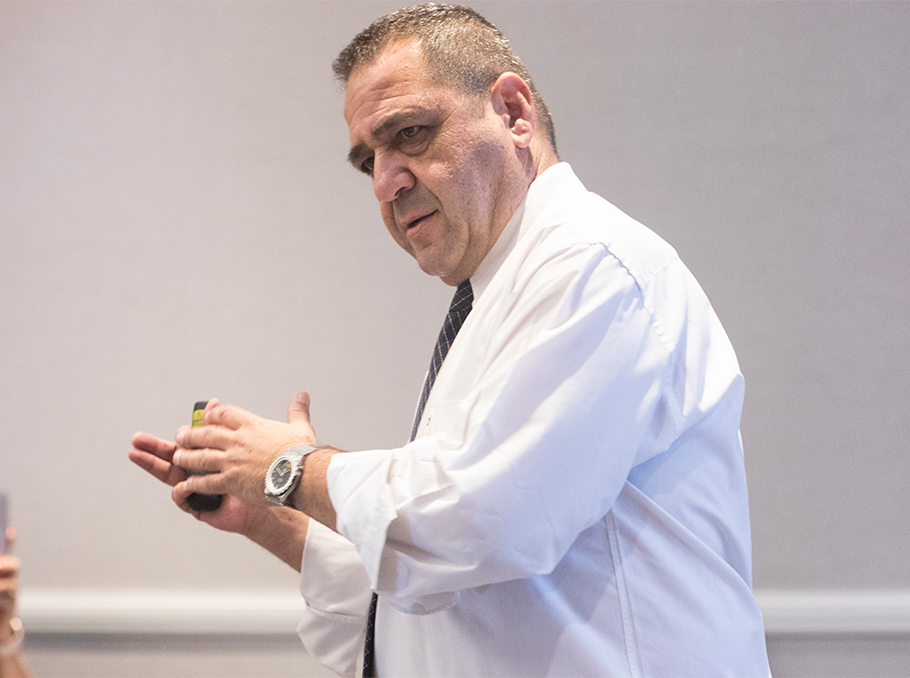 Chris Liasidis
There is a theory with proven practice called management at chaos. What it basically says is that when we operate in chaotic environments, our brain – and specifically our decision-making process – tends to run faster. When we are stressed, we actually become better at developing what we call contingency plans. But the only way to handle transformations is to prepare certain scenarios in advance: what if this or that happens? How should we act?
So, the bottom line is more preparation. Executives and managers should find the time to sit and think about such future eventualities. That is really the only way to progress, because there is no step-by-step formula that guarantees survival in such environments.
- Shifting this conversation to the Pan-European Executive MBA programme, how do you equip your students – most of whom are already managers – with the skills needed to lead and make decisions in chaotic environments?
- The challenge with many managers and directors is that they know their own industry and their own company very well, and sometimes they believe they know everything. What we try to give them are examples to follow – or to avoid – from across industries, in a sort of laboratory setting.
That is why we use hands-on practices: simulation games where things change even faster than in the real world, many case studies that we analyze, and real-life examples. This is an academic programme, so theory is there, but whatever theory says, we always translate it into practical terms.
And through the support we provide, along with peer interaction, the managers studying in our programme, start seeing things more clearly. They learn to organize these “little boxes” in their minds so that they can deal with such challenges but with a much better chance of success.
- One of your widely attended seminars focuses on gamification as a tool for engagement of employees. For readers who may be unfamiliar with the concept, how would you explain it?
- Gamification itself is a made-up word – it does not really exist in the dictionary, yet it is widely used as an international term. At its core, gamification means turning routine tasks in a company into something that feels like a game. The philosophy is simple: if I tell you “go to work,” you will not be excited; if I tell you “go play a game,” you will love it. We, as humans, are built that way. So, the idea is to help employees be more productive and motivated by approaching work like a game.
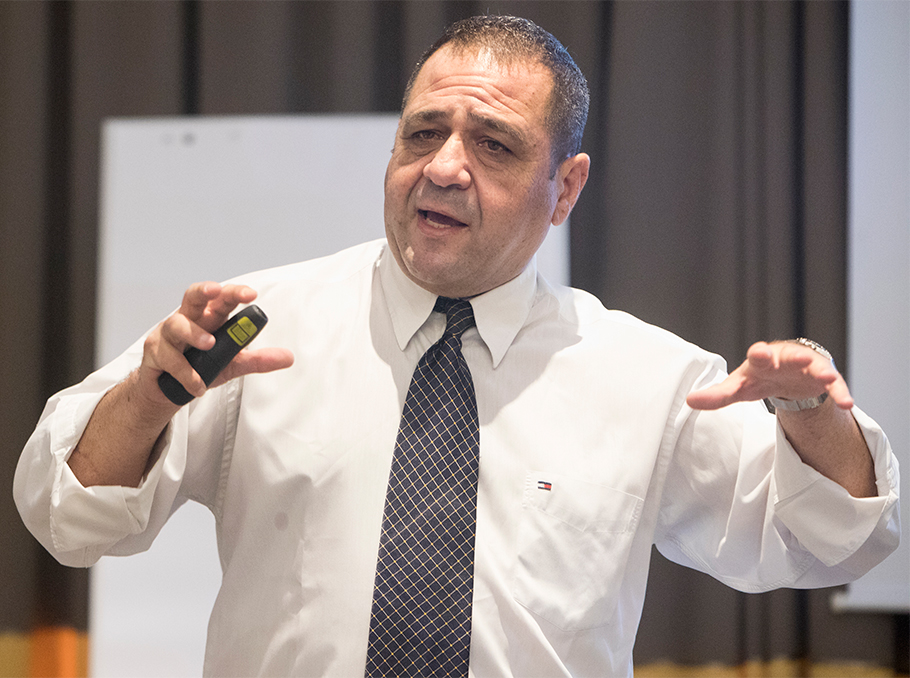 Chris Liasidis
 Photo: Mediamax
It is based on certain principles that game developers use when they design anything from PlayStation games to football or Monopoly. They know how to make something engaging. We simply borrowed some of that game mechanics for the business world.
For instance, in games you always get fast feedback – you immediately know if you came first, second or fifth. And there is transparency: everyone sees where they stand. In many organizations this transparency does not exist.
Another element is the idea of levels. At work, a three-month project feels distant. In games you finish level one, move to level two, and so on. That sense of progression keeps you going. Even at bedtime you catch yourself saying, “Let me just finish this level,” and then maybe one more. That creates tenacity: you cannot rest assured until you finish something. This psychology transfers surprisingly well into companies and corporate environments.
I could talk for hours about the details of gamification, but I think this gives the main idea.
- Does this work the same way with customers?
– Yes, more or less. In the case of customers, engagement means they keep coming back to us again and again – whether we offer a service or a product. And the principle is almost the same: we want them to return on their own, repeatedly. That is where gamification comes in.
In marketing strategies, there is something we call sales promotion. It simply means giving the customer something extra compared to the value of the money they spend. That is why we offer discounts or “three yogurts for the price of two.”
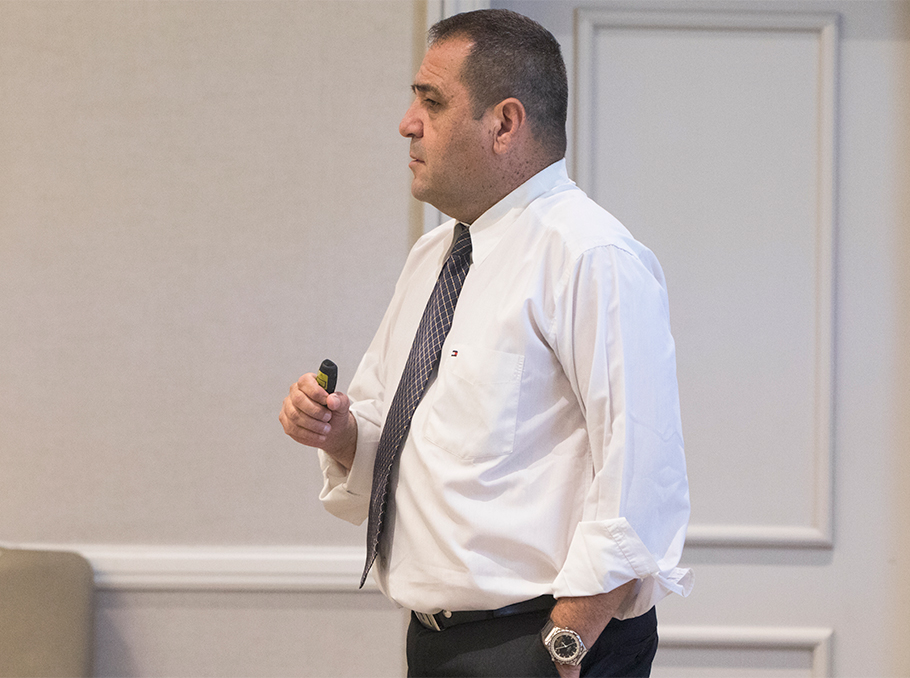 Chris Liasidis
 Photo: Mediamax
Gamification is an extension of that. Instead of just offering a loyalty card, as most companies do today, we apply the game mechanics I mentioned earlier and ask: why stop at a simple loyalty card? Let customers keep collecting points and upgrading levels. For example, when you join the loyalty program of a supermarket or an electronics store, you start as a blue customer. At 1,000 points you become silver; at 5,000, gold; at 20,000, platinum.
These names – blue, silver, gold, platinum – may not mean much on their own, but they create a sense of progression. It becomes exciting for customers to keep buying in order to reach the next threshold and move to a higher status in the loyalty program. That is how it becomes more interesting: people forget that they are spending money, and, much like children, they simply enjoy collecting points.
- I can imagine how enjoyable your lectures must be with this approach, and I assume students become enthusiastic about these ideas as well. Could you please describe what a typical class of yours looks like?
- I want to be honest: maybe it might feel like you are my therapist right now and I am confessing things to you, but speaking personally, I would never do a job just for the sake of doing a job. Yes, it is satisfying to convey knowledge to others, but above all, I have to enjoy it. It is because of who I am – because of my idiosyncrasy – I always start by enjoying what I do.
I am a funny person. Even if I talk to a prime minister, I need to crack a joke. I always have to smile. Even when the topic is serious, I feel the need to say something light just to ease the atmosphere. And that is exactly how I am with my students.
Let’s say I am in the classroom to summarize an entire book – a book someone could read, learn from, and apply. But books are boring. And even if I summarize them, that summary would still be boring. However, when I add my own input, my own examples, my spontaneous ideas – that is what makes the class interesting.
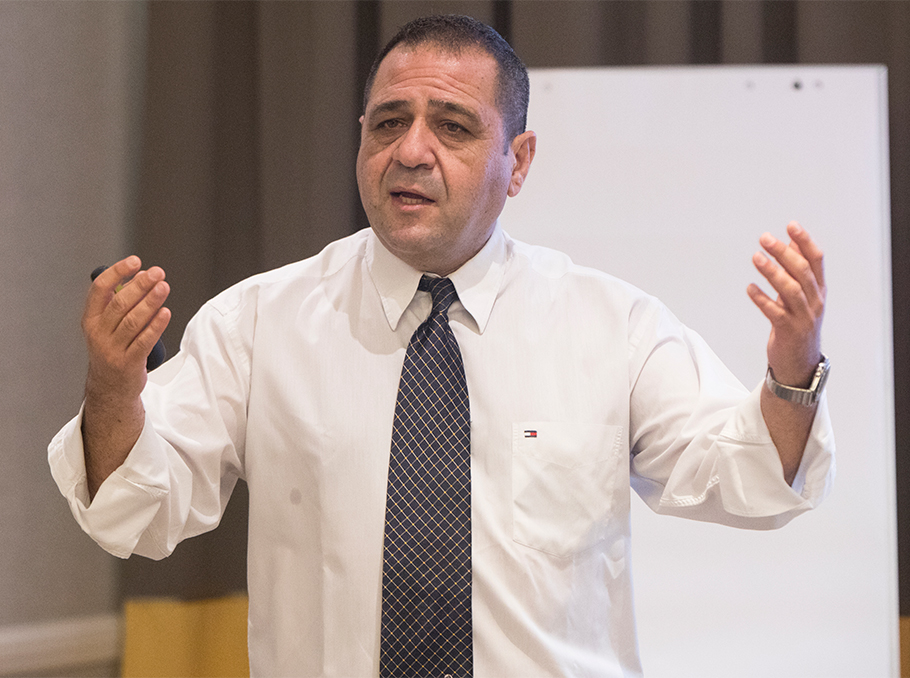 Chris Liasidis
 Photo: Mediamax
And connecting this to what you asked earlier, our students – the executives – already know a lot. But what else can they learn? The magic of our programme is that out of the 200 or 1000 new things we cover, if they take just three ideas and go to work the very next day and apply them, that already means a lot. It shows that we have help them see things from a different angle, to think outside their usual boxes.
- Another thing that rapidly transforms the global business environment today is AI. Are there new competencies that executives need to develop in order to deal with new realities developing due to AI across different industries?
- Humans are built so that whenever we hear the word “change,” we immediately resist it. Let’s say I am good marketer, but I have been doing traditional marketing all my life. One day you, my boss, come and tell me: “Start doing digital marketing, start doing social media marketing.” I panic. I do not know anything about it. That is the first issue: we need to train people to be able to change.
And it works the other way around as well. The younger generations, like Gen Z, are used to AI and all these new tools. Sometimes you need to take them out of their comfort zone and show them how things were done before all these digital means we have today. So, in this world of constant digital transformation, yes, every department – HR, finance, marketing, production – needs to handle things differently.
My best general answer is this: executives need a good balance between hard skills and soft skills. We do develop soft skills in our program a lot.
Hard skills can be generated by AI; it can tell you almost anything. But the real question is how you communicate, how you tell the story. Especially in managerial roles, we all need to become creative storytellers to lead, to inspire others, to help people see things they could not see before.
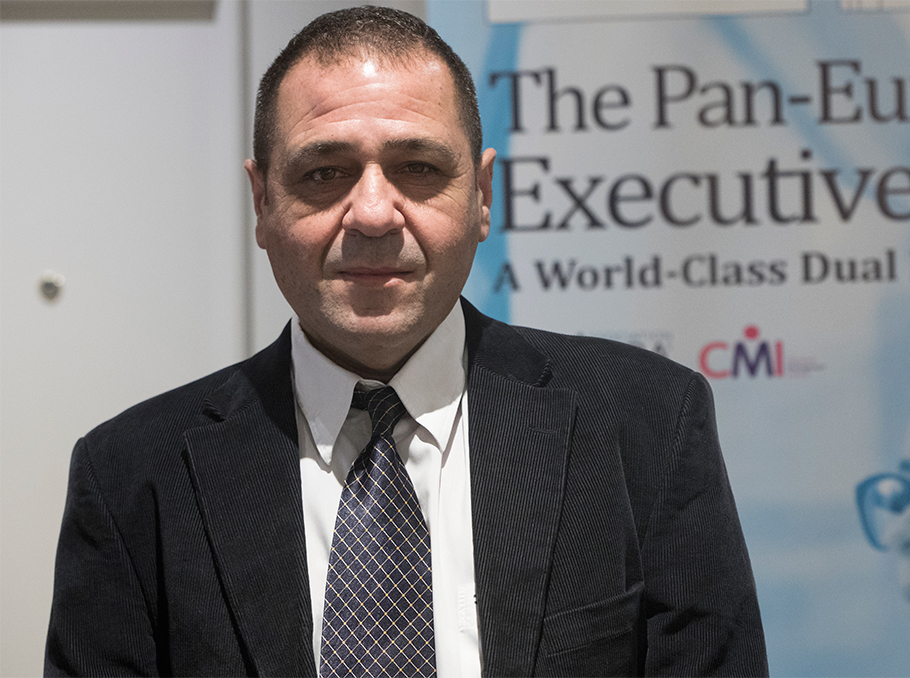 Chris Liasidis
 Photo: Mediamax
Of course, you also need to be a technocrat in today’s digital world. You need to know data mining, analysis, be digitally literate and never be scared of using new tools. So from different angles – technical, digital, creative, interpersonal – all these competencies add up to what employers are looking for today, especially for higher-level managerial and directorial roles.
- Last month in Yerevan we were celebrating the 10-year anniversary of the launch of Pan-European Executive MBA programme in Armenia. Throughout these years, you have been closely working with Armenian students, so I wonder: what qualities make Armenian students stand out?
- I usually do not put my international students into different boxes because they are all modern people open to new ideas. But I can say that over these years I have developed personal relations with my Armenian students. And maybe that is also because of cultural connections, as I grew up with Armenians in Cyprus.
What I can also assure you is that there is so much power in Armenians, and when you help them understand how to do things and advise them in a constructive manner, they can stand at the same level as students in leading countries.
I am sure that with the tenacity and hard work I see in Armenians, they will achieve a great deal in global corporations. But of course, we also want them to stay and contribute to strengthening Armenia’s economy.
I also want to stress that doing an MBA is a big step. Many of the things they will come into contact with they might already know or think they know. But the business world is not like engineering, where someone tells you “do this, this, and that,” and the structure never collapses. In business, the wheel keeps turning, there is no absolute right or wrong. The business education is about giving people the skills to make the right decision at the right time. And this is what we help achieve in our Pan-European Executive MBA programme.
Gaiane Yenokian talked to Mr. Chris Liasidis







Comments
Dear visitors, You can place your opinion on the material using your Facebook account. Please, be polite and follow our simple rules: you are not allowed to make off - topic comments, place advertisements, use abusive and filthy language. The editorial staff reserves the right to moderate and delete comments in case of breach of the rules.