







Times are changing, and so is the field that tells about those times - journalism. Where once a journalist could specialize in working on a single media platform, such as writing for print or producing reports for television, today the landscape has become far more complex. Not only have communication platforms expanded in number and format, but the demands of the era have also given rise to a new direction of the profession: multimedia journalism. Mastering it has become essential for keeping pace with the evolving media industry.
Responding to these challenges in the media field, the American University of Armenia announced the launch of a new academic program in 2024 - the Master of Arts in Multiplatform Journalism (MAMJ). The program aims to educate a new generation of media professionals equipped with the full range of skills required to work in today’s dynamic media environments. MAMJ is accredited by the Western Association of Schools and Colleges (WASC) and licensed by Armenia’s Ministry of Education, Science, Culture, and Sports.
Mediamax spoke with Dr. Shawn McIntosh, the Chair of MAMJ and director of CEJ, as well as students currently enrolled in the program. They shared insights into the advantages of the MAMJ, who teaches in the program and how, and why it is worth applying.
Preparing for the future of journalism
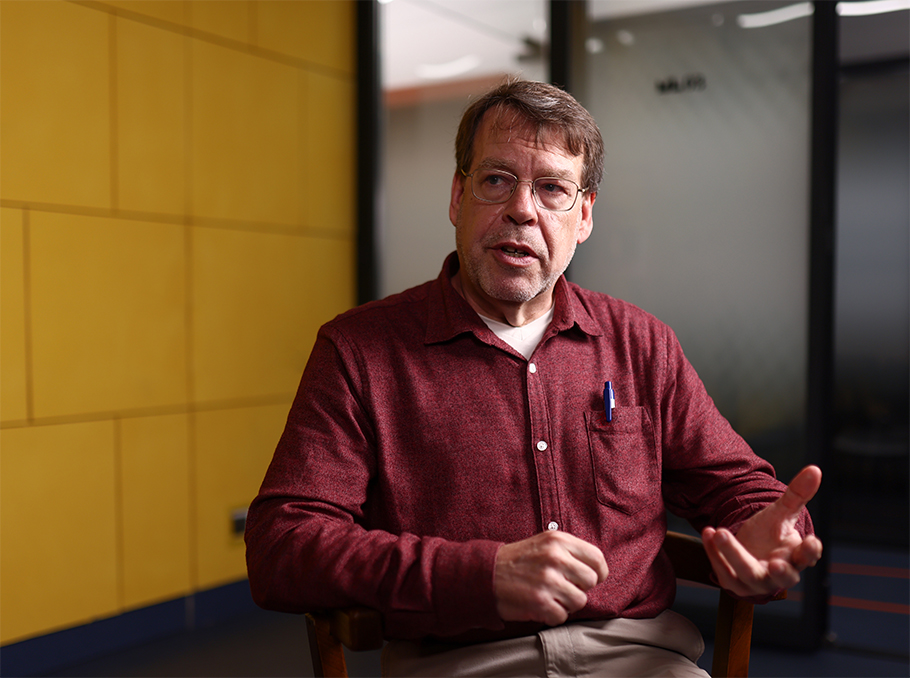
Shawn McIntosh has more than 30 years of experience in journalism, including around 20 years of teaching digital media, journalism, strategic communications, and media ethics at various U.S. universities. He has worked as a journalist in the United Kingdom, Japan, and the United States.
Shawn McIntosh: Today, journalism around the world is experiencing a real crisis, as digital and social media have disrupted the traditional media business models. On the one hand, journalists now have powerful tools for storytelling. On the other, the business side of journalism is suffering: budgets are being cut, media outlets are shutting down, and so-called “news deserts” are emerging in the United States. The days when someone could say, “I am a writer – my only job is to write,” are long gone. Large television production crews are also a thing of the past, as many functions are now handled by a single individual.
Today, journalists must be able to work across multiple formats – written, audio, video. Even if they are not experts in every format, they need at least a clear understanding of how different media types transform storytelling and influence audiences.
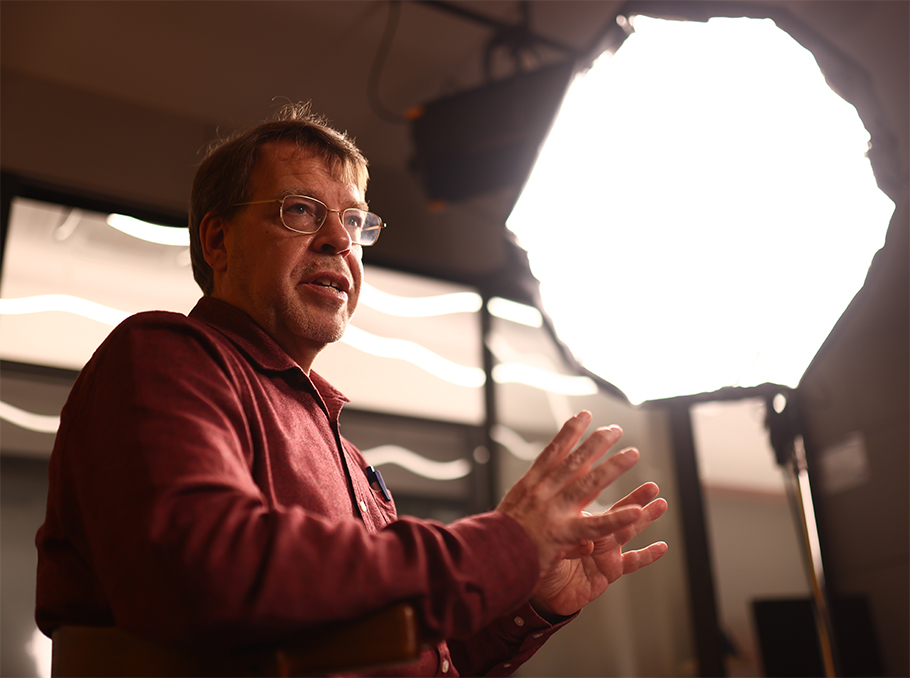 Shawn McIntosh
Photo: Mediamax
At the same time, regardless of technological development, the foundations of journalism remain unchanged: presenting the truth, checking facts, and engaging audiences. The challenge today is to use new tools in ways that strengthen these core skills and enable the development of new approaches to storytelling.
In the Master of Arts in Multiplatform Journalism program, students acquire all the skills necessary to become journalists – not merely theoretical knowledge, but hands-on experience. At the same time, it is important to understand that technologies evolve rapidly, and training focused solely on mastering tools cannot provide sufficient knowledge on its own. The issue is not simply learning which buttons to press – because those buttons will soon change – but developing a deeper understanding of why they are pressed in the first place. This is why our program combines a strong conceptual framework with practical production skills. As a result, students begin producing journalistic stories in multiple formats while still studying, and upon graduation they can confidently enter newsrooms as professional journalists.
Why study journalism at the master’s level
Shawn. My personal view is that studying journalism at the undergraduate level is not the most effective path. My undergraduate major was microbiology, with journalism as a minor. Later I continued my education in journalism at the master’s level. In my view, it is more appropriate to first learn a subject area and then develop expertise in journalism.
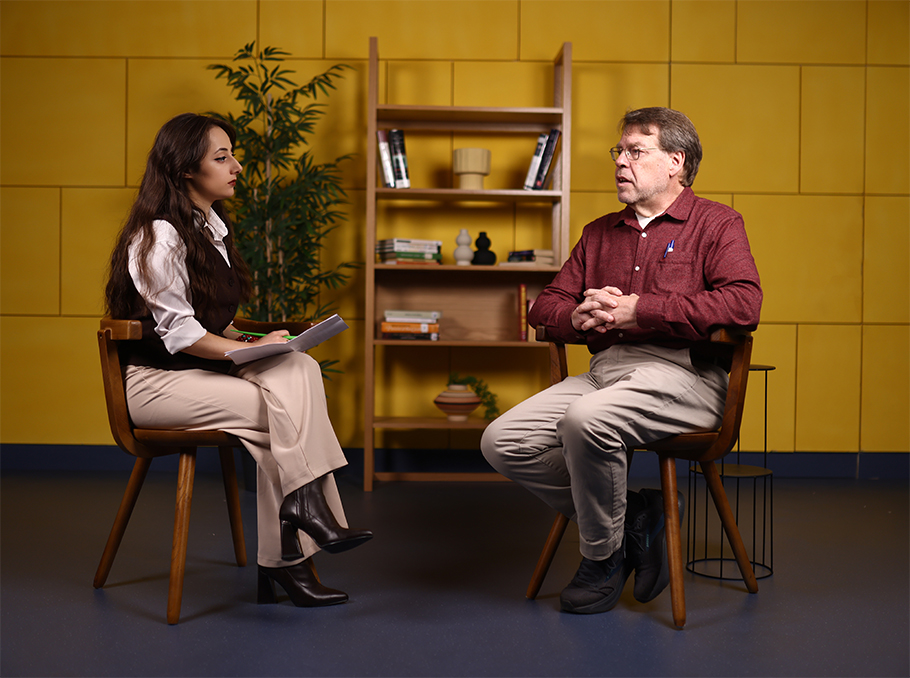
Photo: Mediamax
On the other hand, people may ask what the value is of studying journalism in a master’s program if one can simply take a series of training courses. If you enter the field and are very lucky, you might find a strong editor who takes on a mentoring role and helps you develop your journalistic skills over the years. But most people are not that lucky. Our program, by contrast, can be described as a 14-month mentorship, during which faculty provide students with the experience and knowledge that would otherwise require a minimum of five years of professional journalistic practice.
Who are the program’s students
The program attracts both practicing journalists and professionals with educational backgrounds and work experience in other fields who wish to develop skills in the media sector as well.
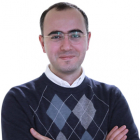
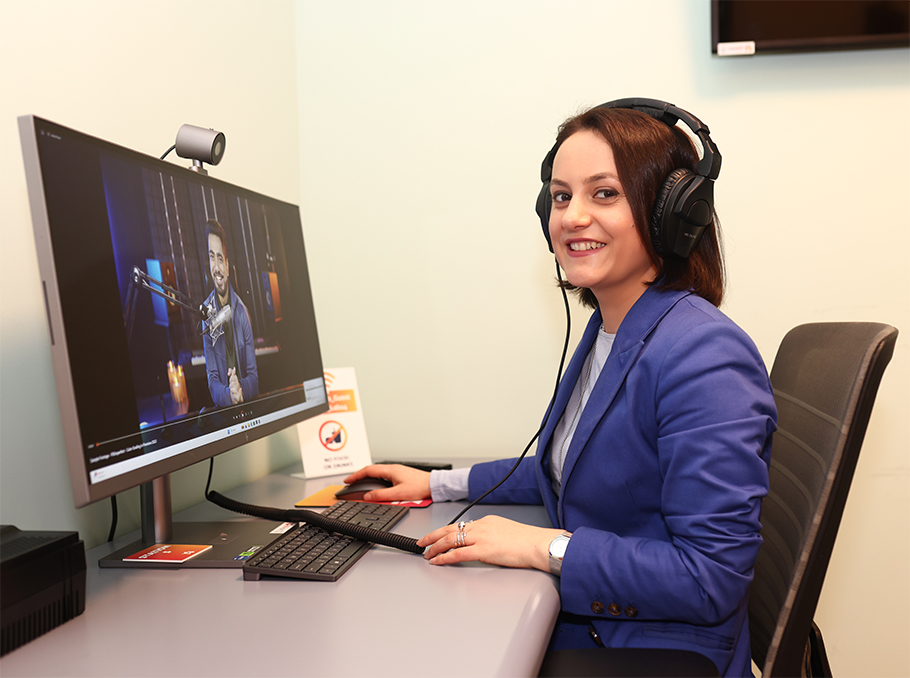
One of the program’s students, Goharik Hovhannisyan is a linguist and public relations specialist. She has also studied and worked in the field of strategic communications. After completing her studies at AUA, she plans to pursue journalism alongside her first profession, producing stories focused on the technology sector.
Goharik Hovhannisyan: Studying alongside practicing journalists makes the educational process even more engaging, as we have the opportunity to learn not only from our instructors but also from our classmates’ experiences, both through in-class and extracurricular discussions.
 Goharik Hovhannisyan
Photo: Mediamax
Our journalist-classmates are always very willing to help. With their experience in the field, they possess what is most important in journalism – a well-developed network of sources – which they generously share with us.
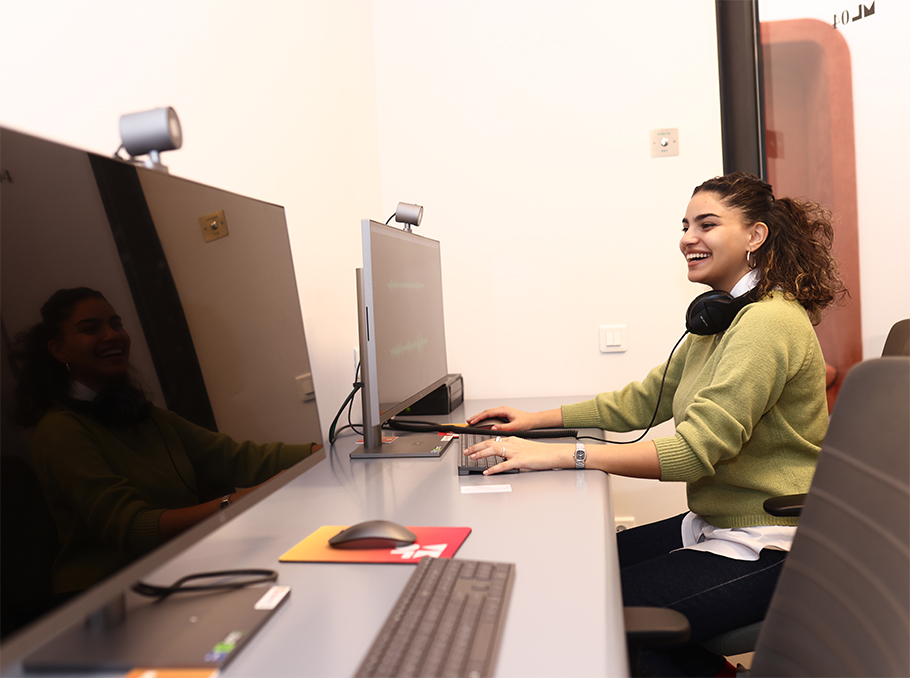
Another student in the program, Yeva Minasyan, is a practicing journalist. After earning a bachelor’s degree in journalism, she applied to AUA’s program to further develop her multimedia journalism skills and to study journalism according to Western standards. She has been working for three years at Public Radio’s second channel, Im Radio, where she is the author and host of the “I Hear You” podcast.
Yeva Minasyan: As journalists, we often think within the same thematic frameworks, while classmates from other fields help us think beyond what has become familiar to us and also offer support from their own professional backgrounds.
The culture of mentorship
The maximum number of students per cohort is set at 20, which allows faculty to give individual attention to each student and provide guidance based on their skills and professional strengths. Currently, 16 students are enrolled in the program.
Goharik: The instructors in this program are ready to support you with any question, and their guidance can often become lifechanging. Because of this approach, you begin to perceive the role of a mentor in a completely different way.
Yeva: As part of studies, I was preparing a podcast on an education-related topic. It was the first time I had to host a podcast in English. I entered the studio I know so well, put on my headphones, and started speaking, but hearing my voice in English felt so unfamiliar that it seemed as if it wasn’t me. After finishing the first recording, I wrote to our mentor, Shawn, saying that although I had been opening the door to that same studio and recording there for three years, I had never felt so unlike myself. Shawn began explaining how to make the process easier, offered words of encouragement, and expressed strong confidence in my ability to do it well. His strong belief in me was enough for me to walk into the studio the next time and speak with such confidence, as if English was completely natural to me.
 Yeva Minasyan
 Photo: Mediamax
During one of our conversations, Shawn once told us: “Imagine that I have sixteen children here, and as a father, I am responsible for all sixteen of you.” He quite literally behaves that way – taking on a fatherly role for all of us in a very Armenian sense (author’s note: she smiles). And it is not only him: even instructors who see us only once a week approach us with the same care.
Shawn: I have taught journalism and strategic communications long enough to know when a student needs praise and when they need a firmer approach – what we call tough love. Being a journalist myself, I can easily recognize work that was finished just minutes before the deadline, and I can tell the student that it is not her/his best work. I say what strict editors would say, because it is only by working on mistakes that one can truly learn and improve.
Who teaches in the program, and how
All of the specialists teaching in the program are either practicing journalists or have previously worked as journalists. As a result, students learn under real-world conditions, so when they step out of the comfort of the classroom and enter an actual newsroom, the chaos will not come as a shock. At the same time, classes are full of surprises.
Yeva: One of our favorite instructors, Ruben Keoseyan (author’s note: Mr. Keoseyan is a professor at California State University Northridge, who visited Armenia for the first time in the summer and volunteered to hold classes for MAMJ students), literally took us out of the classroom and told us we had 40 minutes to produce a report – despite the fact that students with no prior journalism experience had learned how to create a report only minutes earlier.
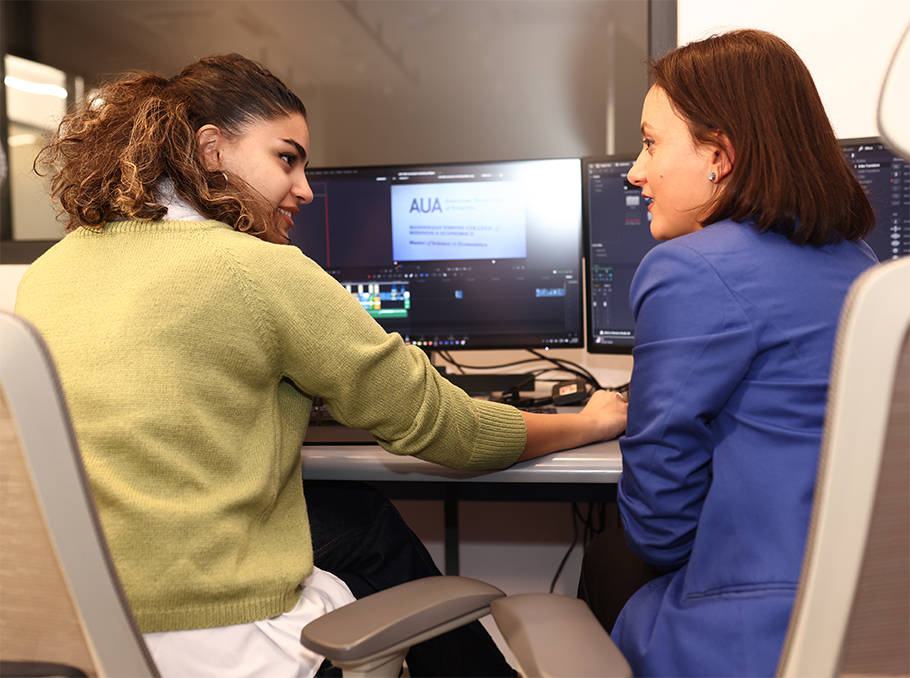
Photo: Mediamax
Another favorite instructor, Asbed Kotchikian, who teaches politics and diplomacy, once decided not to hold class in the usual classroom setting. Instead, he gathered all of us at his home to watch documentaries about revolutions over pizza. In that format, we learned best how our work can influence diplomacy and politics.
Goharik: Among our favorite instructors, we cannot fail to mention Maria Titizian. Her feedback pushes you to grow. If your work is weak, she will tell you so very directly, and if she approves it, it means you are amazing.
In addition to the core faculty, students are frequently joined by a range of international guest speakers who share their professional experience. Several of these meetings left a particularly strong impression.
Goharik: One of our guests was Nerissa Young, a professor at the E. W. Scripps School of Journalism at Ohio University, who specializes in trauma reporting. During the class, it was decided that we would simulate emergency situation and try to conduct interviews as journalists. Nerissa Young placed a chair in the middle of the room, sat down, and began playing the role of an elderly woman who had lost her home, family members, and cat in a flood. She was genuinely crying, and when one of us asked a bad question, she began shouting – exactly as might happen in real life.
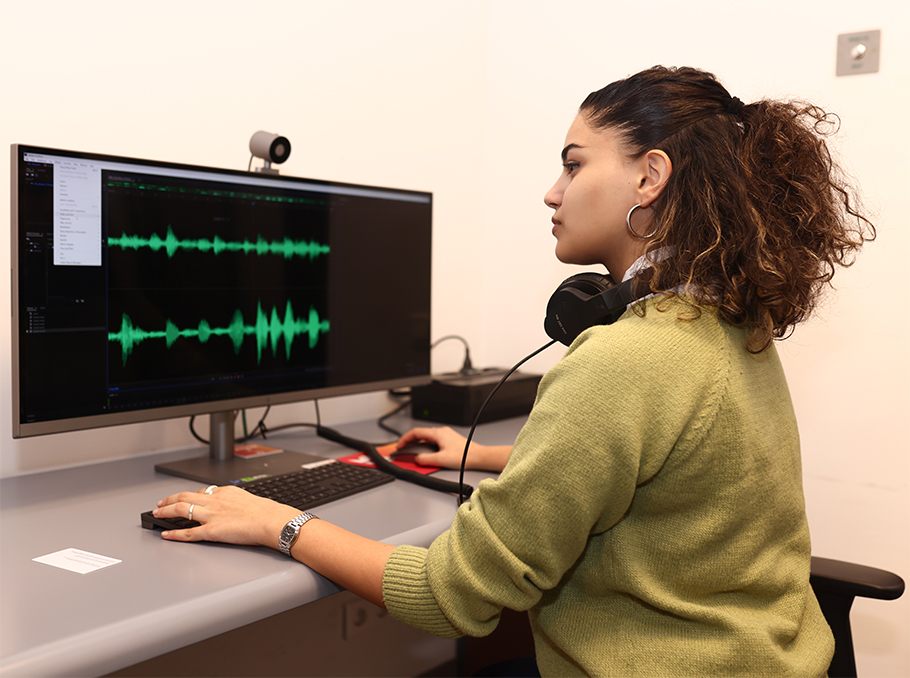
Photo: Mediamax
Among the guests was also Kevin Smith, who leads the Kiplinger Program in Public Affairs Journalism at Ohio University. He shared a deeply personal experience with us, recounting how he once had to cover an explosion in which his brother had also died. He told us that even when a tragedy affects us directly, we must be able to cover it. Working through his own trauma, he wrote an article that moved everyone who read it to tears.
Yeva: Through this story, Kevin Smith showed us that a journalist’s personal experiences can also become a story. This was a very important lesson for us, because at times it feels as if journalists are expected to be only half human – we are told that our emotions should not appear in the articles. Yet this example showed that there are situations in which a journalist’s emotional experience not only has the right, but also should become a story.
The Brief and real multiplatform journalism skills
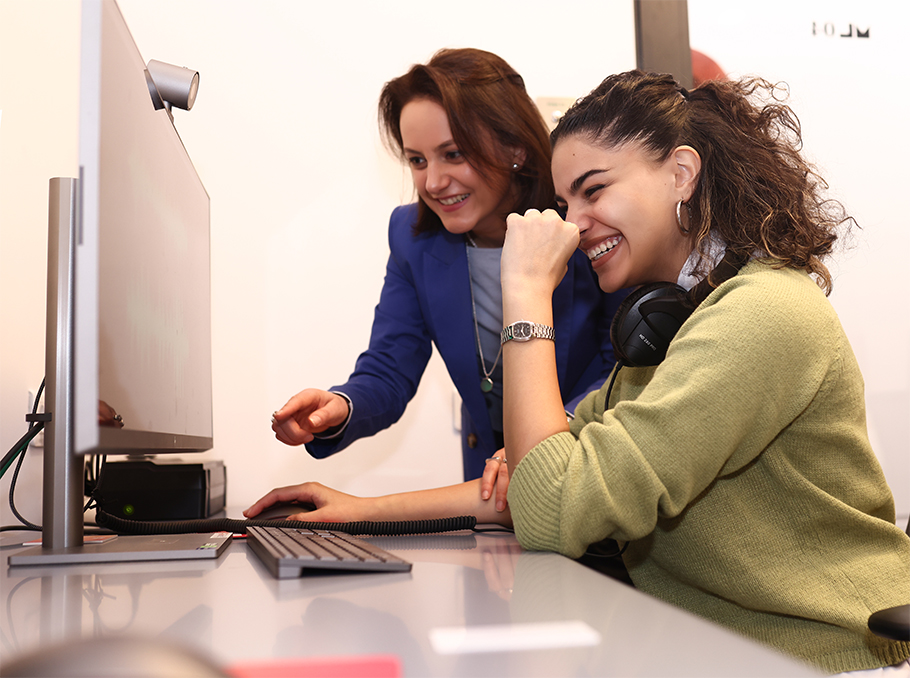
Thanks to AUA’s Media Lab, students have all the necessary resources to create media content across different formats. Their work is publicly accessible through The Brief, a news platform developed by the students themselves. It operates as an independent, student-run media outlet with multimedia content.
Goharik: This program offers the opportunity to gain real journalism experience in different formats. When you have an idea, you take it from the ground up all the way to publication and distribution, which means you learn how to work with content from A to Z.
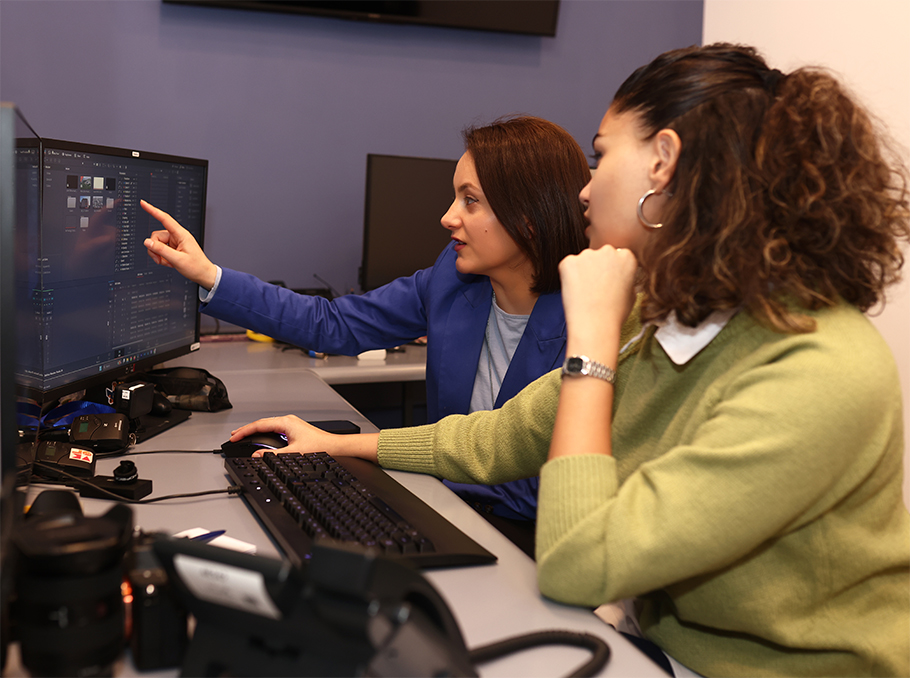
Photo: Mediamax
We are never restricted in our choice of topics, but at the same time we are encouraged to try everything. Personally, I see myself more in the written format, but it is very important to push yourself out of your comfort zone. In this regard, one of our instructors, Shant Petrossian, has helped me greatly. Thanks to him, many of us in the program tried ourselves in podcasting.
Yeva: Here, we are taught to think in 360 degrees, introduced to global approaches to journalism, and – most importantly – encouraged to think big and move beyond the narrow limits of our own thinking.
Internship opportunity in the United States
At the end of the program, students are required to complete a Capstone project, which involves an in-depth, comprehensive journalistic exploration of an important topic. In addition, ten students will undertake a three-week internship at various media outlets in the U.S. state of Washington. This opportunity has been made possible through a partnership with the Edward R. Murrow College of Communication at Washington State University.
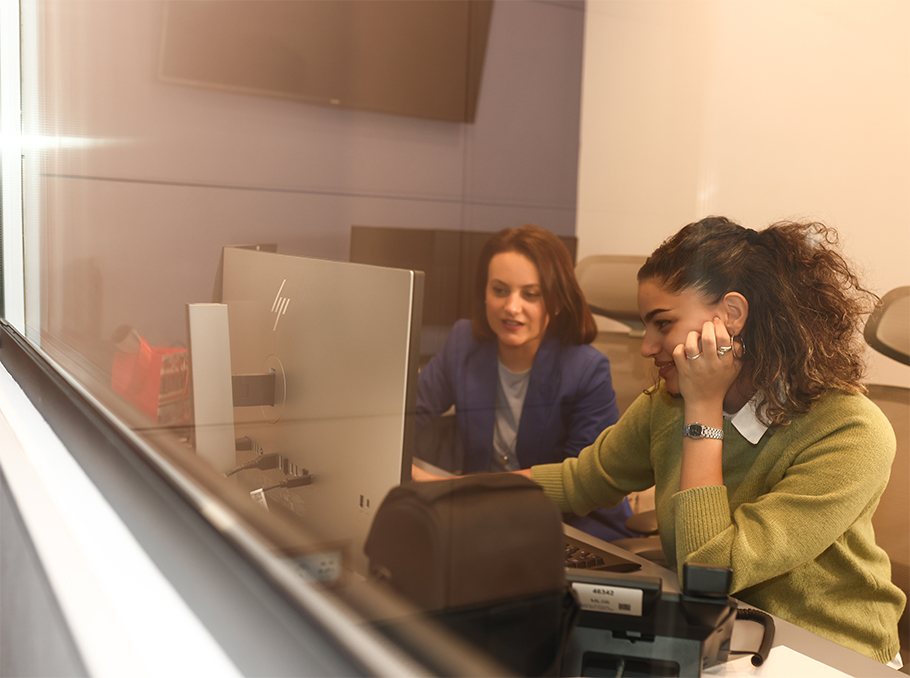
Photo: Mediamax
Yeva: There are some concerns related to the internship, but our mentor Shawn helps us overcome them. On the one hand, it is a unique opportunity to gain valuable experience; on the other, it is a great responsibility, as we will be representing Armenian journalism abroad. We need to do this in a way that makes people outside the country want to learn more about us.
A Message to future applicants
Shawn: I have never regretted making major changes in my life. Age should not be a concern: on the contrary, people who return to an educational environment with life experience discover that learning is not only not difficult, but can be deeply enjoyable.
Goharik: If at some point in your life you have come to the realization that you want to try yourself in journalism, then I would say that idea is definitely worth following. And the best educational program where you can acquire all the core skills needed to build a strong position in the field is AUA’s MAMJ.
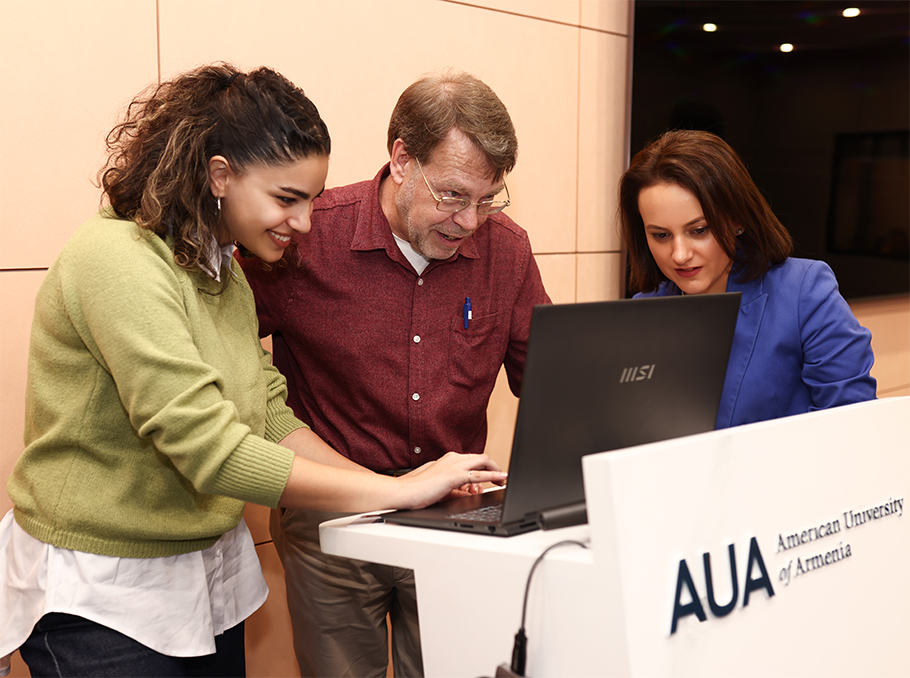
Photo: Mediamax
Yeva: Journalism is a rapidly evolving field, and it is impossible to keep pace with these changes relying solely on a bachelor’s degree earned years ago. This education at AUA will provide you with the development you need. And if you are truly passionate about the idea of working in journalism and believe in its power, here you will meet mentors who believe in the power of this profession even more and who will certainly inspire you to become someone who can bring those changes.
With the support of the U.S. Embassy Yerevan, citizens of the Republic of Armenia can study in this program with a 90% scholarship. The deadline for the early application round is January 15. Applications are accepted via application.aua.am. Additional information about the program is available on the program’s official page. Details on application requirements, deadlines, and tuition fees can be found on the university’s admissions page.
The College of Humanities and Social Sciences (CHSS) of the American University of Armenia (AUA) was awarded USD 2,171,462.49 by the United States (U.S.) Department of State to establish an M.A. Program in Multiplatform Journalism and a Center for Excellence in Journalism within AUA’s CHSS. The Program has also established a partnership between AUA and Edward R. Murrow College of Communication at Washington State University to collaborate on continuously improving the quality and content of journalism education and practice in Armenia.
Gaiane Yenokian
Photos by Emin Aristakesyan





Comments
Dear visitors, You can place your opinion on the material using your Facebook account. Please, be polite and follow our simple rules: you are not allowed to make off - topic comments, place advertisements, use abusive and filthy language. The editorial staff reserves the right to moderate and delete comments in case of breach of the rules.